+86 18560646018

Views: 210 Author: Focus Color Publish Time: 2026-10-06 Origin: Site


Content Menu
● Color Changing Cup vs. Smart Thermos: Quick Comparison
● How a Color Changing Cup Produces a Hot Drink Visual Alert
>> Thermochromic Materials Respond to Temperature
>> Surface Temperature Is Not Beverage Temperature
>> Thermochromic and Photochromic Effects Are Different
● How a Smart Thermos Displays Temperature
>> A Number Needs Measurement Context
>> Displaying Temperature Is Not Controlling It
● Which Option Is More Budget-Friendly?
>> Compare Matched Specifications, Not Category Labels
>> Calculate the Cost per Usable Unit
● Which Visual Alert Is Easier to Understand?
>> Color Changing Cups Offer an At-a-Glance Cue
>> Smart Thermoses Offer Numerical Detail
● Safety: Neither Product Guarantees a Safe Sip
>> Food-Contact Compliance Applies to the Finished Product
● Practical Validation: A Five-Step Sample Test
>> 1. Define the Intended Message
>> 2. Test Realistic Filling Conditions
>> 3. Compare with a Reference Measurement
>> 4. Repeat the Use-and-Care Cycle
>> 5. Document Acceptance Criteria
● OEM/ODM Customization: Match Technology to the Brief
>> Promotional Gifts and Interactive Branding
>> Commuter and Travel Products
>> Liquid Crystal Temperature Indicators
● Care and Long-Term Usability
● Final Recommendation and Next Step
>> Is a Color Changing Cup an Accurate Thermometer?
>> Does a Smart Thermos Heat the Drink?
>> Which Option Costs Less for Bulk Orders?
>> Can a Color Change Mean the Drink Is Safe?
>> Can Both Products Be Personalized?
>> What Should I Check Before Ordering Samples?
A color changing cup vs. smart thermos comparison comes down to one question: do you need a visible heat cue or a numerical temperature reading? For budget-friendly hot drink visual alerts, a thermochromic cup offers a battery-free color response, while a temperature-display thermos combines insulation with an electronic readout. Neither automatically tells you that a drink is safe to sip.
My recommendation is to choose by the information your customer needs—not by how impressive the technology sounds. A promotional cup, an office mug, and a commuter flask solve different problems.
At Qingdao Focus On Color Industry & Trade Co., Ltd., our manufacturing background spans more than 13 years across thermochromic, photochromic, liquid crystal thermometer, and fragrance products. From this product-development perspective, the most useful comparison considers visibility, reliability, customization, and total ownership cost.
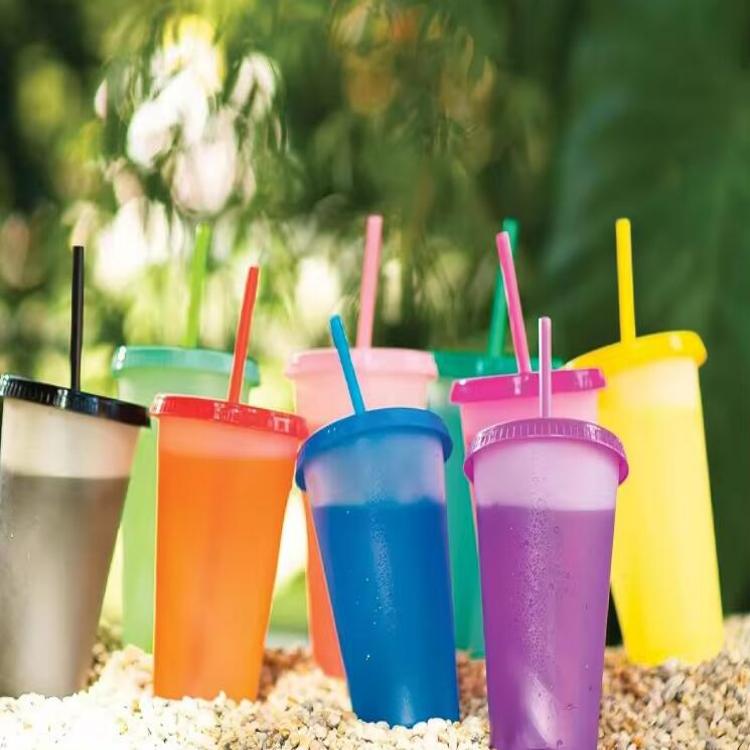
Here, "smart thermos" means an insulated flask with a temperature display. It does not automatically mean an app-connected or actively heated vessel.
| Comparison factor | Color changing cup | Temperature-display smart thermos |
|---|---|---|
| Visual signal | Color shift or revealed graphic | Numerical temperature display |
| Signal source | Temperature-responsive material | Electronic temperature sensor |
| Power requirement | None for the thermochromic effect | Power required for the display |
| Temperature information | Qualitative surface-temperature cue | Reading at the sensor's location |
| Heat retention | Depends on vessel construction | Depends on insulation and closure |
| Customization | Reactive artwork, logos, messages | Body branding and model-dependent options |
| Maintenance | Coating-specific care | Vessel, seal, and electronic-lid care |
| Strongest application | Interactive gifts and simple visual cues | Travel and numerical temperature checking |
| Main limitation | Color is not a calibrated liquid reading | Display accuracy requires verification |
The central distinction is indication: one product communicates through a material response; the other through a sensor and screen.
A heat-sensitive cup uses thermochromic materials that change appearance as their temperature changes. Reversible formulations can return toward their original appearance when they cool.
Depending on the design, heating may reveal a logo, uncover an image, or change a printed area's color. Thermochromic systems include leuco dyes and liquid crystals, but their visual behavior differs.
Buyers should specify:
- The desired activation range.
- The appearance before and after heating.
- Whether the effect must reverse.
- Where the reactive area sits.
- How users should interpret the change.
There is no universal activation temperature for every color changing coffee cup. The formulation must match the intended application.
An exterior coating responds to the temperature at the coating—not directly to every part of the beverage.
Cup material, wall thickness, fill level, and elapsed time affect heat transfer. Consequently, the visible change may lag behind pouring or cooling.
This matters particularly with insulated vessels. An exterior reactive coating may receive too little heat to produce the intended signal.
From a development standpoint, vessel construction and reactive placement must be evaluated together. A pigment sample working correctly does not prove that the finished cup will deliver a useful alert.
Thermochromic materials respond to temperature. Photochromic materials respond to ultraviolet light.
Both can create interactive products, but a sunlight-responsive coating is not a substitute for a hot drink indicator. Buyers should confirm the trigger mechanism before approving artwork or samples.
A temperature-display thermos uses an electronic sensor and display. However, the usefulness of its reading depends on sensor location, thermal contact, response time, and calibration.
A numerical display can appear precise without demonstrating equivalent measurement accuracy.
Before selecting a model, ask:
- What does the sensor actually measure?
- Under which conditions is accuracy specified?
- How long does a reading take to stabilize?
- Does performance change with fill level?
- Can the battery or electronic lid be replaced?
Treat these as model-specific questions. One supplier's design does not establish the performance of all smart thermoses.
A basic smart thermos displays temperature and relies on its insulation to slow cooling. It does not necessarily contain a heater.
Active temperature-control mugs are a separate category. Some combine sensors, heating, and app-based settings to maintain a selected temperature.
For a budget-focused comparison, keep display-only flasks separate from actively heated drinkware. Otherwise, the feature list and price comparison become misleading.
A battery-free reactive design removes electronic components from the visual-alert system. That can simplify a project, but it does not guarantee the lowest finished-product price.
A heavily customized ceramic mug may cost more than a standard display thermos at a particular order quantity. Conversely, customized electronic lids may increase tooling and support requirements.
Request comparable quotations using the same:
- Order quantity and capacity.
- Packaging standard.
- Branding complexity.
- Destination and delivery terms.
- Inspection requirements.
- Warranty expectations.
Without those conditions, a "cheaper" quotation may simply include less.
For procurement, I would compare:
Total project cost ÷ accepted, usable units.
Total project cost should include product pricing, development, inspection, freight, and expected replacement expense.
This approach makes hidden differences visible. An attractive unit price loses value if coating defects, unreadable displays, or packaging damage reduce the number of units customers can use.
Avoid treating an assumed failure rate as proven data. Use pilot-order results, inspection records, and agreed acceptance criteria.
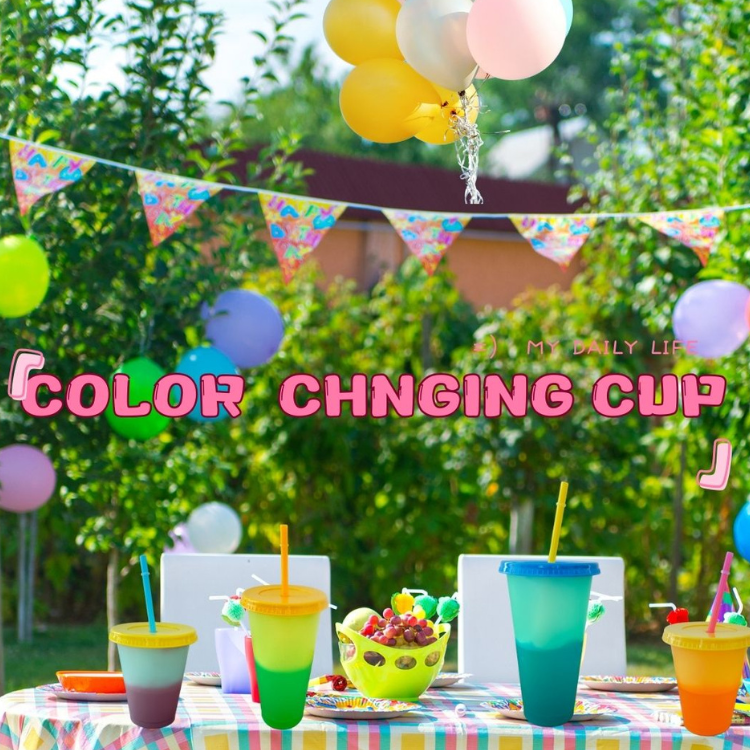
A large reactive graphic can communicate without requiring the user to read digits or touch a screen.
However, decorative transformation and temperature communication are not identical. A disappearing background might look entertaining while saying little about what the user should do.
For clearer communication:
- Pair the color effect with a short message.
- Maintain contrast in both states.
- Avoid relying on red and green alone.
- Keep the reactive area visible during normal use.
- Explain the effect on packaging.
"Changes appearance when heated" is more defensible than an unvalidated "safe to drink" claim.
A display can help users who prefer a temperature number over a color cue.
Its practical value still depends on readability, activation, measurement performance, and whether the user understands Celsius or Fahrenheit.
Evaluate the actual display under typical conditions. Small digits, reflections, and awkward lid positioning can make a technically functioning screen inconvenient.
The better interface is the one customers can interpret reliably—not necessarily the one with more features.
Hot-liquid injury depends on temperature and exposure time. A visual cue or displayed number should not be treated as a universal safety threshold.
Public safety guidance on hot-water scalds demonstrates that prolonged exposure can cause serious injury even at temperatures substantially below boiling. Those skin-exposure figures should not be repurposed as beverage-drinking limits.
For either product:
- Retain clear hot-liquid warnings.
- Avoid unvalidated "burn-proof" claims.
- Do not present a decorative effect as a safety instrument.
- Follow the vessel's filling and handling instructions.
Reactive materials, coatings, vessel bodies, lids, and seals need appropriate evaluation for their intended use.
For products placed on the European market, the food-contact framework requires materials not to transfer substances into food at harmful levels or cause unacceptable changes in composition, taste, or odor.
An exterior coating is not automatically proof of compliance. Its position, potential contact, and manufacturing process still matter.
Request documentation that matches the finished product and target market. A generic pigment document cannot establish compliance for every completed cup.
This proposed protocol is a procurement starting point, not a certified laboratory method.
Decide whether the product should communicate "heat detected," provide a temperature reading, or simply reveal promotional artwork.
Write that requirement before selecting materials.
Evaluate samples at low, medium, and high fill levels. Use representative hot-liquid conditions within the vessel's rated limits.
Observe the reactive area or display after filling and during cooling.
Use a suitable calibrated thermometer to measure the liquid under controlled conditions.
Record the relationship between the reference temperature and the product's signal. For thermochromic cups, assess repeatable visual behavior rather than pretending the graphic is a precise thermometer.
Follow the supplier's cleaning instructions and repeat heating, cooling, and washing.
Check for weaker color response, peeling, leakage, condensation-related issues, and display malfunction.
Agree on acceptable appearance, response behavior, measurement performance, and defects.
Photographs and written observations create a clearer approval record than "the sample looks good."
A color changing cup is worth evaluating when transformation is central to the experience: a revealed logo, campaign message, or personalized image.
In this application, the specification should prioritize artwork visibility, repeatability, and care instructions—not imply temperature precision.
A smart thermos is worth evaluating when the brief prioritizes a closure, insulation, portability, and numerical checking.
Validate leakage and insulation separately from the display. A functioning screen does not prove the flask performs well as a travel vessel.
A liquid crystal indicator can offer another passive visual format, including a temperature-associated color scale.
However, an externally mounted indicator still senses local surface conditions. Its displayed range and relationship to beverage temperature require validation on the intended vessel.
Qingdao Focus On Color Industry & Trade Co., Ltd. can discuss OEM/ODM and personalized customization for temperature-responsive product concepts. Specific performance claims should follow sample testing, not precede it.
Thermochromic cup care depends on the coating and finished-product specification. Do not assume dishwasher or microwave suitability from the ceramic body alone.
For electronic thermoses, confirm how to clean the lid and whether it tolerates immersion. Battery replacement and spare-lid availability also deserve attention.
Ask suppliers for written instructions covering:
- Approved washing methods.
- Temperature limitations.
- Storage conditions.
- Replaceable parts.
- Warranty exclusions.
Clear care guidance helps customers preserve function and helps brands avoid preventable complaints.
Choose a color changing cup for a battery-free, interactive visual cue. Choose a smart thermos when numerical checking and insulated portability better match the brief.
For a custom project, send Qingdao Focus On Color Industry & Trade Co., Ltd. your target market, vessel type, quantity, artwork, and intended temperature message. Request an OEM/ODM feasibility discussion and samples before approving performance wording or bulk production.

Not by default. It indicates a temperature-responsive change at its reactive surface. Accurate beverage measurement requires a separately validated system.
Not necessarily. A temperature-display thermos usually belongs to a different category from actively heated drinkware. Check the model's stated functions.
Neither is universally cheaper. Compare matched specifications, delivery terms, customization, inspection, and replacement costs.
Not without application-specific validation. Decorative thermochromic effects should not be presented as guaranteed safe-drinking indicators.
Potentially, yes. Reactive artwork and vessel branding offer different customization routes. Available options depend on construction, materials, and supplier capability.
Define the intended signal, target market, care expectations, compliance documentation, and measurable acceptance criteria.
1. [SpotSee — "Cold Chain Monitoring Technology & Compliance."] Definitions and operating principles for thermochromic, photochromic, and liquid crystal technologies. [spotsee]
2. [LCR Hallcrest — "Color Change Inks."] Temperature-responsive ink behavior and the distinction between thermal and ultraviolet activation. [thermometersite]
3. [European Commission — "Legislation: Food Contact Materials."] General food-contact safety principles and the European regulatory framework. [food.ec.europa]
4. [U.S. Consumer Product Safety Commission — "Avoiding Tap Water Scalds."] Evidence explaining how hot-water burn risk depends on temperature and exposure duration; not a beverage-drinking standard. [cpsc]
5. [Ember — "The World's First Temperature Control Mug."] Manufacturer information illustrating active temperature control as distinct from display-only drinkware. [ca.ember]
6. [vancasso — "Thermochromic Mugs: How They Work & Are They Safe?"] Secondary commercial background on reactive coatings and product-specific care considerations. [vancassotableware]


