+86 18560646018

Views: 288 Author: Focus Color Publish Time: 2026-10-15 Origin: Site


Content Menu
● Color Changing Cups vs. Neon LED Drinkware: A Quick Comparison
● How Color Changing Cups and Neon LED Drinkware Work
>> Thermochromic Color Changing Cups Respond to Temperature
>> Neon LED Drinkware Produces Its Own Light
● Which Drinkware Creates Better Nightclub and Event Branding?
>> Color Changing Cups Turn Beverage Service into an Interaction
>> Neon LED Drinkware Creates Visibility Across a Dark Venue
● Customization: Matching the Visual Effect to Your Brand
>> Designing Custom Color Changing Cups
>> Designing Custom LED Drinkware
● Total Cost: Compare the Event Workflow, Not Just Unit Prices
>> Color Changing Cup Cost Factors
● Safety and Compliance: Evaluate the Finished Product
>> Food-Contact Suitability Applies to Both Categories
>> LED Drinkware Adds Battery-Safety Considerations
● Durability, Cleaning, and Sustainability
>> Neither Category Is Automatically Dishwasher-Safe
>> Compare Demonstrated Reuse, Not Broad Environmental Claims
● A Practical Sample-Testing Protocol for Event Buyers
>> Step 1: Recreate Beverage and Lighting Conditions
>> Step 2: Measure Branding Readability
>> Step 3: Run a Service Simulation
>> Step 4: Set Written Acceptance Criteria
● Two Event Scenarios: Where Each Category Wins
>> Scenario A: A Beverage Launch with Bright Activation Areas
>> Scenario B: A Dark Nightclub with Premium Table Service
● Plan Your Next Branded Drinkware Project
>> Are Color Changing Cups Effective in a Dark Nightclub?
>> Do Neon LED Cups Need Actual Neon?
>> Can Both Types of Drinkware Include a Custom Logo?
>> Which Option Is Better for Cold-Drink Promotions?
>> How Should Buyers Compare Supplier Quotes?
Color changing cups and neon LED drinkware create two different branding experiences: one reveals a visual transformation when a drink changes temperature; the other illuminates the cup itself. For nightclubs, festivals, and promotional events, the right choice depends on lighting, beverage service, customization, and operating requirements—not simply which product looks more dramatic.
From a manufacturing-focused perspective, I would start with one question: what should guests notice, remember, and do?
Qingdao Focus On Color Industry & Trade Co., Ltd. brings more than 13 years of production experience across photochromic, thermochromic, liquid crystal thermometer, and fragrance products, with OEM/ODM and personalized customization services. That background informs an important purchasing principle: context determines whether an interactive material becomes an effective branded product.
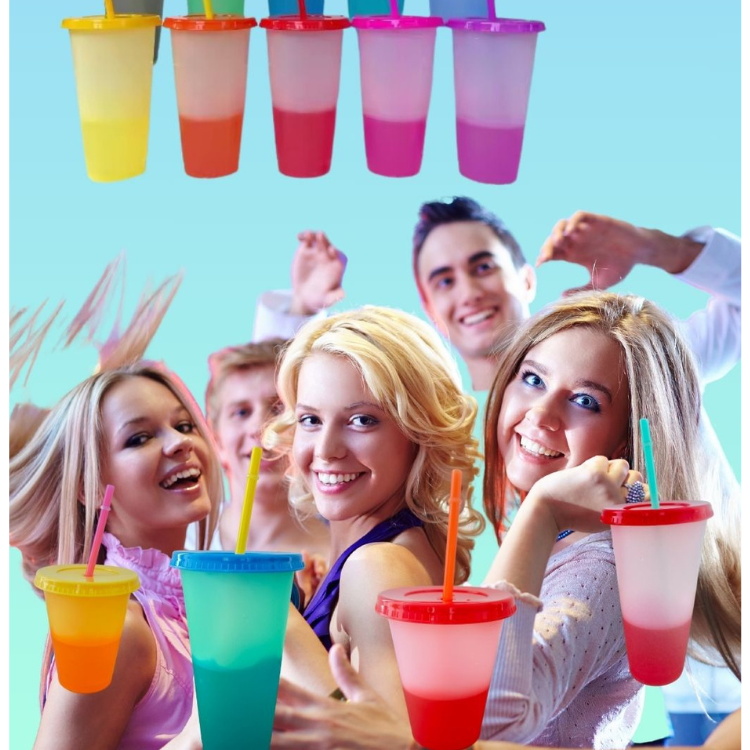
| Comparison factor | Color changing cups | Neon LED drinkware |
|---|---|---|
| Main effect | Temperature-responsive color transformation | Electrically powered illumination |
| Best viewing conditions | Sufficient ambient light to see the color and artwork | Dark or dim environments |
| Power requirements | None for the thermochromic effect | Batteries or another specified power source |
| Guest interaction | Pouring, holding, and watching the transformation | Switching on, selecting modes, or triggering model-specific effects |
| Branding opportunity | Color reveals, contrasting logos, hidden graphics | Illuminated silhouettes, printed logos, coordinated light colors |
| Operational concerns | Activation temperature, abrasion, cleaning compatibility | Runtime, controls, battery security, cleaning compatibility |
| Typical purchasing priority | Reliable transformation and readable artwork | Reliable illumination and manageable electronics |
| Strongest use case | Interactive beverage promotions and take-home merchandise | Nightclub tables, evening activations, and dark-event visibility |
These are category-level distinctions. Actual performance depends on the selected material, cup construction, decoration, and electronic design.
Thermochromic materials change appearance as their temperature changes. Commercial systems commonly use microencapsulated leuco dyes, while liquid crystal systems use temperature-dependent optical changes.
For drinkware, the effect may be incorporated into the cup material or applied through a suitable surface decoration process.
A cold beverage can produce a visible transformation when it brings the responsive material into its designed temperature range. However, not every thermochromic cup changes in the same direction. Some become colored when cooled; others reveal underlying artwork as a responsive layer becomes lighter or transparent.
The practical lesson is straightforward: specify the starting appearance, activated appearance, and intended beverage temperature separately.
Photochromic products are different. They respond to light exposure rather than beverage temperature. Buyers should not treat "sunlight-changing" and "cold-changing" cups as interchangeable.
"Neon LED drinkware" usually describes a neon-like appearance created by LEDs, not traditional neon gas lighting.
Commercial products may offer steady illumination, flashing effects, or multiple colors. Controls and activation methods vary by model.
Unlike thermochromic cups, LED drinkware emits light. This makes the illuminated portions visible in dark surroundings without relying entirely on ambient lighting.
However, a glowing cup does not automatically produce a readable logo. Light placement, cup transparency, beverage color, and printed artwork can all affect the final result.
Request a working sample rather than approving the product from a promotional photograph.
Custom color changing cups are particularly useful when the beverage itself should trigger the brand experience.
Examples include:
- A cold drink revealing a campaign message.
- A contrasting background appearing behind a permanent logo.
- A two-stage design encouraging guests to photograph the transformation.
- A reusable promotional cup extending the campaign beyond the event.
The most effective design gives guests an understandable visual payoff. A subtle shade change may be attractive, but a clear reveal is easier to recognize quickly.
My recommendation is to design the transformation around one message. Multiple hidden slogans and competing graphics can make the effect harder to understand.
LED drinkware is a stronger starting point when the objective is to make tables, guests, or branded service moments visible in low light.
Potential applications include:
- VIP table packages.
- Evening product launches.
- Nightclub anniversary events.
- Branded cocktail presentations.
- Outdoor events continuing after sunset.
The distinction is visibility versus recognition. Guests may notice an illuminated cup before they can identify its sponsor.
For that reason, test logo readability at normal viewing distance—not only in a close-up product image.
A thermochromic design has at least two visual states. Both deserve artwork approval.
Consider:
1. Whether the logo remains visible before activation.
2. Whether the activated color matches the campaign's visual direction.
3. Whether condensation obscures small text.
4. Whether the transformation remains obvious with the intended beverage.
5. Whether the decoration survives the required cleaning and handling.
A permanent brand mark combined with a changing background is one practical concept to discuss with the manufacturer. It preserves identification while adding interaction.
Exact color matching should be evaluated on physical samples. A digital mockup cannot fully represent the behavior of a responsive pigment.
For LED drinkware, approve the product with its lights both on and off.
Ask the supplier to confirm:
- Available illumination colors and modes.
- Whether the lighting is fixed or selectable.
- Logo placement relative to the light source.
- Decoration compatibility with the chosen cup.
- Whether individual units can coordinate automatically.
Do not assume that matching LED colors means synchronized lighting. True coordination requires an appropriate control system.
Also avoid assuming that a light-up cup can reproduce a precise corporate color under every setting.
Neither category is universally cheaper. Material, volume, artwork, packaging, electronics, and delivery terms influence the quotation.
A useful comparison includes more than the purchase price.
Budget for:
- Cup material and construction.
- Responsive pigment or decoration.
- Printing complexity.
- Development samples.
- Packaging and freight.
- Replacements and cleaning.
Removing batteries from the workflow can simplify preparation, but it does not prove that every thermochromic product has a lower landed cost.
Add the costs of:
- Electronic components.
- Batteries or charging arrangements.
- Pre-event function checks.
- Staff preparation.
- Replacement units.
- End-of-life battery and electronics handling.
A useful internal calculation is:
Cost per successful use=Product, delivery, preparation, cleaning, replacement, and disposal costs/Completed usable guest servings
This is a planning framework, not an industry benchmark. Define "successful use" consistently before comparing quotations.
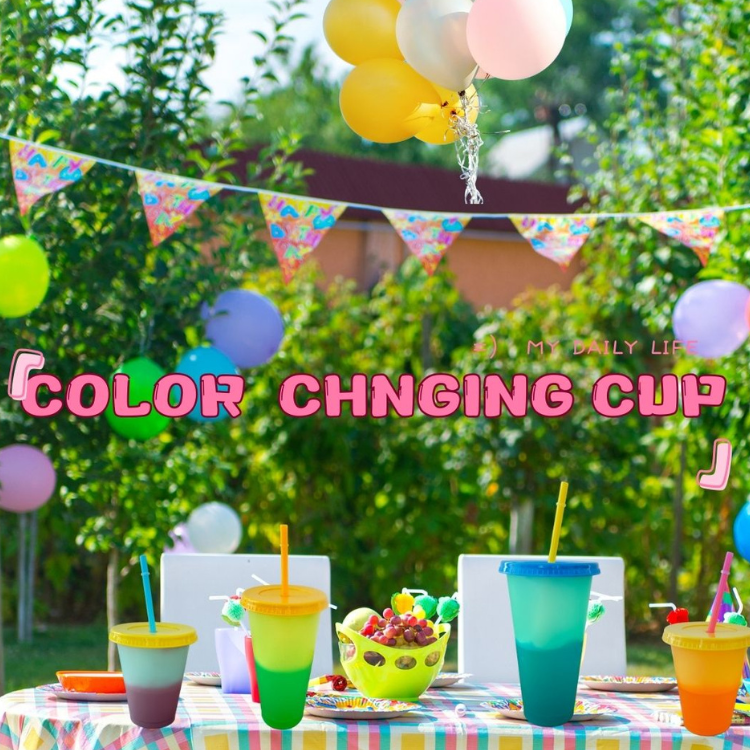
A color-changing effect or illuminated base does not establish food-contact suitability.
The complete article must be assessed for its intended use, including relevant materials, decorations, beverage conditions, and repeated-use expectations.
The U.S. Food and Drug Administration evaluates food-contact substances using migration and toxicological information. European requirements similarly address the transfer of constituents from food-contact materials into food.
Request documentation that matches the actual product configuration. A report for an undecorated cup or unrelated resin may not cover the finished customized article.
Also specify whether the cup will hold cold drinks, warm beverages, acidic cocktails, or alcoholic drinks.
If the product contains button or coin batteries, additional requirements may apply.
For covered products sold in the United States, requirements include secure battery compartments, performance testing, and applicable warnings.
An adult-oriented venue does not eliminate foreseeable exposure outside the nightclub. A promotional cup may later enter a household.
Ask the supplier to identify the battery type, applicable requirements, and supporting documentation before placing a bulk order.
For thermochromic cups, repeated heat exposure, abrasion, cleaning chemicals, and light exposure may affect the responsive material or decoration, depending on formulation.
For LED drinkware, cleaning depends on the construction and protection of the electronic components.
Do not infer that a product is washable simply because it holds liquid. A detachable base also does not prove that the remaining cup is dishwasher-safe.
Obtain written cleaning instructions and test the actual venue procedure.
A battery-free cup avoids battery-related handling, but that alone does not establish a lower overall environmental impact.
Material selection, lifespan, transport, cleaning, and disposal all matter.
For LED products containing lithium-ion batteries, the U.S. Environmental Protection Agency advises separate battery or electronics collection rather than household garbage or ordinary recycling bins.
A credible purchasing brief should therefore ask:
- How many uses are realistically expected?
- Can staff clean and recover the cups?
- Can electronic components be separated safely?
- Which local collection systems accept the discarded product?
Avoid unsupported labels such as "eco-friendly" or "zero-impact."
Before approving production, test both categories against the same event brief.
Use the intended drinks, serving temperatures, ice levels, and venue lighting.
For color changing cups, check whether the cup wall reaches the required activation conditions.
For LED drinkware, evaluate illumination with the actual beverage inside.
Photograph each sample:
- Before and after activation.
- With and without camera flash.
- At table distance.
- In a typical guest-held position.
- With condensation present.
Check whether the brand remains identifiable without editing the photograph.
Ask staff to prepare, serve, collect, and clean a small batch.
Record preparation time, activation failures, confusing controls, stacking problems, and cleaning difficulties.
For LED samples, measure runtime in the selected mode. Do not substitute an unspecified supplier claim for a test under your intended conditions.
Agree on acceptable appearance, functionality, decoration quality, and cleaning performance.
Retain approved samples as references for production inspection.
The following scenarios are planning examples, not documented customer case studies.
Guests receive chilled drinks at a well-lit sampling station, then move into an evening entertainment area.
Color changing cups are a strong candidate because the pouring moment creates a visible reveal. The activation area provides enough light to see the transformation.
A limited LED option could support the later evening experience without complicating every serving.
The main objective is to make premium service recognizable across a dim room.
LED drinkware is the stronger candidate because it produces its own illumination.
The buying decision should still consider logo readability, battery security, runtime, and staff handling. A dramatic glow that disrupts service is not a successful branding solution.
Choose color changing cups when you want guests to experience a beverage-triggered transformation. Choose neon LED drinkware when low-light visibility is the primary objective.
For a customized thermochromic project, contact Qingdao Focus On Color Industry & Trade Co., Ltd. with your target market, cup capacity, beverage temperature, artwork, quantity, and event schedule.
Request an OEM/ODM feasibility review and physical samples before committing to production. Treat LED drinkware as a separate sourcing and validation track unless its availability and specifications are explicitly confirmed.
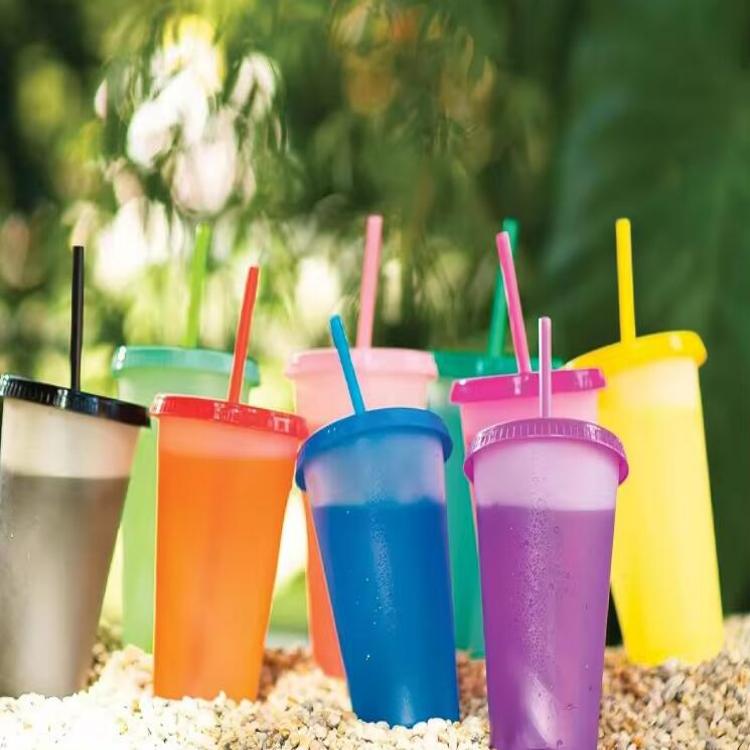
They can work in illuminated bar areas or under suitable table lighting. However, thermochromic cups do not produce their own light. Their visual transformation becomes harder to see as ambient light decreases.
Usually not. The term commonly describes a neon-like visual effect produced by LEDs. Confirm the lighting technology and power source in the product specification.
Yes, depending on the material, decoration method, and product design. Approve physical samples to check adhesion, visibility, and appearance in every relevant state.
Color changing cups are a strong candidate when cold beverage service should trigger the interaction. Confirm that the chosen activation range matches real serving conditions.
Potentially, but reuse depends on construction, cleaning compatibility, decoration durability, and electronic protection. Require model-specific instructions and validate the intended cleaning routine.
Use the same capacity, quantity, artwork, packaging, testing expectations, and delivery terms. For LED drinkware, also specify batteries, lighting modes, runtime expectations, and replacement arrangements.
1. Qingdao Focus On Color Industry & Trade Co., Ltd.; more than 13 years of production experience, stated product categories, and OEM/ODM capabilities. These company statements were supplied in the project brief and were not independently verified.
2. LCR Hallcrest. ["When Temperature Talks: How Thermochromic Pigments Transform Materials."] Technical explanation of microencapsulated leuco dyes, activation temperatures, and differences from liquid crystal systems. [l-i.co]
3. Chemistry Education Xchange. ["Chemical Activities Involving Reversible Thermochromic Pigments."] Background on thermochromic mechanisms and their use in plastic cups. [chemedx]
4. Party Glowz. ["LED Light Up Cups, Glasses, Barware & Drinkware."] Commercial examples supporting the discussion of battery-powered illumination, colors, and lighting modes; not independent evidence of product quality. [partyglowz]
5. U.S. Food and Drug Administration. ["Food Packaging & Other Substances That Come in Contact with Food: Information for Consumers."] Basis for discussion of food-contact substances, migration, and toxicological evaluation. [fda]
6. European Parliamentary Research Service. ["Food Contact Materials—Regulation (EC) 1935/2004."]581411_EN.pdf) Background on the European food-contact framework and migration concerns. [europarl.europa]581411_EN.pdf)
7. European Printing Ink Association. ["Guidance on Migration Test Methods for the Evaluation of Substances in Printing Inks and Varnishes for Food Contact Materials."] Supports finished-article evaluation under relevant conditions of use. [eupia]
8. U.S. Consumer Product Safety Commission. ["Button Cell and Coin Battery Business Guidance."] Basis for battery-compartment, testing, and warning considerations. [cpsc]
9. U.S. Environmental Protection Agency. ["Used Lithium-Ion Batteries."] Guidance on separate collection and recycling of lithium-ion batteries and devices containing them. [epa]


