+86 18560646018

Views: 238 Author: Focus Color Publish Time: 2026-09-24 Origin: Site


Content Menu
● What Creates an Immersive Reading Environment?
● Scented Bookmarks: A Personal and Portable Reading Experience
>> Why Scented Bookmarks Work for Books and Gifts
>> Scented Bookmark Advantages
>> Limits of Scented Bookmarks
● Digital Diffusers: Building a Room-Level Reading Atmosphere
>> Why Digital Diffusers Create Stronger Ambient Impact
>> Digital Diffuser Advantages
>> Limits of Digital Diffusers
● Scented Bookmarks vs. Digital Diffusers: Full Comparison
● How to Choose the Right Format
>> Choose Scented Bookmarks When You Need
>> Choose Digital Diffusers When You Need
>> Consider a Combined Strategy
● Expert Guidance on Scent Selection for Reading Spaces
● A Practical Scent Development Process
● Why Manufacturing Experience Matters
● FAQ
>> 1. Are scented bookmarks safe to use inside books?
>> 2. How long does fragrance last on a scented bookmark?
>> 3. Can scented bookmarks be customized with a logo and artwork?
>> 4. Are digital diffusers suitable for bookstores and libraries?
>> 5. What is the best fragrance for a reading room?
>> 6. Can a scented bookmark and digital diffuser use the same fragrance?
>> 7. What should B2B buyers prepare before requesting a quotation?
A truly immersive reading environment is not created by lighting and silence alone. Scented bookmarks and digital diffusers offer two very different ways to add fragrance to the reading experience: one creates a personal, page-level sensory moment, while the other builds an ambient atmosphere across an entire space.
For publishers, bookstores, subscription-box brands, hotels, libraries, gift companies, and promotional-product buyers, the choice is not simply "paper fragrance versus home fragrance." It is a decision about portability, brand recall, personalization, cost structure, scent control, safety documentation, and user comfort. As a manufacturer with more than 13 years of experience in color-changing, temperature-sensitive, liquid-crystal thermometer, and fragrance-related products, Qingdao Focus On Color Industry & Trade Co., Ltd. sees this distinction clearly: the most effective product is the one that matches the reader's setting and the brand's intended interaction.

Reading is inherently personal. A reader may be at home, on a train, in a café, in a hotel room, or inside a quiet library. The ideal sensory enhancement should support the book without competing with it.
Fragrance can contribute to atmosphere because scent is strongly associated with emotion, familiarity, and memory. However, scent performance is never universal. Its effect depends on several practical factors:
- Intensity: The fragrance should be detectable but not distracting.
- Congruence: The scent should match the story, genre, brand, or reading location.
- Control: Readers should be able to avoid, reduce, or remove the scent if desired.
- Duration: The fragrance should last for the planned use period.
- Personal sensitivity: Some readers prefer fragrance-free spaces or may be sensitive to strong aromas.
- Format: A portable reading accessory requires a different scent-delivery method from a room-based device.
Research on ambient scent has found that consumer reactions are shaped not only by whether a fragrance is pleasant, but also by the context, the level of intensity, the user's expectations, and the fit between the scent and the environment. In other words, a vanilla fragrance may feel comforting in a reading nook but may be unsuitable for a serious academic library or a shared public space.
The best reading fragrance strategy is therefore intentional rather than excessive.
A scented bookmark is a functional reading accessory infused with fragrance. It can be produced in paper, coated card, specialty paperboard, laminated structures, or customized materials depending on the desired scent retention, printed design, durability, and target price.
Unlike a digital diffuser, a scented bookmark stays close to the book and the reader. It does not fragrance the entire room. Instead, it creates a smaller and more personal sensory interaction when the reader opens a book, turns to a saved page, or handles the bookmark.
The strongest advantage of scented bookmarks is their direct relevance to the reading ritual. The product is physically part of the book-reading journey.
A reader receives a bookmark. They place it in a novel. They encounter the fragrance at selected moments. Over time, the scent can become associated with that title, author, campaign, bookstore, or brand.
This makes scented bookmarks particularly useful for:
- Book launches and author events
- Publisher promotional campaigns
- Book subscription boxes
- Educational reading programs
- Museum and cultural-store merchandise
- Hotel welcome gifts
- Literary festivals
- Seasonal retail promotions
- Corporate gifts with a storytelling theme
- Brand sampling and direct-mail campaigns
For example, a historical-fiction publisher could develop a subtle aged paper, cedarwood, tea, or library-inspired bookmark fragrance. A children's-book brand may prefer a light fruit, candy, or soft floral direction, subject to suitable formulation and product-safety requirements. A romance title could use a gentle rose, peony, or warm vanilla profile. The scent should complement the book's identity rather than attempt to describe every scene.
| Feature | Scented Bookmarks |
|---|---|
| Primary scent zone | Close to the reader and book |
| Portability | Excellent |
| Electricity required | No |
| Personalization | Very high |
| Printed branding area | Large relative to product size |
| Best for | Publishing, gifting, events, direct mail, retail inserts |
| Reader control | High; the bookmark can be removed or stored |
| Fragrance coverage | Local and subtle |
| Reusability | Depends on material, fragrance technology, and handling |
| Shipping practicality | Generally lightweight and compact |
A scented bookmark can also be visually customized with full-color artwork, logos, book imagery, QR codes, author messages, promotional copy, collectible designs, or a themed reading guide. This combines a practical object, print advertisement, and sensory sample in one compact product.
From an industry perspective, that combination is valuable. Promotional items often fail because they are either attractive but impractical, or useful but visually generic. A bookmark has a natural reason to stay with the reader over time.
Scented bookmarks are not designed to scent a whole bedroom, café, store, or library. Their fragrance throw is intentionally limited.
Potential limitations include:
- Fragrance may fade faster if exposed to air, heat, sunlight, or repeated handling.
- The scent is experienced only when the bookmark is near the reader.
- Packaging is important for maintaining fragrance before use.
- Heavy fragrance loading can create an unpleasant first impression.
- Some paper types and printing finishes may affect scent release and longevity.
- A book-related scent must not transfer undesirably to pages, covers, or nearby materials.
For procurement teams, the key question is not "Can a scented bookmark replace a diffuser?" The answer is usually no. The more useful question is: Do we want a product-level sensory touchpoint or a room-level fragrance system?
Digital diffusers are electronic fragrance devices designed to disperse scent throughout a defined area. Depending on the technology, a diffuser may use ultrasonic vibration, heat, fan-assisted diffusion, nebulization, cold-air diffusion, or programmable cartridge systems.
For immersive reading environments, digital diffusers are most suitable when the goal is to shape the atmosphere of a dedicated space rather than enhance one individual book.
A reader may use a diffuser in a home library, bedroom, reading corner, office, or quiet lounge. A business may use one in a bookstore, hospitality setting, premium waiting area, literary café, or branded event space.
The central benefit of a digital diffuser is coverage. It can scent a room continuously or according to a scheduled program.
This makes it useful for spaces where atmosphere is part of the experience:
- Boutique bookstores
- Premium libraries and reading lounges
- Hotels with curated guest-room experiences
- Literary cafés
- Brand showrooms
- Wellness-oriented reading areas
- Large home reading rooms
- Audio-book and lifestyle retail spaces
- Pop-up events and book-launch venues
Digital scenting can also create more consistency than a passive scented product. Depending on the device, the user may control output strength, timer settings, operating intervals, and sometimes scent cartridges.
That flexibility is particularly useful for businesses. A bookstore may wish to scent its lounge only during opening hours. A hotel may choose a soft aroma for the lobby but avoid fragrance in certain guest spaces. A brand activation may use scent only during a scheduled event.
| Feature | Digital Diffusers |
|---|---|
| Primary scent zone | A room or defined commercial space |
| Portability | Moderate to low, depending on model |
| Electricity required | Usually yes |
| Personalization | High for scent selection and scheduling |
| Printed branding area | Limited on the device; stronger in packaging and environment |
| Best for | Homes, bookstores, hospitality, cafés, events |
| Reader control | Moderate; depends on device settings and shared-space rules |
| Fragrance coverage | Broad and adjustable |
| Reusability | High with refills or cartridges |
| Shipping practicality | More complex due to device components and liquid products |
Digital diffusers bring a different set of operational concerns. They require power, maintenance, refill management, cleaning, performance testing, and sometimes replacement parts.
They may also be less appropriate in shared reading areas where some visitors prefer unscented spaces. The larger the scent zone, the more important it becomes to avoid over-diffusion.
Potential challenges include:
- Power access and device placement
- Noise from fans or pumps in quiet environments
- Cleaning and maintenance requirements
- Refill or cartridge supply planning
- Scent strength variations caused by room size, airflow, and ventilation
- Higher shipping volume and cost than a paper bookmark
- User sensitivities in shared environments
- Need for staff instructions in commercial installations
A diffuser may create a beautiful ambient reading space, but it is not a simple printed giveaway. It is an experience-management product.

| Decision Factor | Scented Bookmark | Digital Diffuser | Better Choice |
|---|---|---|---|
| Reading interaction | Directly connected to a book | Connected to the room around the book | Bookmark for book-centered campaigns |
| Atmosphere coverage | Personal and localized | Room-wide or zone-wide | Diffuser for spaces |
| Brand visibility | Strong printed surface and physical retention | More indirect; device and scent create the impression | Bookmark for promotional branding |
| Setup requirement | None | Requires placement, power, and operation | Bookmark |
| Cost per recipient | Typically lower for volume campaigns | Higher due to device and fragrance system | Bookmark for mass distribution |
| Long-term use | Can remain in a book but scent may diminish | Ongoing use with refills | Diffuser |
| Custom printed design | Highly flexible | More limited on device body | Bookmark |
| Control in shared spaces | Reader can remove it easily | May affect everyone in the area | Bookmark |
| Sensory immersion | Intimate and moment-based | Environmental and continuous | Depends on the intended experience |
| Ideal buyer | Publishers, gift brands, event organizers | Hospitality, bookstores, lifestyle spaces | Depends on setting |
The essential distinction is simple:
- Choose a scented bookmark when you want the fragrance to become part of the book, gift, campaign, or reader relationship.
- Choose a digital diffuser when you want fragrance to become part of the room, venue, or service environment.
Before ordering, buyers should identify the actual business goal. A product that performs well in one context may underperform in another.
- A lightweight promotional product for thousands of recipients
- Custom artwork, brand messages, or author illustrations
- A book-related gift that can be mailed, inserted, or handed out
- A tactile collectible that supports reader retention
- A lower-complexity product with no device operation
- A fragrance experience that readers can control individually
- A campaign item for a single title, seasonal promotion, or event
- A curated atmosphere across a physical space
- Continuous or scheduled fragrance delivery
- A premium reading lounge, hotel, café, or bookstore experience
- A scent signature that customers encounter repeatedly
- Adjustable output for different times of day
- A reusable solution rather than a single promotional item
- Stronger environmental immersion than a passive paper product can provide
For premium campaigns, the best solution may be a two-layer fragrance concept.
A bookstore could use a gentle, consistent ambient scent in its reading lounge while offering matching scented bookmarks at checkout. The diffuser creates the first impression in the space. The bookmark extends that experience beyond the visit.
This approach supports continuity. The reader may later open the book at home, notice the same scent family, and reconnect it with the store or event.
However, matching does not mean making both products equally strong. The diffuser should be calibrated for the space, while the bookmark should deliver a lighter, close-range experience.
The best fragrance for reading is rarely the strongest one. In product development, the most common mistake is confusing scent intensity with scent quality.
A reading environment requires a fragrance that feels present but does not dominate concentration. Heavy perfume, sharp citrus, aggressive spices, or overly sweet gourmand notes may be appealing in short retail interactions but tiring during longer reading sessions.
For most reading-related concepts, consider fragrance directions such as:
- Soft woods: Cedar, sandalwood, light paper accord, or dry amber for classic and literary themes
- Tea and comfort notes: Green tea, black tea, bergamot, soft vanilla, or milk notes for relaxed reading corners
- Fresh botanical profiles: Lavender, gentle herbs, white tea, or airy florals for calm spaces
- Seasonal concepts: Warm spice for autumn campaigns, clean linen for spring releases, or mild citrus for summer reading promotions
- Fantasy and genre-led concepts: Forest, ocean air, rain, garden, fireplace, or old-library-inspired directions
The fragrance should be tested in its final form. A scent that smells balanced in a fragrance bottle may behave differently after being applied to paper, sealed in packaging, stored in heat, or diffused through a machine.
For B2B buyers, a clear development process reduces uncertainty and protects campaign quality.
1. Define the use environment.
Is the product for one reader, a book package, a small reading nook, or a commercial venue?
2. Identify the desired emotional direction.
Choose words such as calm, nostalgic, fresh, luxurious, playful, mysterious, warm, or scholarly.
3. Select the delivery format.
Decide whether the scent should stay near the pages or fill a physical space.
4. Develop fragrance options.
Review several scent directions rather than approving the first option. Different audiences may interpret the same scent differently.
5. Test intensity and longevity.
Test the product in realistic conditions, including packaging, transport, opening, and repeated use.
6. Review material compatibility.
For scented bookmarks, evaluate printing, coatings, paper structure, fragrance retention, and migration risk. For digital diffusers, assess fluid compatibility, diffusion performance, and refill operation.
7. Confirm documentation and quality requirements.
Fragrance ingredients should be evaluated against applicable safety and product-use requirements. The International Fragrance Association maintains standards intended to support the safe use of fragrance ingredients through scientific evaluation and ongoing review.
8. Run a small pilot before mass production.
A pilot can reveal issues with scent strength, packaging seals, transport temperature, consumer response, or device placement.
Scented promotional products may look simple, but reliable production requires control over several connected elements: fragrance formulation, substrate selection, printing, sealing, packaging, storage conditions, and batch consistency.
For a customized scented bookmark project, the manufacturer should be able to discuss:
- Material options and thickness
- Print process and color accuracy
- Fragrance direction and loading method
- Scent-retention expectations
- Individually sealed or bulk-packaging options
- Shape, hole, tassel, or die-cut customization
- Private-label and OEM/ODM requirements
- Sampling and production lead time
- Quality inspection procedures
- Export packaging and shipping suitability
At Qingdao Focus On Color Industry & Trade Co., Ltd., the value of an OEM/ODM partnership lies in connecting visual design, material performance, fragrance effect, and production stability. A bookmark is not only a printed card. A diffuser is not only a fragrance device. Each is a sensory product that must perform consistently in the customer's real-world setting.
Scented bookmarks are the stronger choice for book-centered promotions, author campaigns, retail giveaways, subscription boxes, and personalized gifts. They are portable, brandable, low-friction, and naturally connected to the reading habit.
Digital diffusers are the stronger choice for home libraries, bookstores, cafés, hotels, and premium reading spaces where the goal is to shape a broader atmosphere over time.
If your business wants readers to remember a specific book, campaign, author, or brand after they leave, start with a customized scented bookmark. If you want visitors to feel a distinctive atmosphere the moment they enter a space, invest in a controlled digital diffuser program.
Ready to create a custom fragrance experience for your reading-related brand? Contact Qingdao Focus On Color Industry & Trade Co., Ltd. to discuss OEM/ODM scented bookmarks, fragrance concepts, custom packaging, and product solutions tailored to your market, campaign scale, and brand story.
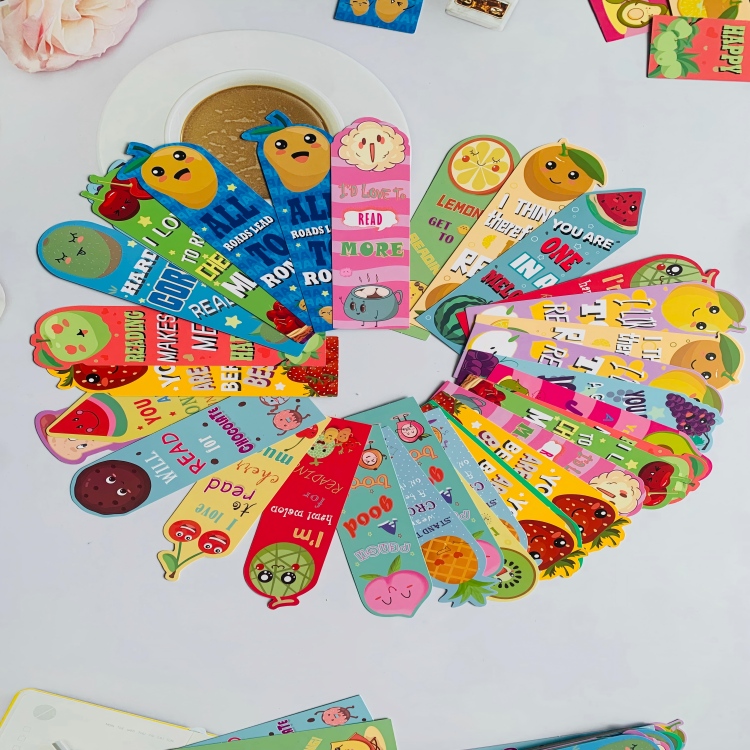
Scented bookmarks can be designed for book use when the material, fragrance application method, packaging, and quality controls are selected appropriately. Buyers should request samples and test them with the intended book paper, cover material, storage conditions, and campaign duration before placing a large order.
Fragrance longevity varies based on the scent formula, material, fragrance-loading process, packaging seal, storage temperature, exposure to air, and how frequently the bookmark is handled. Individually sealed packaging generally helps preserve scent before the user opens the product.
Yes. Scented bookmarks can be customized with logos, brand colors, illustrations, promotional messages, QR codes, book-cover artwork, custom shapes, tassels, and packaging. They are especially suitable for publishers, bookstores, events, and gift brands that need a high-visibility printed promotional item.
Digital diffusers can work well in bookstores, reading lounges, cafés, and selected hospitality spaces. In libraries and other shared quiet environments, fragrance should be subtle, carefully placed, and optional where possible because visitors may have different scent preferences or sensitivities.
There is no single best fragrance. Soft woods, tea notes, mild botanicals, light vanilla, paper-inspired accords, and gentle seasonal fragrances are often more suitable than intense, sharp, or very sweet aromas. The correct choice depends on the audience, space, genre, and desired brand mood.
Yes, but the fragrance should be adjusted for each format. A room diffuser needs controlled airborne diffusion, while a scented bookmark needs close-range performance and appropriate retention in its material and package. The same fragrance theme may be used, but it should not automatically use the same concentration or delivery approach.
Prepare your target quantity, preferred dimensions, artwork requirements, fragrance concept, packaging preference, destination market, desired delivery date, and whether you need OEM/ODM support. Sharing these details helps a manufacturer recommend suitable materials, production methods, and quality-control steps.
1. [International Fragrance Association — IFRA Standards]
2. [International Fragrance Association — Safe Use and Fragrance Science]
3. [Consumer Evaluation of Ambient Scent: The Impact of Context]
4. [The Effects of Scent on Consumer Behaviour: A Systematic Review]
5. [The Presence of a Pleasant Ambient Scent in a Fashion Store]


