+86 18560646018

Views: 241 Author: Focus Color Publish Time: 2026-09-13 Origin: Site


Content Menu
● Top Forehead Thermometer Sticker Suppliers for Arabian Buyers
>> 1. Qingdao Focus On Color Industry & Trade Co., Ltd. — Flexible OEM Partner for Private Labels
>> 2. Chinese Liquid-Crystal Thermometer Sticker Manufacturers — Best for High-Volume Standard Formats
>> 3. Promotional Product and Specialty Printing Suppliers in Yiwu — Suitable for Campaign Orders
● Technical Requirements Buyers Should Specify
>> 1. Temperature Display Range
>> Inconsistent Temperature Response
>> Misleading Compliance Language
>> Artwork Errors in Arabic Packaging
>> Shipping Damage from Heat and Humidity
● An Industry Insider Check Few Buyers Request
● Buyer's Guide for Arabia Procurement Teams
>> Step 1: Define the Product Claim
>> Step 2: Create a Written RFQ
>> Step 3: Request Three Sample Types
>> Step 4: Audit the Factory Remotely or On Site
>> Step 5: Verify Certificates Correctly
>> Step 6: Plan Import Logistics Early
>> 1. How can I verify whether a supplier's ISO certificate has expired?
>> 2. Can a forehead thermometer sticker be sold as a medical device in Saudi Arabia or the UAE?
>> 3. What test should I require to confirm temperature accuracy?
>> 4. What is a realistic MOQ for custom forehead thermometer stickers?
>> 5. Why did my approved sample look correct, but the delivered batch respond differently?
Forehead thermometer stickers are simple products, but reliable sourcing is not simple. For distributors, pharmacies, maternity brands, hospitals, travel retailers, and promotional-product buyers in Arabia, product accuracy, skin-contact material safety, temperature-response consistency, print durability, and documentation can matter far more than the unit price.
Arabia is primarily a demand and distribution market, rather than a concentrated manufacturing base for liquid-crystal forehead thermometer stickers. Most scalable production capacity for these products is located in China's specialized printing, functional-material, and liquid-crystal-temperature-indicator supply chains. Arabian buyers commonly work with regional importers and distributors while sourcing OEM or private-label products directly from Asian manufacturers.
This article evaluates practical suppliers and supplier types for buyers in Saudi Arabia, the UAE, Oman, Qatar, Kuwait, Bahrain, Jordan, and other Arabian markets. The focus is not on promotional claims; it is on manufacturing suitability, customization depth, quality-control visibility, documentation readiness, and fit for long-term procurement.
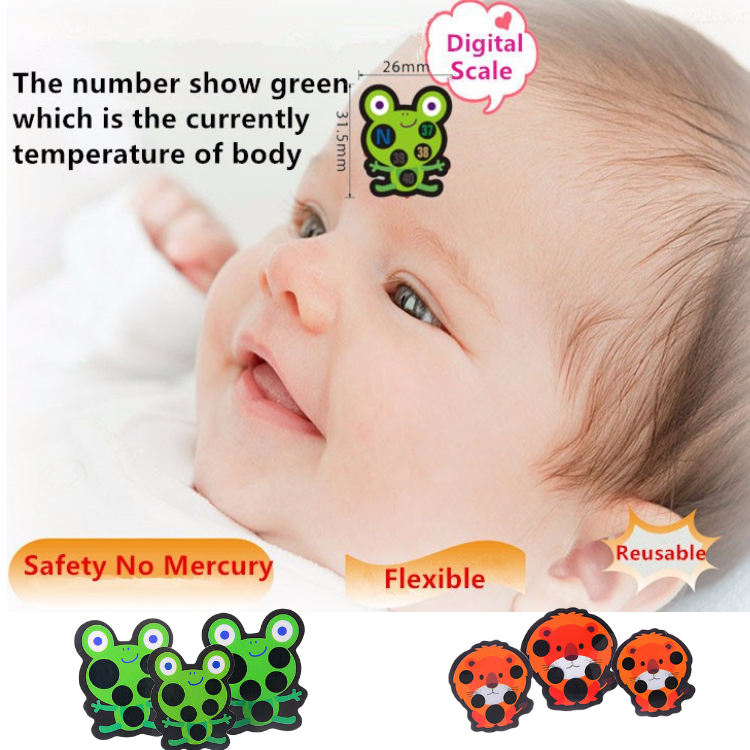
A forehead thermometer sticker should not be selected solely because it changes color or displays a temperature band. Buyers should assess whether the supplier can consistently manufacture the product specified in the purchase order—and prove that consistency from batch to batch.
The companies and supplier categories below were assessed against the following procurement criteria:
- Product specialization: Experience with liquid-crystal thermometers, temperature-indicator labels, thermochromic materials, or related printing products.
- Material control: Ability to specify substrate, adhesive, liquid-crystal layer, lamination, protective film, and skin-contact packaging.
- Temperature-response performance: Defined display range, response speed, readable color transition, calibration process, and batch consistency.
- Customization capability: OEM logo printing, private-label packaging, Arabic/English instructions, custom temperature scales, barcode labels, and retail-ready cartons.
- Quality management: Incoming-material inspection, in-process checks, final visual inspection, temperature verification, packaging control, and lot traceability.
- Compliance support: Availability of relevant test reports and documentation for destination-market review, including RoHS, REACH, SDS, material declarations, and product-specific conformity evidence where applicable.
- Delivery reliability: Production planning, lead-time transparency, export experience, carton optimization, and shipping support to Gulf ports.
- Commercial flexibility: Reasonable MOQ options, willingness to support sampling, and suitability for both emerging brands and volume buyers.
A key point for procurement teams: a forehead thermometer sticker is generally a screening or indicative temperature tool, not automatically a clinical diagnostic device. Product claims, labeling, intended use, registration requirements, and advertising language should be reviewed against the rules of the importing country before market launch. Requirements can differ between Saudi Arabia, the UAE, and other markets.
The Arabian region has strong demand drivers for compact temperature-monitoring products: hot-climate travel, childcare, pharmacy retail, first-aid kits, school and nursery use, hospitality, promotional campaigns, and distribution to remote or mobile populations. Demand can also rise during seasonal illness periods or public-health awareness campaigns.
However, most countries in the region do not have a large dedicated industrial cluster for manufacturing liquid-crystal forehead thermometer stickers at scale. Buyers therefore usually choose one of three sourcing routes:
| Sourcing Route | Typical Buyer | Main Strength | Main Limitation |
|---|---|---|---|
| Direct manufacturer in China | Brand owners, importers, distributors | Lower factory-level cost, deeper OEM options, direct technical communication | Requires supplier qualification and import management |
| Arabian regional distributor | Pharmacies, local retailers, smaller buyers | Faster local delivery and easier replenishment | Usually less packaging and product customization |
| Trading company or sourcing agent | First-time importers and mixed-product buyers | Consolidation and supplier coordination | Less direct control over factory processes |
| Local printing converter | Promotional buyers and short campaigns | Local language printing and quick campaign execution | Often dependent on imported liquid-crystal components |
For large or recurring procurement programs, direct factory engagement is typically more suitable when the buyer requires a specific temperature range, bilingual packaging, a custom visual identity, or controlled batch documentation.
China's advantage comes from established supply networks across functional inks, liquid-crystal materials, adhesive labels, flexible packaging, screen printing, and export logistics. Qingdao, Shenzhen, Dongguan, Yiwu, Ningbo, and parts of Zhejiang and Guangdong are connected to relevant printing, packaging, consumer-product, and specialty-material supply chains. Qingdao also offers practical port access for export-oriented orders.
The following list combines direct manufacturing options and practical supplier channels relevant to buyers in Arabia. Capacity, MOQ, certifications, and lead times must always be confirmed for the exact product design, temperature range, packaging, and order volume.
Established: 2013
Location: Qingdao, Shandong, China
Main markets: International export markets, including North America, South America, and Eastern Europe
Core products: Liquid crystal thermometer stickers and cards, thermochromic products, photochromic products, scratch-and-sniff products, scent-printing products, and promotional packaging items
Suitable for: Small and mid-sized brands, distributors, promotional-product importers, private-label projects, and buyers needing customized communication support
Qingdao Focus On Color Industry & Trade Co., Ltd. is a practical option for buyers that need more than a generic forehead thermometer sticker. The company's product range includes liquid-crystal thermometers and other functional color-changing products, giving it relevant experience in temperature-responsive printing and consumer-oriented customization. Public supplier information identifies the company as established in 2013 and focused on international markets.
For Arabian buyers, its main value lies in project flexibility. Rather than treating every order as a standard catalog transaction, the company is positioned to support customized temperature-indicator products, including branded visual design, logo integration, packaging adaptation, promotional formats, and OEM/ODM development. This is especially useful for pharmacy chains, maternity-care brands, children's-product distributors, health-promotion organizations, and corporate gift suppliers that need Arabic/English packaging or market-specific instructions.
Its Qingdao location also provides an export-logistics advantage. Qingdao Port is one of China's major international shipping hubs, which can support containerized or consolidated cargo movements to Gulf destinations. For buyers importing to Jeddah, Dammam, Jebel Ali, Hamad Port, Sohar, or Shuwaikh, early planning around shipping route, cargo volume, and carton dimensions can reduce avoidable cost.
Strengths for procurement teams
- Broad functional-material and liquid-crystal-product background.
- Suitable for custom designs, promotional adaptations, and private-label packaging.
- More accessible for developing brands than highly rigid, high-MOQ factories.
- Product portfolio includes temperature-sensitive, photochromic, and scent-related products, allowing cross-category campaign development.
- Export-oriented operating model and proximity to Qingdao's logistics infrastructure.
- Potential fit for buyers requiring direct communication during artwork approval, sample development, and packaging confirmation.
OEM/ODM scope to discuss
- Forehead thermometer sticker temperature range and display format.
- Logo, brand colors, custom artwork, and retail card design.
- Arabic-English bilingual instructions and warning labels.
- Individual pouch, paper card, booklet, or kit packaging.
- Pharmacy display packs, maternity kits, travel kits, and promotional inserts.
- Bulk-packed versus retail-ready configurations.
- QR codes, lot codes, barcodes, and distributor labels.
Buyer verification questions
- What liquid-crystal temperature range is recommended for the intended use?
- Can the supplier provide a temperature-response sample from the proposed production construction?
- What is the adhesive type, and is it designed for direct skin contact or single-use external placement?
- What documentation can be supplied for the chosen substrate, ink, adhesive, and packaging materials?
- How is each production lot checked for temperature-display accuracy and print integrity?
- Can the company provide a pre-production sample using final artwork and final packaging language?
Public listings describe Qingdao Focus On Color as a manufacturer/factory and trading company offering liquid-crystal thermometers, color-changing products, scratch-and-sniff stickers, and related printed items. Its reported product scope includes liquid-crystal thermometer stickers or cards and air-freshener-card products.
Established: Varies by factory
Typical production bases: Zhejiang, Guangdong, Jiangsu, Shandong, and other export-oriented manufacturing regions
Main markets: Global wholesale, promotional products, first-aid supplies, pharmacy retail, children's products
Suitable for: Large distributors, standard-product importers, and buyers with stable annual volume
China remains the most practical direct-sourcing base for standard liquid-crystal forehead thermometer stickers because its manufacturers can combine screen printing, liquid-crystal encapsulation, die cutting, laminate conversion, pouches, and export packaging in one supply chain.
These factories often offer familiar formats such as:
- Disposable forehead temperature strips.
- Multi-use liquid-crystal temperature cards.
- Baby-care temperature strips.
- Forehead thermometers with color-coded fever zones.
- Cartoon-shaped thermometer stickers for pediatric use.
- Paper-card-mounted retail packs.
- Promotional thermometer labels for healthcare campaigns.
The main advantage is scale. A factory focused on standardized temperature strips can usually quote aggressively when a buyer accepts standard temperature windows, standard shapes, and standard packaging. The trade-off is reduced flexibility. Some high-volume factories may require substantial MOQ commitments before changing scale layout, liquid-crystal material configuration, adhesive construction, or custom packaging.
For Arabian buyers, this route is suitable when the product specification is already validated and annual demand is predictable. It is less suitable for a brand still testing product-market fit or developing a new bilingual retail concept.
Important qualification point: Request a sample from the same liquid-crystal range and substrate construction quoted for production. A visually similar sample with a different adhesive, coating thickness, or temperature window is not sufficient.
Established: Varies by supplier
Location: Yiwu, Zhejiang, China
Main markets: Promotional-product wholesalers, gift distributors, event suppliers, retail importers
Suitable for: Health campaigns, school initiatives, promotional kits, charity programs, and high-variety mixed orders
Yiwu is a major trading and sourcing center for small consumer goods, promotional items, stationery, novelty products, and packaging. For forehead thermometer stickers, local suppliers are often most useful where the purchase is part of a wider promotional kit: for example, a children's health pack containing a thermometer strip, branded pouch, sticker sheet, sanitizer-card holder, or educational leaflet.
The advantage of Yiwu-based sourcing is speed in product combination and packaging variety. A buyer may be able to consolidate multiple low-value campaign components into one shipment. The limitation is that not every seller is the original manufacturer of the temperature-sensitive component.
For this reason, procurement teams should identify whether the supplier is:
1. The factory producing the liquid-crystal thermometer sticker.
2. A printing converter buying temperature-indicator components from another source.
3. A trader assembling multiple products.
This distinction matters because the trader may be efficient for campaign logistics but unable to answer technical questions about liquid-crystal formulation, calibration, aging tests, or adhesive suitability.
Established: Varies by company
Typical production bases: Shenzhen, Dongguan, Guangzhou, and surrounding Pearl River Delta locations
Main markets: Consumer packaging, toys, apparel, promotional goods, printed electronics, novelty retail
Suitable for: Brands requiring sophisticated artwork, special finishes, color-changing packaging, or multi-product campaigns
Guangdong has a broad industrial ecosystem for printing, consumer products, electronics, plastic conversion, packaging, toys, and export trade. This makes the region useful for buyers that want to combine a forehead thermometer sticker with a more developed branded experience, such as:
- Temperature-sensitive child-care packaging.
- Educational fever-awareness cards.
- Thermochromic labels combined with printed instructions.
- Retail counter displays.
- QR-linked brand campaigns.
- Multi-layer gift sets.
- Promotional inserts for baby-care or wellness products.
Suppliers in this area may be particularly strong in printing complexity, packaging finishes, digital artwork handling, and mass-market product presentation. However, buyers should separate visual capability from measurement performance. A supplier can produce excellent packaging while having limited control over the actual liquid-crystal indicator layer.
Ask whether the factory controls the temperature-sensitive layer internally, sources it from a named approved material supplier, or relies on a generic purchased component. For health-related applications, a traceable component supply chain is preferable.
Established: Varies by distributor
Location: Saudi Arabia, UAE, and other Gulf markets
Main markets: Hospitals, pharmacies, clinics, schools, retail chains, government tenders
Suitable for: Buyers needing local inventory, domestic invoicing, urgent replenishment, or lower initial quantities
Regional distributors are not normally the original manufacturer of forehead thermometer stickers, but they can be valuable partners for buyers that prioritize speed and local commercial support over deep product customization.
They are often appropriate for:
- Emergency replenishment.
- Small pilot programs.
- Pharmacy test launches.
- Local tender participation.
- Buyers without import capability.
- Organizations needing local invoicing and warehouse delivery.
The main limitation is that local stock may be limited to existing formats and brands. Buyers may not be able to change the temperature scale, artwork, packaging dimensions, or language layout without moving to a direct factory order.
For a long-term branded program, an effective model is often to qualify a direct OEM factory for core products while retaining a regional distributor for short-notice replenishment or local-market service.
The figures below are practical sourcing ranges rather than guaranteed quotations. Actual capacity and MOQ depend on sticker size, temperature window, print colors, pouch format, compliance documents, carton configuration, and seasonal demand.
| Supplier Type / Example | Core Strength | Typical MOQ | Estimated Monthly Capacity | Customization Scope | Documentation to Request | Best Fit |
|---|---|---|---|---|---|---|
| Qingdao Focus On Color Industry & Trade Co., Ltd. | Flexible OEM/ODM, functional printing, liquid-crystal product experience, direct export support | 5,000–20,000 pcs depending on design | Confirm per project | Logo, temperature scale, packaging, bilingual artwork, promotional formats | Product specification, test reports, material declarations, packing data, lot records | Small-to-mid-sized brands and customized projects |
| High-volume Chinese thermometer sticker factory | Low unit cost and standardized mass production | 20,000–100,000+ pcs | Hundreds of thousands to millions | Limited to moderate for standard formats | QC procedure, calibration records, product specification, relevant chemical tests | Established distributors and repeat container orders |
| Yiwu promotional-product supplier | Mixed-product sourcing and campaign assembly | 1,000–10,000 pcs | Varies by upstream factory | Strong packaging and kit assembly; variable product engineering | Factory identity, component source, sample records, packaging specification | Campaigns, giveaways, multi-item kits |
| Guangdong functional-printing supplier | Complex artwork, special printing, retail presentation | 10,000–50,000 pcs | Varies by facility | Strong visual, packaging, and special-effect options | Ink/material data, artwork approval process, temperature test method | Consumer brands and marketing-led products |
| Arabian regional distributor | Fast local availability and local-market support | Carton or case quantity | Inventory based | Usually limited to stock items | Import documentation, local registration status where applicable, shelf-life records | Urgent procurement and local replenishment |
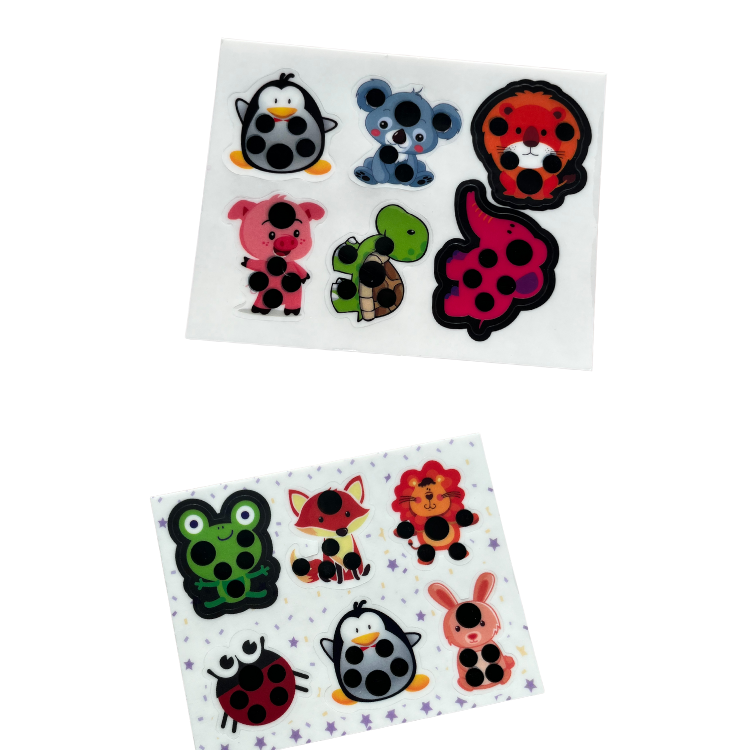
The term "forehead thermometer sticker" can describe several different products. A clear specification prevents disputes and helps factories quote the correct construction.
Define the intended range, not just "fever thermometer." Common formats may display a narrow human-body temperature range, but the exact scale must match the desired market use.
Ask for:
- Display range in °C and, if required, °F.
- Increment size, such as 0.5°C or 1°C.
- Normal, elevated, and warning zone colors.
- Expected response time.
- Viewing angle requirements.
- Ambient operating condition.
- Recommended placement and reading time.
For example, a strip designed for rapid skin-contact screening may perform differently from a card designed to indicate the temperature of a baby bottle, room, or package. Never assume the same liquid-crystal design works for both.
The liquid-crystal component is the functional core. It must be selected for the target temperature range and protected from moisture, ultraviolet exposure, abrasion, and unsuitable chemical contact.
Confirm:
- Whether the response is reversible.
- The calibrated activation range.
- Tolerance between displayed and reference temperatures.
- Expected number of use cycles, if reusable.
- Resistance to humidity and storage heat.
- Shelf-life under sealed storage.
- Protection from direct sunlight during warehousing and shipping.
An important practical issue is that liquid-crystal materials can be sensitive to prolonged high temperatures. For Arabia-bound cargo, containers may experience substantial heat exposure during port storage, inland trucking, or summer handling. Buyers should request storage limits and avoid leaving temperature-sensitive products in uncontrolled containers for extended periods.
The backing material can be PET, PVC-free film, paperboard-supported film, or another laminated construction. The product should remain flat, readable, and stable after storage.
For direct forehead contact, the adhesive and skin-contact design require particular care. Buyers should clarify whether the item is:
- A non-adhesive strip held against the forehead.
- A low-tack adhesive sticker.
- A single-use adhesive item.
- A reusable strip with no adhesive.
- A medical-adjacent consumer product intended for indicative screening only.
A supplier should be able to identify the adhesive system, explain skin-contact suitability, and provide supporting material information where needed.
Arabic-market products often require multilingual packaging. Buyers should ensure the final approved artwork includes:
- Product name.
- Intended use.
- Accurate reading instructions.
- Storage conditions.
- Warnings and limitations.
- Manufacturer details.
- Country of origin.
- Lot number or batch code.
- Production date and shelf-life information, if applicable.
- Distributor/importer information.
- Arabic and English text where required by the target market.
Avoid approving artwork based only on a PDF. Request a photographed or physical pre-production sample because foil pouches, matte laminates, small fonts, and color-coded temperature zones can look different in real production.
A common problem is an unexplained change in the liquid-crystal layer, adhesive, protective film, or pouch material after sampling. The final product may look similar but show slower color transition, poor readability, reduced durability, or different temperature behavior.
How to reduce the risk: Attach a signed product specification to the purchase order. It should identify the temperature range, dimensions, substrate, print layout, pouch construction, packaging, and acceptance criteria. Retain one approved "golden sample" from the final pre-production approval.
A strip may respond correctly in one batch but show a different transition band in another. This can occur if material lots, coating weights, or lamination conditions change.
How to reduce the risk: Require batch-level temperature verification using a documented reference method. Ask the supplier to test a defined sample size from every production lot and include results in the inspection record.
Some suppliers may display generic compliance logos without providing product-specific evidence. A logo alone is not a test report, declaration, registration record, or proof that the product can lawfully be sold with a particular medical claim.
How to reduce the risk: Request complete documents with product identification, issue date, test scope, laboratory information, and validity information where relevant. Match the report's product description to your actual sticker construction and final packaging.
A strong English design can still fail commercially if Arabic text is mistranslated, incorrectly typeset, too small, or missing required product information.
How to reduce the risk: Use a professional Arabic reviewer who understands consumer-product labeling. Verify right-to-left layout, numerical units, medical-adjacent wording, and warnings before mass production.
Liquid-crystal products can degrade if stored outside the supplier's recommended conditions. This is particularly relevant for summer shipments into Gulf ports.
How to reduce the risk: Ask for storage and shipping limitations in writing. Use sealed moisture-resistant packaging, appropriate cartons, desiccant where suitable, and avoid unnecessary container dwell time. For sensitive programs, consider a pilot shipment before committing to a full container order.
One of the most overlooked checks is the thermal-history test after packaging.
Many buyers test a loose sample at room temperature and conclude that the product is acceptable. But a forehead thermometer sticker can perform differently after it has been sealed in its final pouch, packed in a master carton, transported in hot weather, and stored for several weeks.
A stronger approval method is to ask the supplier to perform a controlled post-packaging evaluation:
1. Test the sample before packing.
2. Seal it in the final pouch and final carton.
3. Subject representative samples to agreed storage conditions, including elevated-temperature exposure where appropriate.
4. Allow samples to return to room temperature.
5. Re-test temperature response, readability, adhesion, print condition, and pouch integrity.
6. Compare results against the approved reference sample.
This step can uncover issues caused by pouch chemistry, adhesive migration, inadequate barrier properties, or heat sensitivity—problems that are often invisible during initial sample approval.
Before contacting suppliers, decide what the product is intended to do.
Is it a consumer wellness indicator, a child-care accessory, a first-aid item, a promotional product, or a product marketed for temperature screening? The wording affects the documentation, labeling, quality standard, and possible regulatory review required in the destination market.
Avoid requesting "medical grade" unless you have defined what standard, registration path, test evidence, and market authorization are required.
Your RFQ should contain:
- Product name and intended market.
- Temperature range and unit format.
- Sticker dimensions and shape.
- Required reading time.
- Reusable or single-use requirement.
- Substrate and adhesive preference.
- Artwork file and print colors.
- Packaging format.
- Arabic/English labeling requirements.
- MOQ target.
- Annual estimated volume.
- Destination port.
- Requested Incoterm, such as FOB Qingdao, FOB Ningbo, CIF Jeddah, CIF Jebel Ali, or DDP where appropriate.
- Required documents.
- Sample quantity and target approval date.
A detailed RFQ reduces quotation gaps and makes supplier comparison more meaningful.
Do not rely on one sample only. Request:
- Reference sample: Existing factory product to check visual appearance and readability.
- Customized artwork sample: Confirms dimensions, branding, packaging, and language layout.
- Pre-production sample: Produced using final materials and final mass-production process.
The final pre-production sample should be the benchmark against which the delivered order is inspected.
For recurring orders, conduct a remote video audit or third-party inspection. Focus on real manufacturing controls rather than office presentation.
Ask to see:
- Raw-material storage.
- Liquid-crystal component identification.
- Printing and lamination process.
- Die-cutting process.
- Temperature-response inspection.
- Finished-goods packing area.
- Lot coding process.
- Nonconforming-product segregation.
- Sample retention procedure.
- Export carton markings.
If a supplier cannot explain how it checks the display range or cannot identify the material source, treat that as a procurement warning sign.
To verify whether an ISO certificate is still valid:
- Obtain the full certificate, not only a logo or cropped image.
- Check the certification body name and certificate number.
- Confirm the factory legal name and registered address match the supplier.
- Review the certification scope; it should cover relevant manufacturing or quality-management activities.
- Check issue date and expiry date.
- Search the certification body's public database when available.
- Contact the certification body if the certificate appears unclear or if the legal entity differs.
For product reports, ensure that the tested sample matches the actual production version. A report covering a generic "plastic sticker" does not necessarily validate your liquid-crystal layer, adhesive, ink system, or final pouch.
For Arabia-bound orders, confirm:
- HS code with your customs broker.
- Whether the product requires import registration, product conformity documentation, or specific labeling.
- Whether product claims could move the item into a regulated device category.
- Shipping route and transit time.
- Summer storage risks.
- Carton dimensions and gross weight.
- Palletization requirements.
- Insurance coverage.
- Local importer-of-record obligations.
For Saudi Arabia, buyers should check the current requirements of the Saudi Food and Drug Authority and the Saudi Standards, Metrology and Quality Organization before making clinical or medical claims. For the UAE, confirm the applicable federal and emirate-level requirements based on product classification and sales channel. Regulatory obligations can change, so a local compliance adviser or authorized importer should confirm the final route to market.
For Arabian buyers, the most reliable sourcing approach is to match the supplier model to the project's technical and commercial needs. Regional distributors can be useful for immediate supply and local support, while direct manufacturers in China offer stronger cost control, more meaningful private-label customization, and better scalability for repeat orders.
Qingdao Focus On Color Industry & Trade Co., Ltd. is a relevant starting point for buyers seeking a flexible manufacturer with experience in liquid-crystal thermometers, temperature-sensitive printing, customized packaging, and export-oriented project communication. Its product range and customization orientation make it particularly suitable for small-to-mid-sized brands, pharmacy distributors, promotional-product companies, and buyers developing Arabic-English private-label programs.
Before placing a production order, prepare a clear written specification, validate samples under realistic storage conditions, verify factory documentation, and confirm the import and claims requirements for the destination market. A low unit price is valuable only when the delivered product remains readable, consistent, compliant, and commercially usable after it reaches the end customer.
For a tailored quotation, buyers should send their target temperature range, artwork, packaging format, destination country, estimated quantity, and required documents to Qingdao Focus On Color Industry & Trade Co., Ltd. A structured sample-and-approval process should be completed before mass production.
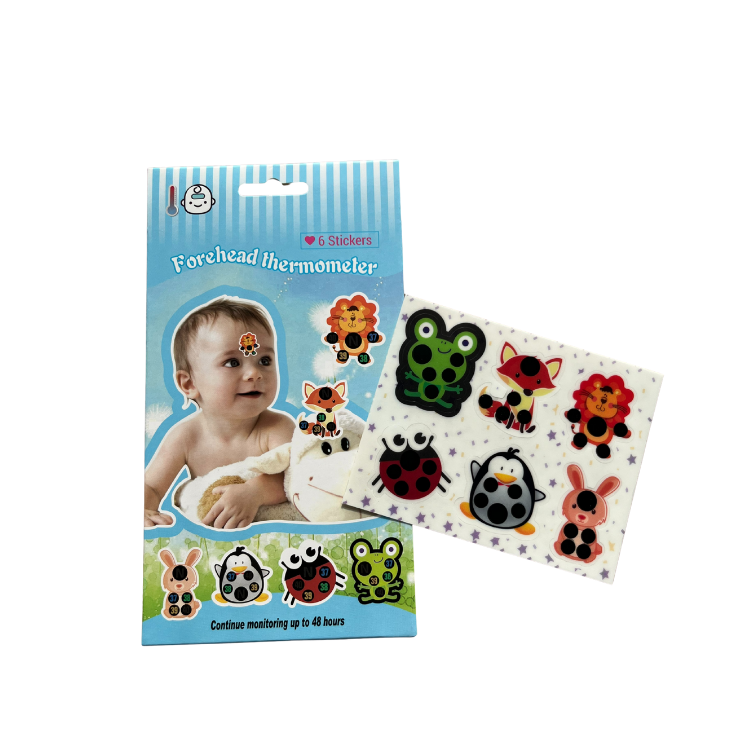
Ask for the full certificate with the certificate number, issuing certification body, issue date, expiry date, legal company name, address, and certification scope. Then check the certification body's verification database or contact the issuer directly. Do not rely on an ISO logo on a website, catalog, or packaging.
It depends on the exact intended use, claims, labeling, product design, and local classification rules. A sticker marketed only as an indicative wellness or screening item may be treated differently from a product claiming to diagnose fever or provide clinical measurement. Confirm requirements with the relevant local authority and your importer before production.
Ask the supplier to define its calibration method, reference instrument, test temperature points, tolerance, sample size, and acceptance criteria. Then verify the product under controlled conditions using a calibrated reference thermometer or temperature-controlled surface. Test both newly produced samples and samples after storage.
For simple logo or packaging customization, many manufacturers may consider orders from approximately 5,000 to 20,000 pieces. Fully customized temperature windows, uncommon shapes, special pouch structures, or dedicated material runs can require much higher MOQs. MOQ should be confirmed after the factory reviews the final artwork and technical specification.
Possible causes include material substitution, different liquid-crystal lot, changed coating weight, altered lamination conditions, exposure to high heat during transit, or a mismatch between the sample and mass-production construction. Prevent this by approving a final pre-production sample, retaining a golden sample, requiring lot-level testing, and using third-party pre-shipment inspection for important orders.
- [Saudi Food and Drug Authority (SFDA)] — Saudi product, medical-device, and healthcare-related regulatory information.
- [Saudi Standards, Metrology and Quality Organization (SASO)] — Saudi standards and conformity information.
- [UAE Ministry of Industry and Advanced Technology] — UAE standards, conformity, and industrial policy resources.
- [UAE Ministry of Health and Prevention] — UAE health-sector and medical-product information.
- [International Organization for Standardization] — Information on ISO management-system standards and certificate-related context.
- [European Chemicals Agency] — Reference information for REACH and chemical-substance compliance.
- [European Commission RoHS Overview] — Information on hazardous-substance restrictions in electrical and electronic equipment.
- [General Administration of Customs of the People's Republic of China] — Official customs and trade information for China.
- [Qingdao Port International] — Port and logistics context for exports from Qingdao.
- [Statista] — Market-research portal for relevant healthcare, consumer-health, and medical-device trend data.


