+86 18560646018

Views: 298 Author: Focus Color Publish Time: 2026-09-28 Origin: Site


Content Menu
● How the Suppliers Were Selected
>> Thermochromic technology affects supplier fit
>> 1. Qingdao Focus On Color Industry & Trade Co., Ltd.
>> 2. Kolortek
>> 3. iSuoChem
>> 5. SMAROL Industry Co., Ltd.
>> 6. Hali Industrial Co., Ltd.
>> 7. New Color Chemical Co., Limited / NewColorChem
>> 8. Qingdao Topwell Chemical Materials Co., Ltd.
>> 10. Hangzhou Tiankai Enterprise Co., Ltd. / TIANKAI
● Buyer's Guide: From Sample to Shipment
>> Specify the effect before requesting prices
>> Use a staged sample approval process
>> Verify the factory and documents
>> Avoid the less-visible formulation trap
● Frequently asked procurement questions
China is a practical sourcing destination for thermochromic products because buyers can find specialty pigments, formulated inks, printed labels, and finished temperature indicators within a broad manufacturing network. That breadth also creates a problem: a supplier that performs well with pigment powder may not be equipped to calibrate a liquid crystal thermometer strip or manage a branded label order.
The market warrants careful supplier selection. A 2026 industry report from Mordor Intelligence estimates the global thermochromic pigments market at USD 2.32 billion in 2026, up from USD 2.16 billion in 2025. It forecasts Asia-Pacific as the fastest-growing region through 2031. These are the research firm's estimates, not audited production figures for the companies below.
Official Chinese customs data offers a broader view of the supply chain. China reported approximately USD 10.10 billion in 2025 exports under HS Chapter 32, which includes dyes, pigments, paints, varnishes, and inks. That figure is not a thermochromic export total: the customs category includes many unrelated products. It does, however, illustrate the scale of China's wider colorant and ink export ecosystem.
For a procurement manager, the decisive question is not "Which company has the longest catalog?" It is "Which company can repeatedly deliver the specified color change, on the specified substrate, with documents that apply to the actual shipped product?" This guide evaluates ten relevant China-based suppliers against that question. They are not presented as a verified ranking by revenue, thermochromic output, or independently audited quality.
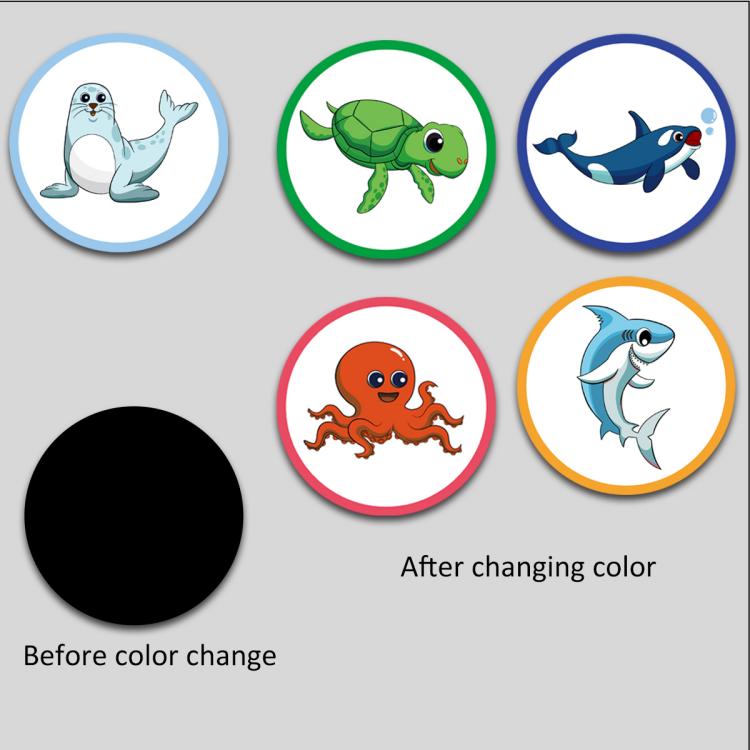
A credible shortlist should be assessed on evidence that can be checked during qualification, not on promotional adjectives. The ten companies below have publicly identifiable thermochromic offerings or closely related temperature-indicating products. Their inclusion reflects different purchasing needs: raw pigments, formulation support, and finished OEM goods.
| Selection dimension | What a buyer should request | Why it matters |
|---|---|---|
| Manufacturing role | Legal entity name, facility address, process flow, and any subcontracted steps | "Manufacturer" can describe a pigment producer, ink formulator, printer, or finished-product assembler. |
| Technical capability | Product data sheet, activation-temperature definition, particle-size information, and substrate compatibility | An attractive color card does not establish performance in your process. |
| Quality control | Lot coding, incoming inspection, retained samples, release criteria, and corrective-action procedure | These controls help identify and contain batch-to-batch variation. |
| Capacity and delivery | Capacity for the specific product, current loading, peak-season lead time, and backup plan | Total company output may say little about thermochromic capacity. |
| Customization | Written scope for color, temperature, ink system, artwork, adhesive, packaging, and tooling | "OEM/ODM available" is too broad to serve as an order specification. |
| Compliance | Current certificates and test reports tied to the relevant legal entity, material, and finished article | A general certificate or an unrelated test report cannot qualify your order. |
Disclosure: Qingdao Focus On Color Industry & Trade Co., Ltd. is the publisher's company and appears first at the publisher's request. Its position is not an independent first-place award. Establishment details, market reach, capacities, and certification status that could not be substantiated from accessible public material are marked for buyer verification rather than inferred.
"Thermochromic" covers several materially different products. Reversible microencapsulated pigments commonly change appearance as temperature rises and return when cooled. An irreversible indicator is intended to retain evidence that a threshold was crossed. Liquid crystal thermometer strips display temperature through a different optical response and need suitable calibration, viewing conditions, backing, and thermal contact. These categories are not interchangeable.
Microcapsule integrity is especially important in inks and molded plastics. Processing heat, incompatible solvents, strong shear, and UV exposure can reduce the visible effect or its useful life. Ask a supplier to test the complete production process, including drying, curing, lamination, or molding—not merely to demonstrate a powder changing color in a beaker. Industry analysis identifies capsule integrity, particle-size distribution, and switching-temperature control as important quality variables.
"Not publicly verified" does not mean a supplier lacks a capability. It means procurement should obtain written, product-specific evidence before using that capability in a comparison.
| Supplier | Strongest apparent fit | Public capacity evidence | Public MOQ evidence | Public compliance evidence |
|---|---|---|---|---|
| Qingdao Focus On Color Industry & Trade Co., Ltd. | Custom printed indicators and liquid crystal thermometer labels | Thermochromic-line capacity not publicly verified | Request by design and quantity | Request product-specific reports and any management-system certificate |
| Kolortek | Effect pigments with private-label support | 18,000 m² workshop disclosed; thermochromic output not stated | Request by grade | Company states ISO 9001 certification; verify current certificate |
| iSuoChem | Pigment sourcing and formulation support | Published pearl-pigment and glitter capacities; not thermochromic capacity | Company profile states 1 kg for certain high-value pigments; one product page states 5 kg | Published ISO certificate details and product-dependent test-document options |
| KingChroma | Custom colors and thermochromic powders | Thermochromic output not publicly verified | Request by grade | Company describes certification and testing; request current, grade-specific evidence |
| SMAROL Industry Co., Ltd. | Pigments, slurries, inks, and masterbatch discussions | Not publicly verified | Request by formulation | Request current certificates and product reports |
| Hali Industrial Co., Ltd. | Effect pigments for coatings, inks, and plastics | Not publicly verified | Request by grade | Request current certificates and product reports |
| New Color Chemical Co., Limited / NewColorChem | Multi-category smart pigments | Not publicly verified | Request by grade | Request current certificates and product reports |
| Qingdao Topwell Chemical Materials Co., Ltd. | Specialty colorant sourcing and custom synthesis inquiries | Not publicly verified | Request by project | Request current certificates and product reports |
| Chongyu Technology | Thermochromic materials and indicator-related development | Not publicly verified | Request by material or finished design | Product-family testing is described publicly; verify report and factory entity |
| Hangzhou Tiankai Enterprise Co., Ltd. / TIANKAI | Thermochromic pigment and ink inquiries | Not publicly verified | Request a current quotation | Request current certificates and product reports |
The table deliberately avoids invented kilograms-per-month figures. A workshop area, headcount, or annual output for *other* pigment families should not be presented as thermochromic production capacity. Published MOQ figures can also differ between a company profile and a particular SKU; the written quotation for your approved grade governs the purchase.
Qingdao Focus On Color is most relevant to buyers seeking a finished, customized product rather than a bulk pigment alone. The company states that it has more than 13 years of experience across photochromic, thermochromic, liquid crystal thermometer, fragrance, and other color-changing products. Its published customization examples include temperature ranges and intervals, Celsius/Fahrenheit scales, label shapes, artwork, adhesives, and retail or bulk packaging.
That scope makes it a sensible candidate for smaller brands developing a branded aquarium thermometer strip, beverage-temperature label, or promotional color-changing item. For these projects, flexible specification discussions and direct communication can be more useful than a very large raw-material catalog. Its stated OEM/ODM offering runs from concept development to mass production; buyers should test that support with a written brief, prototype review, and production timetable.
Founded: A precise incorporation year was not established from the reviewed material; the company states more than 13 years of manufacturing experience. Main markets: It describes serving global customers but does not establish a public market-by-market sales breakdown. OEM/ODM focus: Finished temperature-indicating labels and other custom color-changing products. Request evidence of which printing, converting, and testing steps it performs directly, together with order-specific capacity and compliance records.
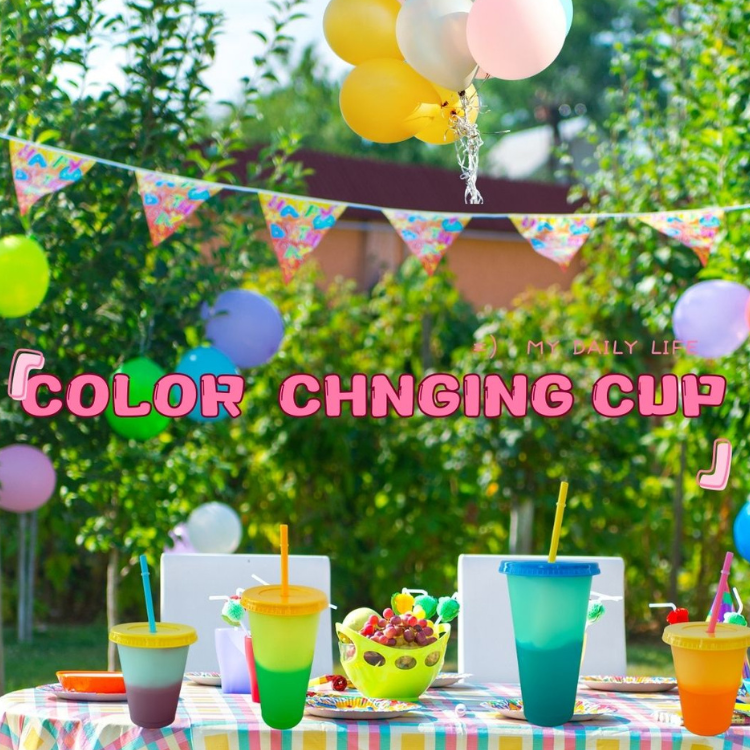
Founded in 2002 and headquartered in Huai'an, Jiangsu, Kolortek describes an 18,000 m² workshop and more than 150 workers. Its wider portfolio includes thermochromic and photochromic pigments alongside pearlescent pigments and cosmetic color additives. The company states that it supports custom colors, formulation guidance, private labeling, and special packaging.
Kolortek is worth examining when a buyer wants thermochromic pigment procurement integrated with other effect pigments or branded pigment packaging. Its stated overseas network covers more than 100 countries and regions, although that figure should not be read as a thermochromic-specific sales measure. Its company materials claim ISO 9001 certification; request the current certificate, covered site, and legal-entity name.
Founded: 2002. Main markets: Global, according to its company profile. OEM/ODM focus: Pigment color development, labeling, and packaging. Qualification priority: Obtain thermochromic-specific capacity, an approved-grade data sheet, and tests relevant to the intended application rather than relying on the size of its broader effect-pigment operation.
iSuoChem's profile dates its business beginnings to 2007 and identifies Anhui I-Sourcing International Co., Ltd. as the legal entity holding its published ISO 9001:2015 and ISO 14001:2015 certificates. The company lists thermochromic pigments among its effect-pigment products and describes formulation, pigment-matching, color-customization, and application support. It identifies Europe, the Americas, Southeast Asia, and the Middle East as key markets.
Its documentation is useful but requires careful reading. The profile gives annual capacities for pearlescent pigment and glitter, not for thermochromic pigment. It states a 1 kg MOQ for certain high-value pigments, while a specific thermochromic product listing states 5 kg. These are not necessarily contradictory: MOQ may depend on grade or packaging. Buyers should obtain a written MOQ for the exact formulation being sampled.
Founded: 2007 business beginnings, according to its profile. Main markets: Europe, North and South America, Southeast Asia, and the Middle East. OEM/ODM focus: Color and formulation support, small-format or custom packaging, and supply coordination. Qualification priority: Match each report and certificate to the legal entity, product grade, and intended use.
KingChroma states that its brand was founded in 2006 and is headquartered in Shenzhen. Its thermochromic powder materials describe multiple temperature ranges, color-to-colorless and color-to-color effects, and custom color work. It also discusses applications in printing, coatings, and selected plastics.
The technical breadth makes KingChroma a candidate for buyers with a defined powder-based project, particularly when temperature and color tuning matter. Its product literature also cautions about UV exposure, chemical compatibility, and damage to microcapsules during processing. Treat broad temperature-resistance statements as a starting point for a grade-specific process trial, not a blanket approval for an extrusion or curing line.
Founded: 2006, according to the company. Main markets: A reliable public breakdown was not established in the reviewed material. OEM/ODM focus: Custom thermochromic colors and application-dependent pigment selection. Qualification priority: Obtain the exact grade's heat-exposure limits, approved carrier system, and test results after your production process.
SMAROL says its predecessor activity in special materials dates to 2005. Its published catalog spans thermochromic pigment powders, slurries, inks, and masterbatches, alongside other color-changing materials. Its ink information distinguishes formats and systems, including screen and flexographic applications.
That makes SMAROL useful for a converter comparing delivery forms, rather than assuming that every powder can simply be stirred into an existing ink. For instance, the company describes non-aqueous pigment-powder applications and separately identifies slurries for aqueous applications. This is a reason to begin an OEM discussion with the press process, binder, substrate, and curing conditions.
Founded: The company cites special-material development activity since 2005; verify the incorporation date of the contracting entity. Main markets: Its materials refer to international customers without a verifiable sales split. OEM/ODM focus: Selection or development across pigment, slurry, ink, and masterbatch formats. Qualification priority: Clarify which entity makes each format and request current capacity and compliance evidence for the chosen one.
Hali states that it was founded in 2004 and works in the research, production, and marketing of effect pigments, including thermochromic pigments. Its company profile identifies use cases across coatings, printing ink, plastics, leather finishes, paper, glass, and decorative products. It lists an address in Changzhou, Jiangsu.
Hali belongs on a shortlist when the buyer is evaluating temperature-changing effects alongside other decorative pigment families. Its public profile establishes a relevant product category and application range, but does not supply a thermochromic-specific capacity, MOQ, or geographic sales split. An inquiry should therefore request a production-site walkthrough, a sample of the proposed grade, and comparable lots for consistency testing.
Founded: 2004. Main markets: Not established in the reviewed company profile. OEM/ODM focus: Application-specific pigment selection should be discussed directly; the extent of documented custom formulation or private-label service needs confirmation. Qualification priority: Verify who produces the proposed grade and where.
NewColorChem's published history says New Color Chemical Co., Limited was registered in 2010 in Hong Kong, that mainland factories were developed across subsequent years, and that Xiamen Magic Color Technology Co., Ltd. was registered in 2012 for domestic sales and foreign trade. Its product scope includes thermochromic and other smart pigments for inks, coatings, and plastics.
This structure may appeal to a buyer sourcing several color-change technologies through one commercial group. It also makes entity mapping essential: the contracting company, production plant, exporter, certificate holder, and report holder may not all have the same name. Ask for a diagram of those relationships before approving a factory audit or compliance file.
Founded: Hong Kong entity registered in 2010, according to company history. Main markets: Global trade is described, but a substantiated regional breakdown was not found. OEM/ODM focus: Application-oriented smart pigments and potential grade selection across material families; confirm project-specific formulation and branding services in writing.
Topwell states that it was established in 2014 and supplies thermochromic pigments among a wider range of specialty pigments and dyes. Its profile emphasizes research, sales, custom processing, and special-dye synthesis, and names the United States, Germany, France, Brazil, and Japan among markets for its products.
Topwell is a candidate for buyers whose thermochromic request sits within a wider specialty-colorant sourcing project. Its own description calls it a supplier; do not assume that every listed material is synthesized in-house. A proper audit should establish the production site for the precise thermochromic grade, any contracted processing, and which organization controls final release.
Founded: 2014. Main markets: The countries named in its company profile, among others. OEM/ODM focus: Customized specialty pigments and dyes, with custom processing and synthesis described. Qualification priority: Separate Topwell's commercial role from the manufacturing role for your SKU.
Chongyu Technology's public materials cover thermochromic materials, photochromic products, aromatic microcapsules, and temperature indicators. Its service-location page identifies a Guangzhou factory as well as customer-service locations in other Chinese cities. Its technical materials describe reversible thermochromic options and publish examples of EN 71 and RoHS testing claims for product families.
Chongyu merits attention for projects spanning microencapsulated materials and indicator-related products. Its material descriptions show why a buyer must define the required behavior precisely: a reversible decorative pigment is not equivalent to an irreversible warning indicator or a liquid crystal temperature scale. The company's public technical examples are useful for an initial discussion, but test reports should be checked against the current grade and production entity.
Founded: A verified establishment year for the relevant contracting entity was not established from the reviewed sources. Main markets: Public regional sales data was not established. OEM/ODM focus: Material and indicator-related customization should be scoped by format and factory. Qualification priority: Identify the Guangzhou production entity and obtain product-specific documents.
Tiankai publishes thermochromic pigment and ink offerings, making it a potential additional source for a dual-supplier qualification exercise. Its accessible product material describes color options, while related company pages market thermochromic ink and pigment supply. Public details reviewed for this guide were insufficient to establish a reliable incorporation year, thermochromic output, or major export-market breakdown.
That limited visibility is not, by itself, a reason to reject the company. It is a reason to apply a more structured request for information: confirm the exact legal and factory names, specify whether the quotation covers pigment or formulated ink, and request recent batch records and application samples.
Founded: Not verified. Main markets: Not verified. OEM/ODM focus: Thermochromic pigment or ink options should be confirmed against a written project brief. Qualification priority: Complete legal-entity, factory, capacity, and document checks before commercial comparison.
A useful RFQ begins with the desired behavior, not merely the word "thermochromic." State whether the effect must reverse after cooling, remain changed after a threshold event, or display a temperature range. Define the starting and changed colors, substrate, process, exposure conditions, expected service life, and destination market.
For a liquid crystal strip, specify whether it is intended to indicate the temperature of a surface or provide an estimate of contents through a container wall. An externally applied strip responds to the surface it touches; wall thickness, material, airflow, and placement can affect how its reading relates to the liquid inside. A critical control or diagnostic application needs a separately validated measurement method.
1. Document the target. Send a drawing or application brief with the operating-temperature window, acceptable visual result, substrate, dimensions, and foreseeable exposure.
2. Request traceable samples. Obtain the grade name, batch number, production date, data sheet, safety data sheet where relevant, and the stated storage conditions.
3. Test under actual processing conditions. Include the intended ink binder, printing method, coating thickness, drying temperature, laminate, adhesive, or molding cycle.
4. Measure both directions. For reversible products, record the appearance while heating and cooling. Agree on how the activation point and acceptable transition band will be defined.
5. Approve a production reference. Retain a signed physical sample and written specification; require written approval before any change to pigment, binder, substrate, adhesive, or protective film.
An illustrative specification might read: "The printed label must show a clearly readable change under the agreed test method at the target temperature; samples must recover their initial appearance after cooling; each production lot must be compared with the signed reference." The actual thresholds and tolerances should be set from the product's purpose and confirmed through testing—not copied from a catalog.
Ask which steps occur at the nominated facility: pigment preparation, microencapsulation, ink blending, printing, die-cutting, assembly, and final inspection. Then match the business license, purchase contract, production-site address, audit report, and certificate holder. A trading or export entity can be a legitimate partner, but its role should be explicit.
ISO 9001 concerns a quality management system, not automatic approval of every pigment or label. ISO states that it does not issue certificates itself. To check a claimed accredited certificate, use IAF CertSearch or contact the issuing certification body; confirm the legal name, site, scope, status, and dates rather than relying on a screenshot.
Apply the same discipline to product claims. CE marking is required only where specific EU legislation mandates it; it is not a general certificate for thermochromic powder. EU RoHS rules target electrical and electronic equipment. For a toy application, relevant toy requirements—including applicable chemical-migration testing—need evaluation. For a material intended to contact food, assess the finished food-contact construction under the applicable rules rather than treating a pigment supplier's general statement as clearance.
The costly substitution is not always an obviously different pigment. A sample may use one capsule grade, loading, binder, or protective construction, while production uses another combination that looks similar at room temperature. The resulting label can pass a quick visual inspection yet lose contrast after repeated cycling, curing, sunlight exposure, or storage.
Prevent this by locking an approved bill of materials and process window, not just a color photograph. Record the pigment or liquid-crystal grade, supplier, batch traceability, ink or coating system, target loading, protective layers, and permitted process conditions. Require notification and reapproval for substitutions. Hold retained samples from the approved trial and each shipment, then compare them using the same heating-and-cooling method. This control follows directly from the importance of capsule integrity and switching-temperature consistency.
Other recurring pitfalls deserve equal attention:
- Misleading capacity claims: Ask for output and lead time for the exact thermochromic SKU, not the company's combined pigment business.
- Wrong-grade documentation: Check whether a test report covers the material and finished configuration being purchased.
- Shelf-life assumptions: Obtain the supplier's sealed-storage conditions and verify performance after the expected warehouse and shipping period.
- Poor container or adhesive fit: Test finished labels on the buyer's actual surface, including cleaning, curvature, condensation, and removal conditions.
- Incomplete shipping instructions: Confirm packaging against moisture, heat, sunlight, and crushing risks; agree on carton labels, lot identification, and the Incoterm in the purchase contract.
The right Chinese thermochromic supplier depends on what is being purchased. A pigment buyer should prioritize formulation and capsule performance; a printer should qualify the ink in its real process; a brand buying thermometer strips or promotional labels should focus on calibration, converting quality, artwork control, and dependable OEM execution.
Qingdao Focus On Color is a relevant first conversation for brands seeking customized, finished temperature-indicating products, while the other suppliers provide alternatives across pigments, inks, and specialty materials. For a useful quotation, send your application surface, target temperature behavior, annual volume, artwork, destination market, and required documents. Ask each shortlisted company to return a product-specific sample plan before comparing unit prices.
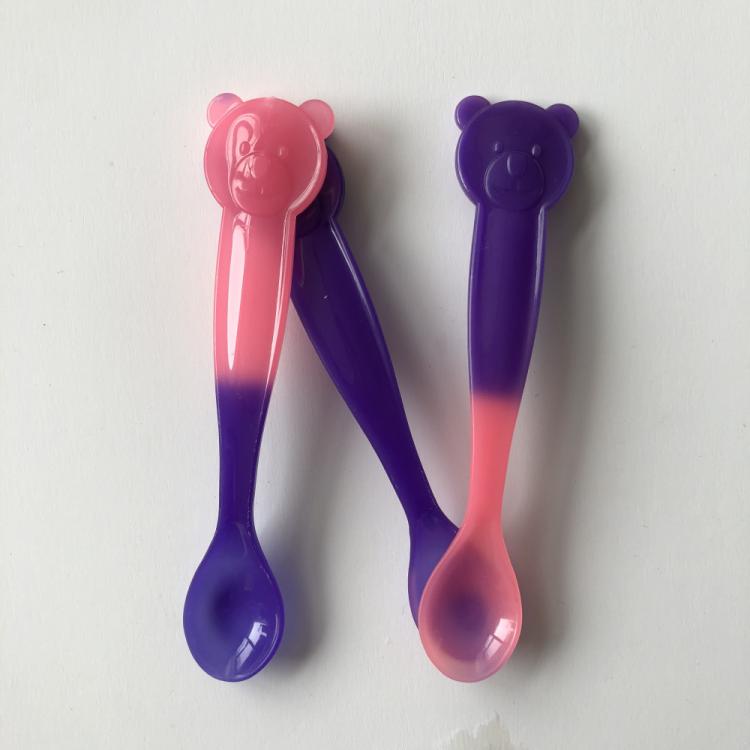
1. How can I tell whether a supplier's ISO 9001 certificate has expired or belongs to another company?
Request the full certificate, then check its certificate number, legal entity, site, scope, issue and expiry dates, and present status through IAF CertSearch or the named certification body. A certificate for a sales company or unrelated factory does not automatically cover the proposed manufacturing site. ISO itself does not issue the certificate.
2. Why does a "31°C pigment" begin changing before or after 31°C?
A named activation temperature is not necessarily an instantaneous switch point. The observed transition can span a range and differ between heating and cooling; formulation, substrate, and measurement conditions also matter. Agree in advance whether 31°C means the start, midpoint, or completion of the visible change, and document the test method.
3. Can an EN 71-3 or RoHS report prove a thermochromic label is suitable for food packaging?
No. Those documents address different questions and scopes. For EU food-contact use, assess the applicable food-contact rules and the finished construction, including potential migration under the intended conditions. Also establish whether the thermochromic layer is intended for direct contact or sits behind a functional barrier; do not infer clearance from a pigment-level report.
4. How should we qualify a liquid crystal thermometer strip for a bottle or aquarium?
Test the finished strip on the actual wall material and thickness, at its intended location. Compare readings after stabilization with a calibrated reference instrument under realistic ambient conditions. Specify adhesive performance, viewing instructions, and acceptable measurement differences. An external strip indicates surface temperature; it should not be described as an exact measurement of internal liquid temperature without validation.
5. What is the safest way to move from a successful prototype to a large OEM order?
Approve a traceable pilot lot made with the proposed production materials and equipment. Retain reference samples; define incoming and final inspection points; agree on change control, lot coding, packaging, and remedies for failed lots. Request a capacity-and-delivery plan for your SKU before fixing a launch date. This prevents a strong laboratory sample from being mistaken for proven repeatability at order scale.
- [General Administration of Customs of China — 2025 imports and exports by HS chapter]. [english.customs.gov]
- [Mordor Intelligence — Thermochromic pigments market, 2026–2031]. Estimates are the publisher's own and are not China-only production or export data. [mordorintelligence]
- [ISO — How to verify an accredited certification]. [iso]
- [European Commission — RoHS Directive]. [environment.ec.europa]
- [European Commission — Food-contact materials legislation]. [food.ec.europa]


