+86 18560646018

Views: 277 Author: Focus Color Publish Time: 2026-09-30 Origin: Site


Content Menu
● Did Hitler Make Scratch and Sniff Stickers? The Short Answer
● Why People Confuse Propaganda Stickers With Scented Stickers
>> What evidence would prove a historical scent claim?
● When Were Scratch-and-Sniff Products Developed?
>> Was Hitler the inventor of stickers?
● How Do Scratch-and-Sniff Stickers Actually Work?
● What Modern Buyers Can Learn From This Myth
>> A sample-testing checklist for custom projects
● How to Specify a Reliable Custom Scented Sticker
● Why Accurate Product Stories Matter
>> Did Hitler invent scratch-and-sniff stickers?
>> Did the Nazis use ordinary stickers?
>> Who invented scratch-and-sniff technology?
>> What makes a sticker smell when scratched?
>> Are scented stickers and scratch-and-sniff stickers the same?
>> How long does a scratch-and-sniff sticker last?
>> What should a buyer send for an OEM/ODM quotation?
No. Hitler did not make scratch and sniff stickers. The claim appears to confuse two separate stories: Nazi organizations used ordinary propaganda stickers, while the microencapsulation technology behind scratch-and-sniff products emerged decades later. Understanding that difference matters. A sticker can carry a printed message without containing a fragrance that releases when rubbed.
The historical record supports the existence of Nazi propaganda stickers. The technical record places the development of modern scratch-and-sniff printing in the 1960s. Neither point establishes that Hitler invented, commissioned, or used scented stickers. Here is what we can verify, how the technology actually works, and what modern buyers should ask before ordering a custom fragrance product.
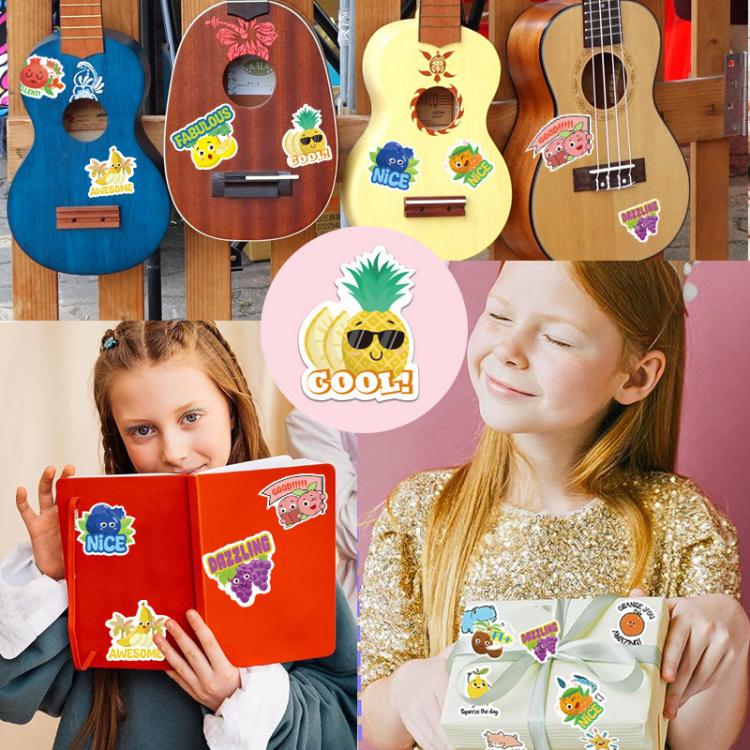
There is no credible evidence that Hitler made scratch-and-sniff stickers. Nazi groups did use stickers to spread antisemitic messages. That fact is documented. But the adhesive message stickers of the 1930s and the fragrance-releasing stickers familiar today are not the same product.
Modern scratch-and-sniff printing relies on tiny capsules that hold scented material until friction breaks them. The technology grew out of work on carbonless copy paper and entered commercial fragrance printing in the 1960s. Hitler died in 1945. The timeline alone makes the claim about modern scratch-and-sniff stickers untenable.
The strongest answer is precise rather than sensational: Nazi propaganda stickers existed; evidence for Nazi scratch-and-sniff stickers has not been established; and the documented origins of modern scent-release printing are postwar.
A memorable false claim often combines one real detail with one unrelated invention. In this case, the real detail is the historical use of stickers as a propaganda medium.
A German Historical Museum exhibition, reported by Deutsche Welle, described how Nazi organizations placed antisemitic stickers in public spaces and on Jewish-owned shops after the Nazis came to power. These were tools of intimidation and persecution, not harmless advertising novelties. The United States Holocaust Memorial Museum documents the broader role of propaganda in creating support for exclusion, violence, and genocide.
What is missing from that history is proof of the second half of the claim: a scratch-activated scent layer. Descriptions of printed propaganda do not automatically imply fragranced printing. A surviving sticker might demonstrate what it said and where it was distributed. To substantiate a scratch-and-sniff claim, researchers would also need evidence of a scent-bearing construction, its manufacture, and its period of use.
A convincing case would require more than a social-media caption or a photograph of an old sticker. Relevant evidence could include:
- A dated, authenticated sticker with a documented chain of custody.
- Contemporary manufacturing specifications or purchase records describing an intentionally scent-releasing layer.
- Laboratory analysis consistent with the claimed materials, interpreted alongside the object's preservation history.
- Independent archival corroboration connecting the product to the person or organization named in the claim.
This checklist is a way to evaluate an extraordinary product-history claim, not a claim that such evidence exists. If a post shows only a picture of a propaganda sticker, it has not answered the scent question.
The key breakthrough was microencapsulation: enclosing a small amount of material inside a thin shell that can break under pressure. The technology was developed for carbonless copying, where pressure from a pen could release chemicals needed to reproduce handwriting on the sheet below.
Gale W. Matson, associated with 3M's predecessor company, is named as the inventor on a U.S. microcapsule patent filed in 1966 and published in 1970. That patent describes capsules and highlights carbonless paper as an important application. It should not be mislabeled as a patent for every scratch-and-sniff sticker. What it does provide is a dated technical record for the microencapsulation work that helped make later fragrance printing possible.
An industry reference on scratch-and-sniff manufacturing describes how researchers adapted microcapsules to carry scented oil and dates a commercial scratch-and-sniff debut to 1965. Exact dates for individual product formats can differ depending on whether a source means a scent-coated print, a sticker, or a perfume sample. The defensible historical point is that commercial scratch-activated fragrance printing belongs to the postwar era, not Hitler's lifetime.
| Item | What the evidence supports | What it does not prove |
|---|---|---|
| Nazi-era propaganda sticker | A printed adhesive message used for political agitation | That it contained a scratch-released fragrance |
| Matson's microcapsule patent | A documented 1960s capsule process associated with carbonless paper | That every scented sticker used that exact patented process |
| Modern scratch-and-sniff sticker | A printed product designed to release scent when rubbed | Any connection to Nazi-era manufacturing |
No such conclusion follows from the fact that Nazis used them. A group can adopt an existing communication format without inventing it. The same distinction applies to posters, leaflets, or radio broadcasts: using a medium is different from developing the medium itself.
For this particular rumor, the most important error is even narrower. It turns documented propaganda stickers into undocumented scratch-and-sniff stickers simply because both share the word "stickers."
A typical scratch-and-sniff surface contains microscopic fragrance-filled capsules held in a printed coating. A finger or fingernail rubs the coated area, some capsules rupture, and their contents release a detectable aroma. Capsules that remain intact may release scent during later use.
Think of the coating as a field of tiny sealed containers. Its design must balance two competing needs: the containers should survive printing, packing, and shipping, but they must break when the customer rubs the intended area. That balance helps explain why fragrance selection, capsule construction, printing conditions, and packaging cannot be considered separately.
A simplified production path looks like this:
1. Select the intended scent. Define the target aroma and the way customers will interact with it.
2. Encapsulate the fragrance. Enclose suitable scented material within microscopic shells.
3. Prepare the printable coating. Combine capsules with a binder compatible with the chosen substrate and process.
4. Apply the scent area. Print or coat the material without destroying too many capsules prematurely.
5. Convert and pack. Cut the stickers, protect the scented surface, and check samples after handling.
These steps describe the general manufacturing logic, not a universal factory recipe. Materials and process settings vary by product. More importantly, a product that smells inside its sealed package is not necessarily performing well. Strong pre-use odor can indicate fragrance on the outside of the coating, damaged capsules, or a packaging issue. A good evaluation distinguishes scent released intentionally by rubbing from scent that escaped before use.
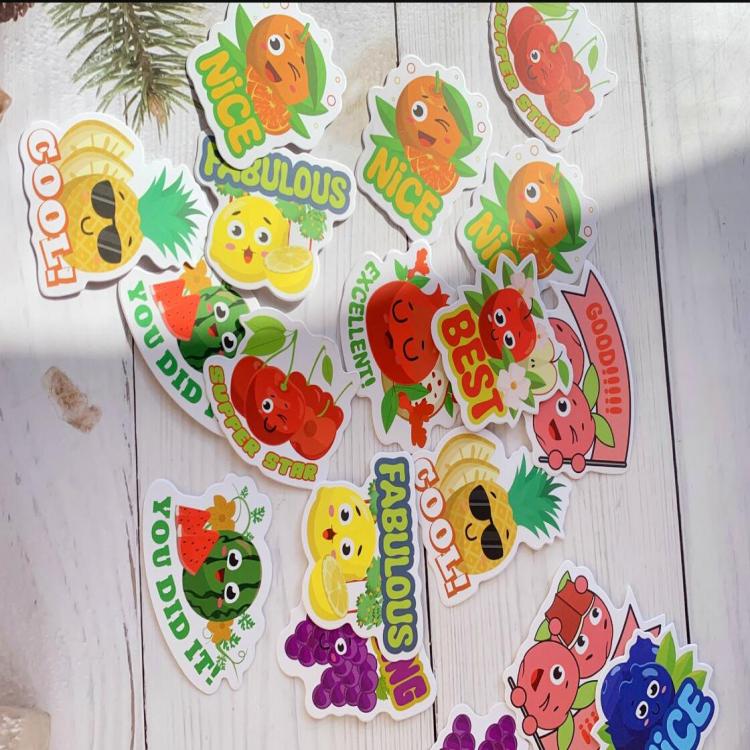
The historical correction leads to a practical question: when a supplier calls something a "scented sticker," what exactly will the buyer receive? The phrase can refer to a fragrance-coated label, a scratch-activated patch, or a sticker packed with a separate scented item. Those experiences are not interchangeable.
| Format | Intended user experience | Useful buyer question |
|---|---|---|
| Scratch-and-sniff sticker | Rub a defined printed area to release scent | Where is the active area, and what activates it? |
| Continuously scented label | Smell a fragrance without deliberate rubbing | How is unwanted scent transfer controlled in transit? |
| Scented insert or sample strip | Open or peel an insert to reveal a fragrance | How will it fit the final package or campaign? |
For example, a fruit-themed promotion may need a customer to rub a printed orange to smell citrus. If the scent is already obvious when the package arrives, the reveal loses its effect. Conversely, a display label intended to smell continuously should not require repeated scratching. Define the experience before approving the artwork or requesting a quotation.
A polished mockup cannot prove that the delivered batch will perform as expected. Ask for representative samples made with the proposed artwork, substrate, scent, and packaging. Then review them with a simple, repeatable test:
1. Inspect before activation. Look for oil marks, unwanted odor, color shifts, and damaged print.
2. Rub the specified area consistently. Use similar pressure and strokes across comparison samples.
3. Evaluate the scent blind if possible. Have several people describe what they smell without seeing the fragrance name.
4. Repeat after storage. Check retained samples following conditions that reflect your actual shipping and warehousing plan.
5. Check application. Apply stickers to the real packaging material and assess adhesion, appearance, and ease of removal where relevant.
Record the sample date, scent code, substrate, artwork revision, packaging format, and test observations. This creates a useful baseline if a later production lot needs to be investigated. It also prevents a common purchasing mistake: approving the picture while leaving the scent experience undefined.
From a manufacturer's perspective, the first conversation should focus on intended use, not an attractive fragrance name alone. A brief that says "make a lavender sticker" leaves too many open questions. A workable brief might say: "Create a scratch-activated lavender-scented label for a paper retail sleeve, with the scented area on the front, individually protected during transit, for distribution in our target market."
Before sampling, agree on these project details:
- Application: Classroom reward, direct mail, product packaging, retail promotion, or another use.
- Activation: Scratch, rub, peel, or continuous fragrance release.
- Scent profile: Target impression, acceptable variation, and any fragrances to avoid.
- Construction: Size, shape, artwork, substrate, adhesive, and printed scent location.
- Packaging: Sheet or roll format, packing method, and anticipated storage conditions.
- Evaluation: Agreed sample approval criteria and checks for the finished order.
- Documentation: Fragrance information and any testing needed for the destination market and end use.
Do not treat a general fragrance document as a blanket safety approval. The International Fragrance Association explains that a Certificate of Conformity applies to a particular fragrance mixture and intended use, and that its standards do not replace applicable local regulations. Ask which documentation is appropriate for the actual product, audience, and market. If children will use the stickers, clearly communicate that intended use to the supplier rather than assuming a standard adult promotion specification will suffice.
Qingdao Focus On Color Industry & Trade Co., Ltd. describes itself as a manufacturer with more than 13 years of production experience across photochromic, thermochromic, liquid crystal thermometer, and fragrance product lines. The company offers OEM/ODM and personalized customization for global customers. These company details are supplied for this article; they are not independent proof of a particular scented sticker specification, certification, or performance result. Buyers should confirm the proposed construction and supporting documents for their own project.
That distinction is useful for both sides. The buyer gets a product brief that can be sampled and checked. The manufacturer gets enough information to discuss feasible materials, printing, packaging, and any constraints before a full production run. Specific requirements make a more reliable starting point than broad promises.
A surprising origin story can attract attention, but it should never replace evidence. In this case, the rumor obscures two histories: the use of antisemitic propaganda stickers as instruments of intimidation, and the later technical development of scent-release printing. Keeping them separate respects the historical record and gives readers a clearer understanding of the product they may want to buy.
The practical takeaway is straightforward. If you are researching the question, the answer is no: there is no credible basis for saying Hitler made scratch-and-sniff stickers. If you are sourcing them, focus on the modern questions you can verify: how the fragrance is released, how samples behave after storage, what documentation is available, and how the finished sticker fits your application.
Planning a custom fragrance campaign? Contact Qingdao Focus On Color Industry & Trade Co., Ltd. with your artwork, target scent, intended use, destination market, quantity, and packaging format. Request an OEM/ODM sample and confirm its performance and documentation before placing a production order.

No. Historical reporting documents Nazi propaganda stickers, but not Hitler's invention of scratch-activated scented stickers. The documented development of the microencapsulation approach used in modern scent-release printing occurred decades later.
Yes. Nazi organizations used printed stickers to circulate antisemitic messages and intimidate Jewish communities. That documented use should not be confused with evidence of fragrance-releasing materials.
It is better to describe a sequence of technical work than to credit one person with every product format. Gale W. Matson is named on a significant 1960s microcapsule patent associated with 3M's predecessor company. Fragrance applications developed from microencapsulation work originally directed at carbonless paper.
Microscopic capsules in a coated area contain fragrance. Rubbing breaks some of the capsules and releases their contents into the air. The print and package should help protect the remaining capsules before the customer uses the product.
Not always. Some products release fragrance continuously; others are designed to release it mainly when scratched or opened. When ordering, specify the activation method and ask for a sample of the proposed construction.
There is no responsible universal shelf-life promise. Retention depends on the formulation, coating, handling, storage, and package. Test samples after conditions that resemble your real distribution plan and agree on acceptance criteria with the supplier.
Provide the product size, quantity, artwork, desired scent, activation method, substrate or application surface, packaging format, intended users, and destination market. Ask for representative samples and product-specific documentation before confirming a bulk order.
1. [United States Holocaust Memorial Museum, "Nazi Propaganda."] Historical context on Nazi messaging, persecution, and its consequences.
2. [Deutsche Welle, "How the Nazis used stickers to spread propaganda," April 21, 2016.] Reporting on a German Historical Museum exhibition documenting Nazi propaganda stickers.
3. [Gale W. Matson, "Microcapsules and process of making," U.S. Patent 3,516,941; filed July 25, 1966, published June 23, 1970.] Primary technical record for microcapsule development associated with carbonless paper.
4. [Angela Woodward, "Scratch and Sniff," *How Products Are Made*, via Encyclopedia.com.] Manufacturing background, fragrance printing history, and quality-control overview.
5. [HowStuffWorks, "How do scratch-and-sniff stickers work?"] Accessible explanation of fragrance-filled capsules and scent release.
6. [International Fragrance Association, "Certificates."] Scope and limitations of Certificates of Conformity for fragrance mixtures.
7. Qingdao Focus On Color Industry & Trade Co., Ltd., company description supplied for this article. Source for the stated experience, product lines, OEM/ODM services, and customization; verify project-specific claims directly with the company.


