+86 18560646018

Views: 258 Author: Focus Color Publish Time: 2026-10-01 Origin: Site


Content Menu
● What Counts as Scented Paper or a Synthetic Scent Disc?
● Scented Paper vs. Synthetic Scent Discs: At a Glance
● Which Insert Creates a Better Luxury Unboxing Experience?
>> Scented Paper Adds Fragrance Without Another Object
>> Synthetic Discs Make Scent a Separate Feature
● Which Option Is More Eco-Friendly?
>> Paper-Based Does Not Automatically Mean Recyclable
>> A Plastic Disc Needs a Credible Exit Route
● How Do Scent Performance and Product Protection Compare?
>> Compare the Same Scent, Not Just the Same Carrier
>> Prevent Transfer to the Product
● A Practical Pilot: Test Before Approving a Custom Insert
● Three Design Choices Buyers Often Miss
>> Count Every Extra Component
>> Match the Scent Moment to the Product
>> Specify Claims Before Artwork Is Final
● What Should an OEM/ODM Brief Include?
>> Is scented paper always more sustainable than a synthetic scent disc?
>> Can scented paper go into paper recycling?
>> Do synthetic scent discs last longer than scented cards?
>> Are natural fragrances safer or greener for luxury packaging?
>> Can I print an FSC label on a scented insert?
>> What is the first sample test I should request?
Scented paper vs. synthetic scent discs is not simply a choice between natural and artificial materials. For eco-friendly luxury packaging inserts, the right option depends on how the fragrance is released, how long it must last, what it may touch, and what happens after unboxing. Scented paper usually makes sense for a light, integrated brand moment; a synthetic scent disc can suit a longer-lasting, removable fragrance experience. Neither format is automatically recyclable or environmentally preferable.
For packaging buyers, the practical question is: which insert delivers the intended sensory experience without unnecessary material, product contamination, or unsupported sustainability claims? This guide compares both formats from a manufacturing and specification perspective and offers a repeatable way to test them before purchase.

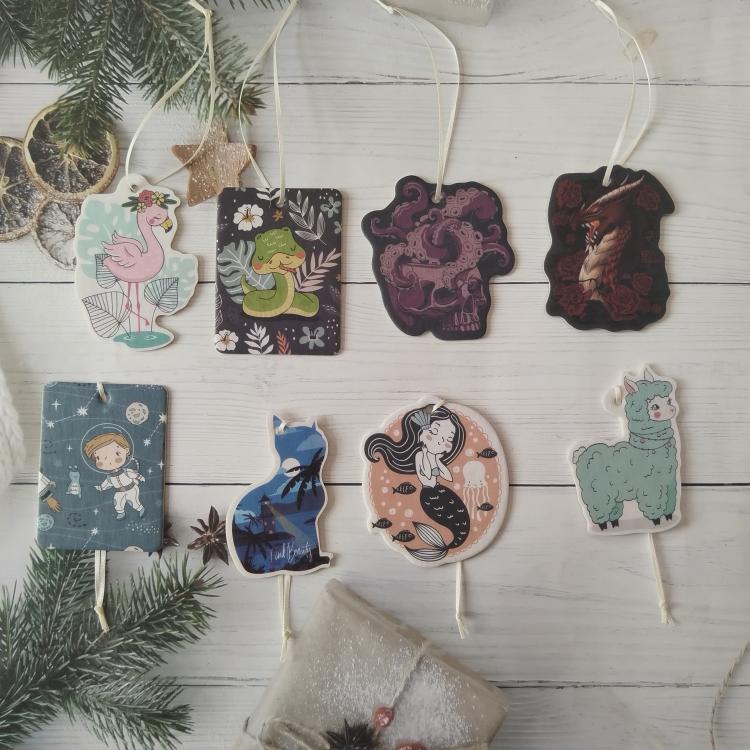
Scented paper is a paper-based card, tissue, tag, or insert carrying fragrance. The fragrance may be applied directly, incorporated into a printed coating, or held in microcapsules that release scent when rubbed. These approaches do not perform identically. A freely scented card may make the box smell pleasant on opening; a rub-activated patch creates a more deliberate moment after the customer handles it.
A synthetic scent disc is a separate shaped fragrance carrier, often made from a polymer such as EVA, PE, or PP. Fragrance may be incorporated into the material or absorbed into a porous structure. The term "synthetic" describes the carrier, not necessarily whether the fragrance ingredients are synthetic. Likewise, paper can carry a synthetic fragrance and still be paper-based.
Both are distinct from the product itself. If you put either insert next to cosmetics, garments, leather goods, or food, assess the risk of scent transfer and unintended contact before deciding where it belongs in the pack.
| Decision factor | Scented paper insert | Synthetic scent disc |
|---|---|---|
| Visual integration | Can double as a printed story card, thank-you note, or branded tag | Can be molded into a branded shape, but reads as a separate object |
| Scent release | Directly scented paper releases passively; encapsulated coatings can be activated by rubbing | Typically releases fragrance passively from the carrier; rate depends on polymer, formulation, and design |
| Shelf-life potential | Depends heavily on coating, fragrance, and barrier packing | Can be engineered for sustained release, but duration must be verified for the exact design |
| Space and weight | Usually thin and easy to insert into a flat pack | Often thicker and requires retention or a dedicated position |
| Artwork options | Strong for typography, illustrations, and instructions | Strong for three-dimensional form, color, and a keepsake-like feel |
| End-of-life route | Depends on coatings, adhesives, contamination, and local paper collection | Depends on resin, additives, shape, and local collection; small discs may not be recovered |
| Typical starting point | Printed luxury unboxing with limited material | Removable fragrance feature where extended diffusion matters |
The table describes design tendencies, not guaranteed performance ratings. For a purchasing decision, compare finished samples under the same shipping, storage, and unboxing conditions.
A scent-bearing card can turn an existing communication piece into part of the experience. It can carry a product story, care instructions, or a personalized message, so the scent has a clear purpose rather than feeling like extra filler. Paper also allows refined printing and a slim profile inside a jewelry box, gift set, or mailer.
The challenge is control. With passively scented paper, the fragrance may be noticeable before opening or fade before the customer receives it. With a rub-activated coating, the initial box opening may be relatively quiet; the customer needs a prompt such as "Rub here to explore the scent." Microcapsules and their coating ingredients also need review when the brand plans a paper-recycling claim.
A disc can create a more visible, removable fragrance object. A recessed holder or attached card can keep it away from delicate contents. That separation may help when you want the consumer to take the insert out and continue using it after unboxing, but it does not by itself prevent fragrance vapors from reaching the product.
A loose disc is rarely a premium solution. It can rattle, obscure the presentation, or be mistaken for a product component. Design a purposeful placement, tell customers what the disc is, and avoid claims about weeks or months of scent without finished-pack testing.
Paper offers an apparent advantage when the insert uses an existing card rather than adding a new component. But fragrance oils, polymer microcapsules, varnishes, laminates, and adhesives can change how a finished card behaves in a paper mill. Even a coating described as water-based is not proof that the coated card is accepted in local recycling.
Ask for the complete construction, including substrate, ink, coating, capsule chemistry, adhesive, and fragrance loading. For significant volumes or a prominent recyclability claim, seek testing of the final construction using a relevant paper-recyclability method and check the destination market's collection route. If you want an FSC label, verify chain-of-custody eligibility and approved use of the mark; buying an FSC-labeled paper stock alone does not authorize every finished-product claim.
A polymer disc can be useful when its longer functional life displaces another fragrance product or when it can be reused. But that benefit should be demonstrated in the intended use, not assumed. A small, scented, multi-material disc may have no practical route through household recycling, even if its base resin is recyclable in other formats.
Compare function per unit of material, not material labels alone. Weigh each finished insert, include protective sachets and holders, document how many pieces are required per box, and ask what the customer can realistically do with each part. Do not label an insert biodegradable, compostable, plastic-free, or recyclable unless its complete design and destination-market evidence support that exact claim.
For EU-bound packs, review the Packaging and Packaging Waste Regulation at the packaging-unit level. Initial requirements began applying on August 12, 2026, while the framework targets recyclable packaging by 2030. The treatment of an insert depends on its function, classification, and finished-pack design; do not assume that swapping a disc for paper establishes compliance.
The fragrance formula influences intensity, character, and stability as much as the carrier does. A citrus top note and a woody accord may behave differently during storage, so a test with one scent cannot validate another. The opening impression also differs from a later sniff: the first tests headspace in the closed package; the second tests what remains on the insert.
For paper, distinguish passive release from rub activation in the brief. For a disc, specify whether the fragrance is compounded into the polymer, added after molding, or held in pores. These details affect release behavior and handling. Ask the supplier for finished-sample evidence rather than a generic claim such as "long-lasting."
Fragrance can be absorbed by porous products or their packaging. Directly applied oils may also stain or leave a residue if the insert touches a surface. Such risks are especially relevant to textiles, leather, unwrapped soap, and products marketed as fragrance-free.
Specify a physical gap or protective barrier where appropriate. Then test a fully assembled pack, including the product, insert, tissue, box, and any shipping wrap. Check for stains, discoloration, odor change, and residue after storage. If food or other sensitive products are involved, obtain application-specific material and migration advice; a general fragrance document is not a substitute for testing the finished use.
The following is a proposed buyer test protocol, not a published performance standard. Its purpose is to give paper and disc prototypes the same acceptance conditions.
1. Write the sensory brief. Define the intended scent, strength on opening, desired scent after opening, product-contact restrictions, target markets, and disposal message.
2. Request matched prototypes. Compare the same fragrance direction in a scented paper card and a disc. Record substrate or resin, fragrance system, dimensions, weight, and any individual wrap.
3. Build real packs. Place each candidate in the exact box and position planned for production. Include a fragrance-free control pack to identify the baseline odor of the box and product.
4. Simulate the route. Store sealed packs under agreed ambient and elevated-temperature conditions, then evaluate after your actual expected transit and warehouse intervals. Set conditions with your quality team; do not present them as universal shelf-life thresholds.
5. Score blind. Ask several reviewers to rate opening intensity, pleasantness, brand fit, and unwanted scent transfer without revealing which carrier is inside. Record disagreements, not just averages.
6. Inspect and decide. Check finish damage and odor changes, review material documentation and local disposal routes, then approve a production specification with acceptable tolerances.
A useful scorecard can weight brand fit, product protection, scent retention, total inserted material, and end-of-life clarity. Set the weights before evaluating samples. Otherwise, the strongest-smelling prototype may win even when it performs poorly against the actual brief.
A "lightweight" card may come in a plastic barrier pouch, while a "long-life" disc may need a holder, sleeve, and printed explanation. Compare the entire insert system rather than the carrier alone. If an existing printed card can deliver a subtle scent without another piece, it may be the simpler design. If a removable disc replaces a second promotional item, document that trade-off too.
For a fragrance discovery kit, a rub-to-release printed spot can let the customer choose when to smell it. For a non-fragranced premium accessory, a mild removable disc may create atmosphere without deliberately perfuming the item. In either case, consider whether some buyers prefer no added scent. An unscented pack option or a removable insert can be more considerate than increasing fragrance strength.
Decide whether your intended statement is about responsible fiber sourcing, recyclability, reduced plastic, or reuse. Those are different claims requiring different evidence. A scent supplier's safety paperwork does not establish recycling performance, and a paper supplier's sourcing certificate does not establish the finished coated card's recyclability.
A clear request saves rounds of sampling. Provide the insert's role in the unboxing, the target fragrance profile, intended scent duration, box dimensions, product-contact rules, expected shipping climate, artwork, projected order quantity, and destination markets. State whether the insert must be passive or interactive, individually wrapped or unwrapped, and removable or integrated.
Request a bill of materials and relevant fragrance documentation, including a certificate of conformity to the applicable IFRA Standards where appropriate to the intended use. Have the fragrance supplier confirm the exposure category rather than guessing it from the word "packaging." Ask for available safety data, batch traceability, construction details, and evidence supporting any environmental claim you plan to print.
Qingdao Focus On Color Industry & Trade Co., Ltd. offers OEM/ODM and personalized product development and reports more than 13 years of manufacturing experience. Share your packaging dieline, product-contact requirements, target markets, and fragrance brief with our team to discuss suitable scented-paper and scent-disc samples. Final material choices and claims should follow testing of your own finished pack.

No. Compare the finished insert's material use, coatings, wraps, useful life, and actual disposal route. A simple scented card may be preferable when it replaces an existing printed piece. A disc may make sense if it delivers a valued reusable function. Neither conclusion follows from the material name alone.
Possibly, but the answer depends on the complete construction and the local collection and processing system. Fragrance coatings, adhesives, laminates, and capsule materials can affect repulping. Obtain a relevant assessment for the final design before making a broad recyclability claim.
Some polymer systems are designed for sustained fragrance release, while microencapsulated paper can preserve scent until activated. Performance varies with formulation, storage, package barriers, and use. Compare prototypes in identical finished packs rather than relying on a general duration promise.
Not automatically. Ingredient origin alone does not establish safety, lower environmental impact, or suitability for product contact. Review the specific formula, intended exposure, relevant documentation, and finished-pack test results.
Only if the finished product and supply chain meet the applicable FSC requirements and the label use is authorized. A certified paper input does not, on its own, approve an on-product claim for a converted and fragranced insert.
Test both formats inside the actual closed pack, with the intended product and a fragrance-free control. Evaluate opening scent, scent after storage, visible transfer, and whether customers understand how to use and dispose of the insert.
- European Commission. [Packaging & Packaging Waste Regulation]. Regulatory direction on packaging waste and 2030 recyclability.
- UK Department for Business and Trade. [EU PPWR – Packaging and Packaging Waste Regulation]. Timeline and exporter-facing overview, updated September 2026.
- Confederation of Paper Industries. [Design for Recyclability Guidelines, fourth edition]. Guidance on fiber packaging, coatings, inks, adhesives, and case-by-case assessment.
- Cepi. [Cepi Recyclability Test Method Version 3]. Laboratory approach for assessing paper and board in conventional recycling mills.
- Forest Stewardship Council. [Chain of Custody Certification]. Requirements for tracing certified fiber and labeling finished products.
- International Fragrance Association. [IFRA Standards] and [Certification of IFRA Standards]. Fragrance safety standards and certificate context.
- H&H Graphics. [Custom Scent & Fragrance Printing]. Industry examples of passive and rub-activated scented printing.
- Avient. [Cesa Fragrance Technologies]. Industry examples of fragrance additives for polymer products.


