+86 18560646018

Views: 253 Author: Focus Color Publish Time: 2026-09-02 Origin: Site


Content Menu
● Top 10 Manufacturers and Suppliers
>> 1. Qingdao Focus On Color Industry & Trade Co., Ltd.
>> 3. Jiangsu Itech Labels Technology Co., Ltd.
>> 4. Guangzhou Miyi Printing Co., Ltd.
>> 5. Wenzhou Zigpac Industry Limited
>> 6. Shenzhen Shunxinchang Culture Corporation Limited
>> 7. Winnin Overseas Co., Ltd.
>> 8. Hangzhou Zenjoy International Trade Co., Ltd.
>> 9. Ningbo Xianying Packing Material Co., Ltd.
>> 10. Shenzhen Minsda Printing Co., Ltd.
● Comparison: Capacity, MOQ, and Compliance
● Technical Requirements Buyers Should Specify
>> 1. Substrate and Material Grade
>> 2. Fragrance Microcapsule System
>> 5. Safety and Market Compliance
>> Low-Grade Fragrance Materials
>> Inconsistent Scent Between Batches
>> Fragrance Migration and Cross-Contamination
>> Misleading "Eco-Friendly" Claims
>> Certification Misrepresentation
● Buyer's Guide: From Inquiry to Shipment
>> Step 1: Prepare a Clear RFQ
>> Step 2: Request a Technical Proposal
>> Step 3: Approve Samples Carefully
>> Step 4: Confirm the Golden Sample
>> Step 6: Plan Logistics Correctly
>> 1. How can I verify whether a supplier's ISO certificate is still valid?
>> 2. Can a scratch-and-sniff sticker be considered safe for children?
>> 3. Why does one scratch-and-sniff sample smell strong while the production sample smells weak?
>> 4. What is a realistic MOQ for custom scratch-and-sniff stickers?
>> 5. Should I choose paper, PVC, PET, or PP for scented stickers?
Scratch and sniff stickers are not ordinary printed labels. A reliable product requires the right balance of fragrance microcapsules, ink compatibility, adhesive performance, substrate selection, coating durability, and export-ready quality control.
For purchasing managers, brand owners, educational-product distributors, promotional-gift buyers, and packaging teams, choosing a supplier based only on a low quotation can create costly issues: weak fragrance release, inconsistent scent between production batches, adhesive failures, ink rubbing, delayed delivery, or incomplete documentation.
China remains a practical sourcing base for custom scented labels and scratch-and-sniff promotional materials because it combines printing capacity, fragrance-material supply chains, flexible converting operations, export logistics, and a broad network of OEM-oriented factories. China is also a major global exporter of paper and paper articles; official customs data recorded exports in this broader category during 2025, illustrating the country's established manufacturing and export infrastructure for paper-based products.
This guide identifies manufacturers and supplier types that buyers should evaluate when sourcing custom scratch and sniff stickers from China. The list is not a certification of every supplier's current production capability. Instead, it is a practical procurement shortlist based on publicly available product positioning, product scope, manufacturing relevance, customization potential, and suitability for international B2B orders. Buyers should still conduct document verification, sample testing, and pre-shipment inspection before placing bulk orders.
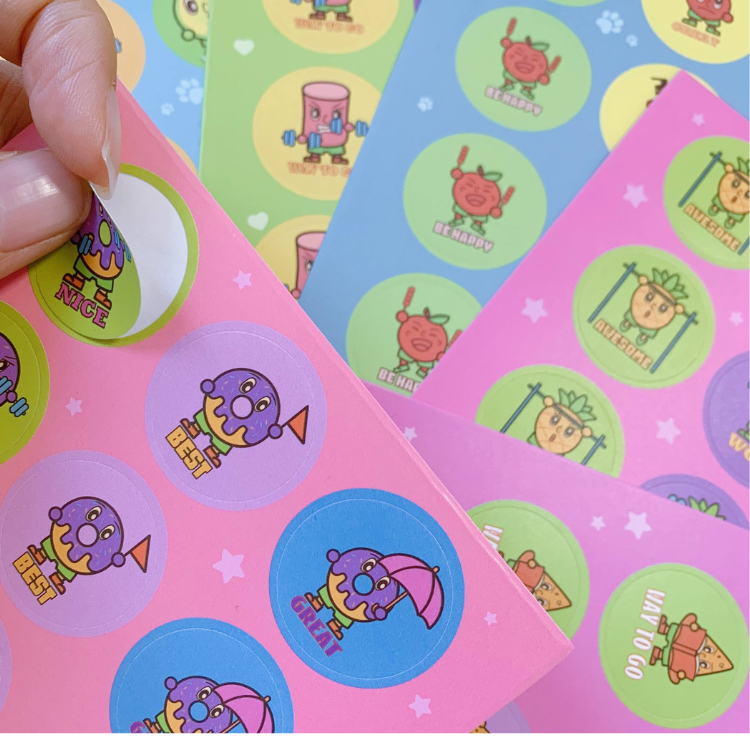
Scratch and sniff stickers require more process control than standard adhesive labels. Therefore, this list does not simply prioritize companies with attractive catalogs or broad sticker listings.
The suppliers were assessed using the following commercial and technical criteria:
- Relevant product capability: Ability to provide scented stickers, fragrance labels, scratch-and-sniff cards, scented promotional materials, or related microencapsulated fragrance applications.
- OEM and ODM flexibility: Willingness to customize shape, scent, artwork, substrate, packaging, adhesive, and order quantity.
- Material and process understanding: Familiarity with paper, PET, PVC, PP, coated paper, release liners, pressure-sensitive adhesives, offset printing, screen printing, flexographic printing, or digital-printing workflows.
- Fragrance-release performance: Use of microencapsulated fragrance rather than merely applying conventional perfume oil to the surface.
- Quality-control visibility: Ability to explain incoming-material checks, print-color control, adhesive testing, scent-consistency checks, and final inspection.
- Export readiness: Experience serving overseas customers, communicating in English, preparing commercial invoices, packing lists, carton markings, and shipping documentation.
- Order stability: Practical lead-time management, batch consistency, reasonable MOQ options, and capacity planning for repeat orders.
- Compliance support: Ability to provide or coordinate material declarations, safety documentation, test reports, and market-specific compliance information where required.
A key distinction is important: not every scented sticker is a true scratch and sniff sticker. A genuine scratch-and-sniff format normally relies on fragrance microcapsules. When the surface is rubbed or scratched, part of the capsule structure breaks and releases fragrance. A simple fragrance coating may smell strong at first but can fade quickly, migrate into packaging, or create inconsistent performance.
The printed-label market continues to grow alongside demand for packaging, promotions, retail identification, and product differentiation. One recent market estimate valued the global printed-label market at approximately USD 55.95 billion in 2026, with continued growth projected through 2033. Scratch-and-sniff labels occupy a smaller specialty segment, but their use in cosmetics, food-and-beverage promotions, children's products, educational materials, direct-mail campaigns, collectibles, and sensory brand activations creates demand for suppliers able to manage both printing and fragrance technology.
China's advantage is not based on one single city or one single factory type. Instead, the supply chain is distributed across several specialized clusters.
- Shenzhen and Dongguan: Strong for promotional gifts, packaging, printing, electronic accessories, premium label finishing, and export-oriented customization.
- Guangzhou and Foshan: Well developed for commercial printing, packaging, paper products, consumer goods, and sourcing coordination.
- Wenzhou: Known for label-related manufacturing, adhesive products, packaging components, and flexible printing supply chains.
- Hangzhou, Ningbo, and Yiwu: Useful for stationery, crafts, gift products, trading integration, and small-to-mid-size export orders.
- Qingdao: Offers access to northern China manufacturing resources and major port logistics, making it practical for exporters serving international customers.
For paper-based labels, HS Code 4821 covers paper and paperboard labels, including printed and unprinted varieties. Plastic self-adhesive materials may instead fall under HS Code 3919, so importers should confirm classification according to the actual substrate and product structure.
China's manufacturing ecosystem also makes it possible to combine multiple components within one project: sticker sheets, backing cards, retail packaging, custom envelopes, printed inserts, fragrance cards, color-changing packaging features, and promotional gifts.
However, sourcing convenience should not replace technical verification. A supplier that produces ordinary labels may not necessarily understand fragrance microcapsules, odor retention, rub resistance, or cross-scent contamination during production.
| Rank | Manufacturer / Supplier | Location | Core Focus | Typical MOQ Positioning | Publicly Referenced Capability |
|---|---|---|---|---|---|
| 1 | Qingdao Focus On Color Industry & Trade Co., Ltd. | Qingdao, Shandong | Color-changing and fragrance-sensitive products | Flexible, project-dependent | Scratch and sniff, thermochromic, photochromic and custom promotional products |
| 2 | China Printing Group | Shenzhen, Guangdong | Custom printed sticker sheets and scent labels | Low-to-mid MOQ options | Fruit-fragrance scratch-and-sniff label customization |
| 3 | Jiangsu Itech Labels Technology Co., Ltd. | Jiangsu | Self-adhesive labels and custom stickers | Project-dependent | OEM/ODM label, multi-layer label and custom sticker supply |
| 4 | Guangzhou Miyi Printing Co., Ltd. | Guangzhou, Guangdong | Commercial printing and paper packaging | Mid-volume oriented | Custom print products, packaging and paper-based promotions |
| 5 | Wenzhou Zigpac Industry Limited | Wenzhou, Zhejiang | Custom label and sticker printing | Project-dependent | Eco-oriented and durable custom sticker formats |
| 6 | Shenzhen Shunxinchang Culture Corporation Limited | Shenzhen, Guangdong | Promotional and custom scented sticker sourcing | Small-to-mid volume | Custom scent selection and bulk supply |
| 7 | Winnin Overseas Co., Ltd. | Taiwan, China | Stationery, crafts and scratch-and-sniff cards | Product-dependent | Scratch-and-sniff stickers and scented greeting-card applications |
| 8 | Hangzhou Zenjoy International Trade Co., Ltd. | Hangzhou, Zhejiang | Gift, paper product and stationery sourcing | Flexible by item | Stickers, planners, gift boxes and paper-product OEM coordination |
| 9 | Ningbo Xianying Packing Material Co., Ltd. | Ningbo, Zhejiang | Packing materials and custom sticker sourcing | Quote-dependent | Export-oriented packing-material and sticker support |
| 10 | Shenzhen Minsda Printing Co., Ltd. | Shenzhen, Guangdong | Cosmetic and packaging labels | Mid-to-large volume | Custom label production for consumer-product packaging |
Qingdao Focus On Color Industry & Trade Co., Ltd. is a suitable option for buyers that need more than standard sticker printing. The company's product scope includes scratch-and-sniff items, liquid crystal thermometers, photochromic products, thermochromic products, UV color-changing products, color-changing cups, color-changing apparel applications, and promotional gifts. Public company information identifies scratch and sniff stickers as one of its main product categories.
This positioning makes the company particularly relevant for buyers developing sensory promotional products, educational materials, interactive packaging, fragrance campaigns, color-changing gift items, or multi-effect marketing products.
Rather than competing only on large-volume standard labels, Qingdao Focus On Color is better positioned as a flexible manufacturing partner for customers that need:
- Custom fragrance concepts and scent-related promotional products.
- OEM and ODM support for small brands, distributors, and mid-sized importers.
- Coordination between sticker design, fragrance requirements, material selection, and packaging.
- Product combinations involving scratch-and-sniff, thermochromic, photochromic, or liquid-crystal effects.
- Faster technical communication for projects requiring revisions, prototypes, or customized solutions.
- Export-oriented support through Qingdao's logistics network and international-port access.
For a buyer launching a private-label educational reward sticker range, for example, the company can be a practical partner when the project requires more than a generic fruit-scent sticker. A buyer may need a custom scent profile, branded artwork, specific sheet sizes, safer substrate options, retail-ready packaging, and potentially color-changing features for a complete interactive experience.
Its key commercial value is flexibility. Many large printing factories prefer high-volume, standardized orders. In contrast, a specialist supplier with experience in color-changing and fragrance-sensitive product categories can be more responsive when an emerging brand needs iterative sampling, customized graphics, multiple fragrance options, or a smaller initial production run before scaling.
Buyers should request a written technical specification covering fragrance type, microcapsule process, substrate, adhesive, print method, storage conditions, sample standard, packaging method, and batch-consistency criteria before confirming a purchase order.
China Printing Group, based in Shenzhen, publicly offers custom sticker-sheet formats with scratch-and-sniff fragrance label options. Its product information describes fragrance stickers using microcapsules to encapsulate fragrance technology, which is a technically relevant point for true scratch-and-sniff performance.
The supplier's visible offering includes fruit-flavor-themed scented labels and custom sticker-sheet options. It also states that its listed sticker product can include properties such as waterproofing, oil resistance, UV resistance, adhesive strength, moisture resistance, and environmental positioning.
This supplier may be suitable for:
- Reward stickers for schools and children's activity products.
- Fruit-, food-, beverage-, or candy-themed promotions.
- Sticker-sheet products with branded graphics.
- Low-to-mid MOQ campaigns.
- Retail sticker packs and promotional inserts.
A public listing shows MOQ references beginning from 20, 50, 100, or 150 sheets per pack configuration, although buyers should treat these figures as product-specific rather than universal factory MOQs.
Its main advantage is the clear focus on custom printed sticker sheets rather than only industrial labels. Its limitation is that buyers should independently verify fragrance durability, ink rub resistance, substrate suitability, and compliance documentation for their end market.
Jiangsu Itech Labels Technology Co., Ltd. is listed as a manufacturer/factory and trading company for self-adhesive labels, multi-layer labels, hang tags, and custom stickers. It is also publicly identified as offering OEM and ODM services.
Although public marketplace information does not establish that every product line is dedicated to scratch-and-sniff labels, the company is relevant for buyers that require a label-focused production partner with broader converting capabilities.
Potentially suitable projects include:
- Scented labels integrated into product packaging.
- Multi-layer promotional labels with hidden messages or coupons.
- Peel-and-reveal concepts combined with fragrance effects.
- Retail labels that need stronger adhesive and shelf-life performance.
- Complex label structures for cosmetics, personal care, food packaging, and promotional products.
Its apparent strength is conventional self-adhesive label expertise. This matters when a scratch-and-sniff concept must perform on a bottle, pouch, carton, or retail display rather than as a simple paper sticker sheet.
Before ordering, buyers should specifically confirm whether the factory produces fragrance microcapsule coatings in-house, outsources that stage, or applies pre-coated materials from another supplier. That answer affects lead time, quality-control responsibility, scent confidentiality, and repeat-order consistency.
Guangzhou Miyi Printing Co., Ltd. appears in sourcing listings for scratch-and-sniff card-related products and is associated with books, custom magazines, catalogs, paper bags, and paper boxes.
This type of commercial printer is relevant for buyers whose scratch-and-sniff program includes printed collateral rather than loose labels alone. Typical applications may include:
- Fragrance sample cards.
- Cosmetic catalog inserts.
- Direct-mail promotions.
- Children's activity books.
- Product-launch brochures.
- Greeting cards and collectible cards.
- Printed box inserts with scent-reveal features.
The main advantage of a commercial-printing-oriented supplier is its ability to coordinate printed paper components, folding, binding, carton packaging, and custom inserts. This can reduce supply-chain complexity for brand campaigns that need sticker sheets plus marketing materials.
Buyers should ask whether the scented coating is applied before or after the main print process. If fragrance coating is applied too early, later finishing operations can damage the capsule layer. If applied too late without proper drying or curing controls, the surface can become vulnerable to smudging or uneven fragrance release.
Wenzhou Zigpac Industry Limited is identified in a 2026 supplier directory as a specialist in custom sticker printing, including eco-friendly and durable options tailored to different industries.
Wenzhou's broader label and packaging ecosystem makes suppliers in this region worth evaluating for projects that require functional labels, custom shapes, adhesive choices, and scalable manufacturing. This may be especially relevant for buyers seeking:
- Durable labels for product packaging.
- Water-resistant or oil-resistant sticker formats.
- Eco-conscious paper or film options.
- Custom die-cut shapes.
- Private-label packaging labels.
- Medium-volume repeat orders.
For scratch-and-sniff applications, an "eco-friendly" claim must be defined precisely. Buyers should not assume that a recyclable paper face stock automatically means the complete sticker construction is recyclable. Adhesive, release liner, coating chemistry, laminate, and fragrance microcapsules can change the overall environmental profile.
Request a full bill of materials when sustainability is a purchasing requirement. This should include face stock, coating, adhesive, release liner, ink system, varnish, laminate, and packaging materials.
Shenzhen Shunxinchang Culture Corporation Limited has been publicly associated with custom scratch-and-sniff scented stickers, including options to customize a designated scent or supply fragrance oil for processing.
This type of supplier can suit buyers who already have a scent concept, proprietary fragrance direction, or marketing campaign based on a particular aroma. Potential applications include:
- Brand-scent promotional stickers.
- Beauty and personal-care product sampling.
- Scented stationery.
- Event giveaways.
- Character merchandising.
- Custom collectible sticker packs.
The ability to work with a buyer-specified scent can be commercially useful, but it also introduces quality and compliance questions. Buyers should clarify:
- Who owns the fragrance formula?
- Is the fragrance oil suitable for microencapsulation?
- Does the supplier perform compatibility testing with the ink and adhesive?
- Will the fragrance be stored separately from other scent projects?
- How is scent cross-contamination prevented?
- Can the buyer receive a retained sample from each production batch?
A fragrance that works in a perfume blotter may not perform properly in a scratch-and-sniff coating. The capsule wall material, particle size, coating weight, print coverage, and protective varnish all affect the final scent release.
Winnin Overseas Co., Ltd., located in Taiwan, China, publicly lists scratch-and-sniff stickers, scratch-and-sniff cards, greeting cards, scrapbooking accessories, stationery, and promotional gift products among its supply range.
For buyers focused on crafts, stationery, school products, or gift items, this broad product range can be useful. The company may be worth considering for projects such as:
- Scented greeting cards.
- DIY craft kits.
- Children's reward stickers.
- Scrapbooking sticker packs.
- Character-based stationery.
- Retail gift assortments.
The strength of a stationery and craft-oriented supplier is category familiarity. It may understand sheet formats, child-friendly designs, retail packaging, seasonal themes, and multi-SKU product assortments.
However, buyers should distinguish between a supplier's ability to source an item and its ability to control production. Ask direct questions: Is the supplier the actual printing factory? Which processes are internal? Which stages are outsourced? Who is responsible if the fragrance fades before the agreed shelf-life period?
Hangzhou Zenjoy International Trade Co., Ltd. is listed in a scratch-and-sniff-card sourcing category and is associated with planners, paper boxes, gift boxes, stickers, and notebooks. It is publicly described as offering OEM and ODM services.
This supplier type can be valuable when a buyer is sourcing a finished consumer product rather than only stickers. For example, a brand may need scented sticker sheets packaged inside a custom notebook, planner, educational kit, gift box, or subscription-box insert.
Suitable projects may include:
- Stationery bundles.
- Planner and journal accessories.
- Educational activity kits.
- Gift-box components.
- Custom retail packaging.
- Seasonal promotional products.
Its likely advantage is project coordination across several paper-product components. Its limitation is that trading companies can have varying levels of direct control over technical manufacturing. Buyers should request factory identification, sample approvals, and production-inspection procedures before paying a deposit.
Ningbo Xianying Packing Material Co., Ltd. appears in a sourcing listing related to scratch-and-sniff cards and packing-material products, with a stated response-time reference of three hours or less in the listing.
Ningbo has strong international shipping infrastructure and a broad export-oriented packaging ecosystem. Suppliers in this region can be useful for buyers who want to combine:
- Sticker production.
- Custom backing cards.
- Protective sleeves.
- Inner boxes.
- Carton packing.
- Export consolidation.
- Container or LCL shipment preparation.
For scratch-and-sniff stickers, packaging is not a secondary issue. Poor packaging can shorten fragrance life. If sticker sheets are packed in unsealed polybags, exposed to heat, or stored near strong-smelling materials, scent stability may deteriorate before the products reach the customer.
Buyers should ask for packaging details such as:
- Individual OPP bag, paper sleeve, or sealed pouch options.
- Desiccant requirements where appropriate.
- Carton stacking limits.
- Heat-exposure precautions.
- Lot number and production-date labeling.
- Storage recommendations for distributors and retailers.
Shenzhen Minsda Printing Co., Ltd. is publicly associated with cosmetic-label supply and custom label production for consumer-product packaging.
Cosmetics and personal-care packaging are relevant segments for scratch-and-sniff technology because fragrance labels can support in-store marketing, product discovery, sample campaigns, and scent communication without opening the actual product.
A cosmetic-label-oriented supplier may be suitable for:
- Perfume and body-care promotion labels.
- Scent-reveal packaging.
- Beauty product inserts.
- Skincare promotional cards.
- Sachet or carton labels.
- Premium finishing and branding projects.
Buyers should pay special attention to odor migration. If a fragrance label is packed with a cosmetic product, the scent should not transfer into the primary product, affect the product's declared fragrance profile, or create confusion for consumers. Use sealed testing and aging tests before moving into large-scale packaging campaigns.
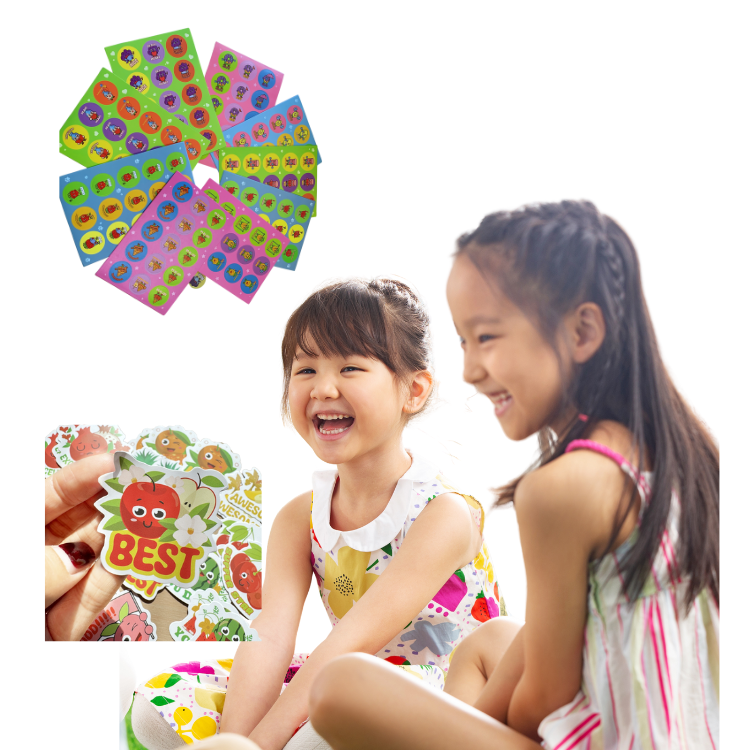
Exact production capacity and MOQ vary by design, material, order complexity, and season. The table below is a procurement comparison framework, not a guarantee of current commercial terms. Confirm all figures directly in writing during quotation.
| Supplier | Typical Project Scale | Indicative MOQ Approach | Compliance / Documentation to Request | Suitable Buyer Profile |
|---|---|---|---|---|
| Qingdao Focus On Color | Small to medium, scalable customized orders | Flexible by product and customization level | Material declarations, fragrance-related documentation, QC records, third-party tests if required | Brands needing custom scent, color-changing, and interactive promotional products |
| China Printing Group | Small to medium sticker-sheet orders | Public listing shows low MOQ pack options for selected items | Material specification, microcapsule confirmation, adhesive test information | Reward stickers, retail packs, short campaigns |
| Jiangsu Itech Labels | Medium to large label projects | Quote-dependent | ISO certificate copy, adhesive data, print inspection plan | Packaging and functional-label buyers |
| Guangzhou Miyi Printing | Medium print and paper-product projects | Quote-dependent | Paper/ink specification, coating details, print-color standard | Cards, brochures, catalogs, paper promotions |
| Wenzhou Zigpac | Medium repeat label orders | Quote-dependent | Environmental material declaration, substrate specification | Durable labels and eco-focused projects |
| Shenzhen Shunxinchang | Small to medium customized orders | Quote-dependent | Fragrance ownership statement, safety information, sample retention process | Custom scent campaigns and promotional merchandise |
| Winnin Overseas | Small to medium craft and stationery projects | Product-dependent | Child-product material information, packaging specification | Stationery, crafts, greeting cards |
| Hangzhou Zenjoy | Small to medium multi-item projects | Flexible by item | Factory disclosure, inspection process, packing list controls | Gift sets, planners, paper-product bundles |
| Ningbo Xianying | Packaging-linked sticker projects | Quote-dependent | Packaging validation, storage and carton specifications | Buyers needing sticker and packaging integration |
| Shenzhen Minsda Printing | Medium to large cosmetic-label projects | Quote-dependent | Cosmetic packaging compatibility, migration-test support | Beauty and personal-care promotional projects |
A supplier's reported MOQ should never be evaluated in isolation. A low MOQ may look attractive, but it can result in a high unit cost, limited color options, restricted scent choices, simplified finishing, or weaker batch consistency. Conversely, a higher MOQ may be commercially reasonable if the project requires a custom microcapsule blend, special adhesive, individual retail packing, or precise color management.
A complete request for quotation should include more than dimensions and artwork. Buyers should provide a detailed product brief covering the following items.
Common scratch-and-sniff sticker substrates include:
- Coated paper.
- Woodfree paper.
- Art paper.
- Synthetic paper.
- PVC film.
- PET film.
- PP film.
- Specialty paper with a textured finish.
- Card stock for fragrance cards or promotional inserts.
Paper-based products are generally cost-effective and suitable for sticker sheets, reward labels, magazines, and promotional materials. Film-based products can offer better moisture resistance, but coating compatibility and cost must be reviewed carefully.
If the product is intended for children, educational settings, or frequent handling, specify the expected use environment. A classroom reward sticker may need a different adhesive and surface durability standard than a luxury fragrance-card insert.
Ask the supplier whether the fragrance is:
- Microencapsulated.
- Screen printed.
- Offset compatible.
- Applied as a separate scented coating.
- Protected by a varnish layer.
- Available in standard or custom scent profiles.
- Tested for rub activation and scent retention.
The phrase "scented sticker" is not enough. Request a written explanation of the scent-release process.
A strong initial odor does not necessarily indicate better quality. Some suppliers may use excessive fragrance loading to make samples smell impressive. In mass production, this can cause oil migration, staining, adhesive interference, or rapid scent loss. The more important metric is controlled fragrance release after normal storage and repeated scratching.
The selected printing method should match the order quantity, artwork complexity, and material.
| Printing Method | Suitable for | Strengths | Buyer Considerations |
|---|---|---|---|
| Offset printing | Large paper-based orders | Strong color reproduction and cost efficiency at volume | Plate costs and setup time may be higher |
| Flexographic printing | Roll labels and repeat packaging labels | Efficient for high-volume label production | Confirm coating and microcapsule compatibility |
| Screen printing | Specialty coatings and fragrance layers | Can handle thicker coating deposits | Slower production and higher unit cost for some formats |
| Digital printing | Short runs and variable artwork | Faster sampling and no plate requirement | Confirm whether fragrance coating is added separately |
| Gravure printing | Very large, repeat-volume packaging projects | Consistent high-volume output | Usually not economical for smaller custom runs |
Adhesive selection is often overlooked. Buyers should define the intended application surface:
- Paper.
- Glass.
- Plastic.
- Metal.
- Corrugated carton.
- Cosmetic packaging.
- Fabric.
- Notebook covers.
- Children's activity books.
- Refrigerated packaging.
- Curved containers.
A sticker that adheres well to coated paper may fail on a low-energy plastic surface such as polypropylene. Similarly, a high-tack adhesive can damage a book page or leave residue if the sticker must be removable.
Scratch-and-sniff sticker requirements depend on the destination market, intended use, consumer group, and product category.
For example:
- CE marking is not a general certification for all stickers. It applies only when a product falls within the scope of relevant EU legislation.
- RoHS primarily addresses certain hazardous substances in electrical and electronic equipment. It is not automatically the correct compliance route for ordinary scented stickers.
- REACH may be relevant for chemical substances and certain consumer-product applications in the European Union.
- EN 71 testing can be relevant for toys or children's products, depending on how the product is marketed and used.
- CPSIA may be relevant for children's products entering the United States.
- FSC can be relevant if buyers require responsibly sourced paper materials, but the claim must be supported by an appropriate chain-of-custody arrangement.
Do not request a generic "CE/RoHS certificate" simply because it appears on competitor listings. Instead, identify your product's actual regulatory category and request the correct documentation.
China's labeling and marking obligations can also vary by product. For goods entering China, certain product categories require China Compulsory Certification, while food and other regulated goods may have specific labeling requirements. For export projects, buyers should focus first on the legal requirements in their own destination market.
The most common hidden problem is the use of low-grade fragrance materials or insufficient microcapsule content. A supplier may send a strong-smelling initial sample but reduce fragrance concentration during bulk production.
How to avoid it:
- Keep an approved "golden sample."
- Define the scent profile in writing.
- Request a retained sample from each production batch.
- Conduct random scratch tests after production and before shipment.
- Require the supplier to state whether fragrance microcapsules are made in-house or purchased from a third party.
A strawberry scent in the first order may smell noticeably different in the second order if the fragrance supplier changes, the capsule formula changes, or the coating weight is reduced.
How to avoid it:
- Require a batch code.
- Ask for fragrance supplier and formula-version control.
- Approve a scent standard before each large repeat order.
- Keep reference samples in sealed packaging away from heat and sunlight.
- Include acceptable sensory variation limits in the purchase specification.
Poor adhesive selection can cause stickers to curl, lift, fall off, or leave residue. This is especially common when buyers do not identify the final application surface.
How to avoid it:
- Send actual packaging material to the factory for testing.
- Request peel-adhesion test results where appropriate.
- Test at different temperatures and humidity levels.
- Specify whether the sticker must be permanent, removable, repositionable, freezer-grade, or oil-resistant.
This is an industry issue that is widely understood by experienced suppliers but often overlooked in online sourcing discussions.
A strong-scent sticker can contaminate nearby products during storage or shipment. If pineapple-scented and coffee-scented stickers are packed in the same carton, adjacent packs may develop mixed odors. The problem becomes worse when products are exposed to heat in containers.
How to avoid it:
- Pack each scent SKU separately.
- Use sealed inner packaging where needed.
- Avoid mixing fragrance families in the same master carton.
- Request a heat-aging test for high-temperature shipping routes.
- Keep fragrance labels away from food, cosmetics, textiles, and products with their own signature scent unless compatibility has been tested.
Some suppliers describe a product as eco-friendly because the face stock is paper, while the construction still includes silicone-coated release liners, synthetic adhesives, plastic laminates, or chemical coatings.
How to avoid it:
- Request a complete material breakdown.
- Define whether the priority is recycled content, recyclability, compostability, FSC paper, plastic reduction, or low-VOC ink.
- Avoid vague "eco" language in customer-facing marketing unless documentation supports it.
A supplier may display an ISO certificate on a website that is expired, belongs to a different company name, covers a different facility, or does not include the relevant manufacturing scope.
How to avoid it:
- Check the legal company name against the certificate.
- Verify the factory address.
- Confirm the certificate scope includes relevant manufacturing activities.
- Check expiry date and certification body.
- Contact the certification body or search its online certificate directory where available.
- Request a current audit report or recent surveillance-audit evidence for critical projects.
The most important question is not, "How long will the scent last?"
The better question is: "How long will the scent remain identifiable after the sticker has experienced real storage, transport, rubbing, and retail display conditions?"
Many suppliers evaluate scent retention using newly produced samples kept in a controlled factory environment. But global buyers face a different reality: container heat, warehouse storage, retail handling, e-commerce fulfillment, and customer use.
A useful test protocol should include:
1. Store samples in sealed retail packaging and in open air.
2. Age samples at room temperature and elevated temperature.
3. Test fragrance after 30, 60, and 90 days where the project schedule permits.
4. Compare scratch response before and after aging.
5. Check whether the fragrance remains recognizable rather than simply detectable.
6. Inspect the surface for oil marks, discoloration, adhesion loss, and print damage.
7. Confirm that different scent SKUs do not transfer odor to one another.
For repeat programs, buyers should create a fragrance approval panel with at least three people. Scent perception differs by person, so one buyer's opinion should not be the only acceptance standard.
Your inquiry should include:
- Finished size and shape.
- Sheet format or roll format.
- Artwork file format.
- Number of colors.
- Surface finish.
- Material preference.
- Adhesive requirement.
- Scent type.
- Custom or standard fragrance requirement.
- Quantity by SKU.
- Retail packaging requirement.
- Target market.
- Required delivery date.
- Destination port or shipping address.
- Required tests or compliance documents.
A well-prepared RFQ reduces quotation delays and prevents suppliers from pricing different specifications.
Do not accept only a price sheet. Ask for:
- Recommended substrate.
- Print method.
- Fragrance process.
- Expected production lead time.
- MOQ by scent and design.
- Sample lead time.
- Packaging method.
- Production capacity for repeat orders.
- Quality-control checkpoints.
- Available test reports.
- Incoterms quotation, such as EXW, FOB, CIF, DDP, or DAP.
Evaluate samples for:
- Print sharpness.
- Color accuracy.
- Die-cut quality.
- Surface feel.
- Adhesive strength.
- Scent strength.
- Scent accuracy.
- Scratch activation.
- Fragrance stability after several days.
- Packaging odor.
- Carton quality.
If your artwork includes licensed characters, trademarks, cosmetic claims, food images, or children's content, ensure that all intellectual-property rights and labeling claims are cleared before production.
The approved sample should become the reference standard for bulk production.
Your purchase order should state:
- The golden sample date.
- The approved fragrance name or code.
- The approved artwork revision.
- Color standard.
- Material construction.
- Packing specification.
- Inspection requirements.
- Acceptable defect level.
- Delivery schedule.
- Payment terms.
- Remedies for quality discrepancies.
For important orders, use one or more of the following:
- Pre-production inspection.
- During-production inspection.
- Pre-shipment inspection.
- Random scent activation testing.
- Carton-drop test.
- Barcode and labeling verification.
- Container-loading supervision.
For higher-risk fragrance projects, consider retaining sealed samples from the beginning, middle, and end of the production run.
Scratch-and-sniff stickers should be protected from excessive heat, direct sunlight, moisture, crushing, and odor contamination.
For sea freight:
- Use strong export cartons.
- Avoid leaving cargo in direct sun before container loading.
- Consider seasonal shipping conditions.
- Request clear carton marks and batch codes.
- Confirm pallet requirements.
- Keep different scent families separated.
- Use moisture protection if the shipment route requires it.
For air freight, freight cost can be higher, but transit time is shorter. This may be appropriate for urgent launches, samples, smaller high-value orders, or products with strict launch dates.
Sourcing scratch and sniff stickers from China can deliver strong value when buyers select suppliers based on technical capability rather than quotation alone. The right partner should understand fragrance microcapsules, print-and-coating compatibility, adhesive requirements, batch consistency, packaging protection, and international delivery expectations.
For buyers seeking a responsive partner for custom scratch and sniff stickers, fragrance-sensitive promotional products, color-changing materials, or combined interactive packaging concepts, Qingdao Focus On Color Industry & Trade Co., Ltd. is a practical manufacturer to include in the early supplier-evaluation stage. Its experience across fragrance, photochromic, thermochromic, and liquid-crystal product categories makes it particularly relevant for brands that require customized development rather than a standard off-the-shelf sticker.
Before placing a bulk order, request a technical proposal, approve physical samples, document the fragrance and material specification, verify relevant certificates, and conduct pre-shipment quality inspection. These steps are usually more valuable than pursuing the lowest initial unit price.
Contact Qingdao Focus On Color Industry & Trade Co., Ltd. with your artwork, target quantity, scent concept, required material, packaging requirements, destination market, and preferred delivery date to receive a project-specific OEM or ODM quotation.

Request a color copy of the certificate, then compare the company name, factory address, certification scope, certificate number, issue date, and expiry date with the supplier's business documentation. Check whether the certification body offers an online certificate directory. For critical orders, email the issuing certification body with the certificate number and ask whether it remains valid.
It depends on the product's intended use, destination market, materials, fragrance composition, and applicable child-product regulations. If the sticker is marketed as a toy or included in a children's product, ask the supplier about relevant testing such as EN 71 or CPSIA-related test support, as applicable. Do not rely on a generic "non-toxic" claim without current test documentation tied to the actual material construction.
Possible causes include lower fragrance microcapsule loading, changes in fragrance supplier, different coating weight, a protective coating that blocks fragrance release, long storage time, heat exposure, or inconsistent production parameters. Use a golden sample and require batch-specific quality checks to reduce variation.
MOQ depends on the printing process, scent customization, material, die-cut shape, packaging, and whether a new fragrance formulation is required. Standard scent options and simple paper sheets may allow lower quantities. Fully customized scents, special films, unique adhesives, and retail packaging usually require higher MOQs. Ask suppliers to quote three quantity tiers so you can compare unit-cost changes.
Choose based on the application. Coated paper is economical for reward stickers, books, cards, and short-term promotions. PP or PET may offer better water resistance and durability for packaging or consumer-product labels. PVC can be flexible but may not suit buyers with strict sustainability policies. Always request compatibility testing between the substrate, adhesive, ink, fragrance coating, and intended end-use environment.
- [China Customs: Major Export Commodities in Quantity and Value] — Official trade data covering paper, paper pulp, and related articles. [english.customs.gov]
- [U.S. International Trade Administration: China Labeling and Marking Requirements] — Background on China product-labeling and marking obligations. [trade]
- [China National Bureau of Statistics: National Economy Pushed Forward with Innovation-Led Development] — Official 2025 national manufacturing and economic data. [stats.gov]
- [China Customs Statistics Portal] — Official customs-statistics access point. [customs.gov]
- [Printed Labels Market Analysis] — Recent global printed-label market estimate and forecast. [coherentmarketinsights]
- [Qingdao Focus On Color Industry & Trade Co., Ltd. Public Company Profile] — Publicly listed product scope including scratch-and-sniff and color-changing products. [made-in-china]


