+86 18560646018

Views: 212 Author: Focus Color Publish Time: 2026-08-29 Origin: Site


Content Menu
● Why Keg Temperature Matters for Cold Brew
● What Is a Thermometer Sticker?
>> How Liquid-Crystal Temperature Stickers Work
>> Typical Thermometer Sticker Features
>> Typical Smart Keg Ring Features
● Thermometer Sticker vs. Smart Keg Rings: Quick Comparison
● Thermometer Sticker Benefits for Cold-Brew Operations
>> Immediate Visibility During Service
>> No Battery, Network, or Subscription
>> Strong Branding and Customization Potential
● Smart Keg Ring Benefits for Scaling Brands
>> Remote Temperature Monitoring
>> Data for Operations and Sales
● The Hidden Limitations of Each Option
>> Thermometer Sticker Limitations
● Expert Recommendation: Use a Layered Temperature-Control Strategy
>> Layer 1: Refrigeration Control
>> Layer 2: Visible Keg-Level Check
>> Layer 3: Calibrated Verification
>> Layer 4: Connected Monitoring Where It Pays Back
● How to Choose the Right Solution
>> Choose Thermometer Stickers If You Need:
>> Choose Smart Keg Rings If You Need:
● Practical Setup Checklist for Thermometer Stickers
● Custom Thermometer Sticker Design for Cold-Brew Brands
● FAQ
>> 1. Are thermometer stickers accurate enough for cold-brew coffee kegs?
>> 2. What temperature range should a cold-brew keg thermometer sticker display?
>> 3. Can a thermometer sticker be applied to stainless-steel kegs?
>> 4. Do smart keg rings replace manual temperature checks?
>> 5. Can thermometer stickers be customized with a coffee brand logo?
>> 6. Are thermometer stickers suitable for nitro cold brew?
>> 7. Which option costs less: thermometer stickers or smart keg rings?
For operators serving cold brew on tap, temperature is not a minor operating detail—it directly affects beverage quality, consistency, cleaning routines, product holding decisions, and customer confidence. Choosing between a thermometer sticker and smart keg rings depends on whether your priority is fast visual verification at the keg or continuous digital visibility across the dispensing system.
In practical terms, a liquid-crystal thermometer sticker is usually the most accessible choice for daily staff checks, small cafés, mobile coffee carts, and operators managing a limited number of cold-brew kegs. Smart keg rings are more suitable for multi-location brands, high-volume taprooms, and businesses that need remote readings, automated alerts, inventory intelligence, or more structured operating records.

Cold brew coffee is often brewed, stored, transported, and served through a closed dispensing system. That gives operators speed and consistency, but it also creates a responsibility: the beverage temperature must remain controlled from keg filling through final pour.
A keg may be located in a refrigerated cabinet, undercounter cooler, walk-in chiller, mobile service unit, or back-of-house cold room. Yet the product temperature inside the keg can differ from the cabinet display temperature, especially when:
- A refrigerator door is frequently opened.
- A keg has recently been loaded into a cooler.
- The line run is long or exposed to warmer ambient air.
- The dispensing system is installed in a busy service area.
- The cooler is overloaded or poorly ventilated.
- Equipment maintenance has been delayed.
- A mobile coffee cart operates outdoors or in changing weather.
Cold-brew guidance published by Maricopa County states that cold brew should be brewed, held, and dispensed at 41°F / 5°C or below when handled as a time/temperature control for safety food. The same guidance also highlights operational needs such as cold-holding procedures, date marking, thermometer calibration, and staff training. For kegged product, local rules and process requirements may differ, so operators should always verify the applicable requirements with their local authority.
Temperature also changes the customer experience. Coffee that is too warm can taste flatter, less refreshing, and less visually appealing in a clear cup. In nitrogen-infused cold brew, unstable temperature can also contribute to inconsistent foam, altered mouthfeel, and a less reliable cascading presentation.
This is why a visible, correctly selected temperature indicator can be valuable. It gives the team a practical way to see whether the keg environment appears to be within the intended serving range before problems become visible to customers.
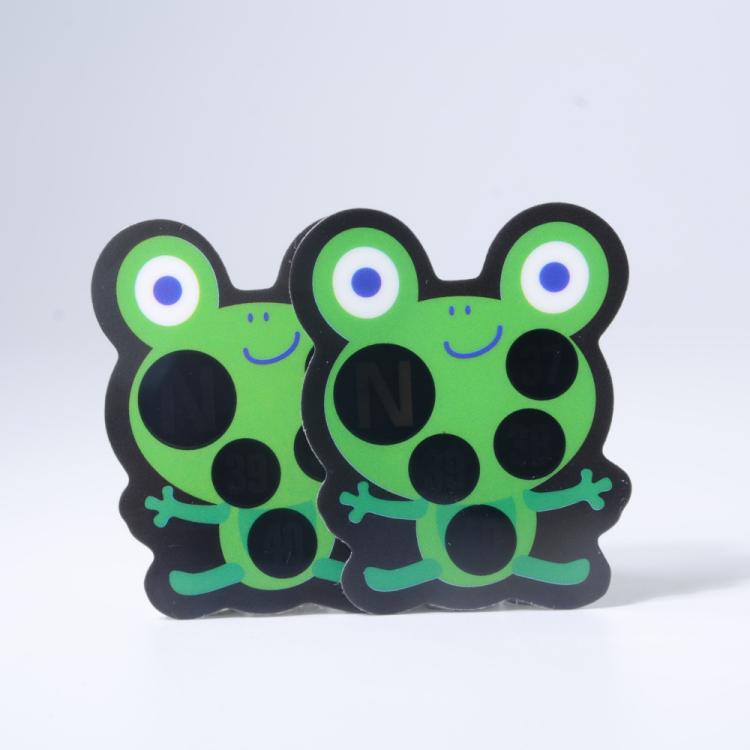
A thermometer sticker is an adhesive temperature indicator applied directly to the outside of a keg, container, beverage tank, pipe, cooler, or other surface. In cold-brew dispensing applications, the most common version uses thermochromic liquid-crystal technology.
The indicator changes color as the surface temperature changes. Depending on the design, it may display individual temperature values, a color band, a highlighted temperature window, or a selected temperature point.
For example, a liquid-crystal keg thermometer sticker may show a scale such as:
- 35°F / 2°C
- 40°F / 4°C
- 45°F / 7°C
- 50°F / 10°C
- 55°F / 13°C
When the keg reaches the relevant range, a designated number or color becomes more visible. This creates a fast visual cue without requiring batteries, charging, Wi-Fi, software, or staff login credentials.
Thermochromic liquid crystals respond to temperature by changing the wavelengths of light they reflect. In a temperature indicator, these materials are typically microencapsulated and applied as part of a printed functional layer. The display may shift through colors such as black, brown, red, green, blue, or another designed visual sequence.
Liquid-crystal indicator technology can be engineered for narrow or broad temperature ranges. Some liquid-crystal systems can detect relatively small temperature changes, but real-world performance depends on the formulation, printed construction, mounting surface, viewing angle, ambient lighting, and whether the sticker has fully equilibrated with the keg surface.
For cold-brew use, the objective is usually not laboratory-grade measurement. It is fast operational visibility: a staff member should be able to look at the keg and recognize whether it appears appropriately chilled, warming unexpectedly, or sitting outside the target serving range.
A customized thermometer sticker for a cold-brew coffee keg can include:
- A chosen Fahrenheit, Celsius, or dual-scale temperature range.
- Brand logo, color system, and private-label artwork.
- Keg identification area, batch field, or service-date space.
- Waterproof or moisture-resistant surface layers.
- Adhesive selected for stainless steel, coated metal, plastic, or glass.
- Rounded corners for improved handling and reduced edge lifting.
- QR code space for cleaning procedures, batch information, or product instructions.
- Custom dimensions for Cornelius kegs, slim kegs, growlers, tanks, or cold-brew dispensers.
- A visual design that matches a café, roaster, distributor, or equipment brand.
For a manufacturer or distributor, the sticker can also serve as a functional branded accessory. Rather than giving customers an ordinary keg label, the business can provide a useful visual tool that reinforces professionalism every time staff members check the system.
Smart keg rings are electronic monitoring devices designed to attach around, near, or in connection with a keg. Depending on the product architecture, they may collect and transmit information such as keg temperature, movement, location, fill level, pressure, dispensing activity, or asset status.
A smart keg ring usually combines sensors, a power source, and wireless communication. Data may be sent through Bluetooth, cellular connectivity, low-power wide-area networking, Wi-Fi, near-field systems, or a gateway installed at the venue.
The term "smart keg ring" can refer to several different products. Some focus mainly on asset tracking. Others are designed for beverage inventory management. Some systems estimate remaining volume through weight, flow, or dispensing data. Others may monitor temperature as one data point among several.
For cold-brew coffee brands with many kegs circulating across cafés, hospitality venues, offices, events, and distributor networks, smart keg technology can provide more than a simple temperature reading. It can create a centralized view of where kegs are, whether they are moving, how long they have been deployed, and how quickly product is being poured.
Depending on the system, smart keg rings may offer:
- Digital temperature reporting.
- Remote monitoring dashboards.
- Mobile application access.
- Time-stamped temperature history.
- Alerts when readings exceed a set range.
- Keg location or movement tracking.
- Inventory and keg-cycle visibility.
- Pour-rate or remaining-volume estimation.
- Maintenance and collection reminders.
- Customer-site performance reporting.
- Asset recovery support for returnable kegs.
These capabilities can be valuable. However, they also require a more complex operating model. The business may need to manage device costs, battery life, connectivity, software subscriptions, staff onboarding, data access, and maintenance workflows.
| Comparison Area | Thermometer Sticker | Smart Keg Rings |
|---|---|---|
| Primary function | Visual surface-temperature indication | Digital monitoring and connected keg intelligence |
| Power source | No battery required | Battery or powered electronic system required |
| Reading method | Staff visually checks the indicator | Data appears through an app, dashboard, gateway, or alert system |
| Installation | Peel-and-apply | Attach, activate, pair, register, and sometimes configure |
| Cost level | Low | Moderate to high |
| Custom branding | Highly flexible | Possible, but typically less simple and more system-dependent |
| Temperature history | No historical data | Often available, depending on the platform |
| Remote access | No | Yes, if connectivity is available |
| Alert capability | Visual only | May support automated notifications |
| Best for | On-site service checks and simple operations | Multi-site monitoring, asset management, and data-driven operations |
| Maintenance needs | Minimal | Battery, firmware, hardware, and software management |
| Reusability | Can be permanent, replaceable, or disposable depending on construction | Usually reusable hardware |
| Keg-level monitoring | Only if designed as a separate level-sensitive label | Possible in some systems, depending on sensors and data model |
| Accuracy expectations | Best used as an operational visual reference | May provide more detailed data, but requires calibration and system validation |
The most important distinction is simple: a thermometer sticker helps people see; a smart keg ring helps organizations collect, transmit, and manage data.
Neither is automatically better in every cold-brew coffee dispensing system.
A thermometer sticker is often underestimated because it is simple. In reality, simplicity can be a significant operational advantage.
During a busy morning rush, employees do not always have time to open an application, connect to a dashboard, or search for a specific keg ID. A visible sticker on the keg provides an immediate cue.
A barista, shift supervisor, delivery driver, or service technician can look at the indicator and make a quick decision:
- Is this keg cold enough to serve?
- Has the keg warmed after loading?
- Is the cooler performing as expected?
- Should the system be checked before the next service period?
- Does this keg require a secondary measurement with a calibrated probe?
This is especially useful in locations where staff turnover is high or where multiple team members share responsibility for beverage service.
A passive thermometer sticker does not need charging or wireless coverage. It remains visible during power interruptions, network failures, app outages, and equipment transitions.
For mobile cold-brew carts, outdoor events, pop-ups, festivals, catering operations, and temporary installations, that independence is valuable. A connected smart device may still be helpful, but it cannot replace a simple visual check when the environment is unpredictable.
For a roaster or coffee distributor with dozens, hundreds, or thousands of reusable kegs, the per-unit cost matters. Thermometer stickers are generally far more economical than electronic tracking hardware.
This makes them well suited for:
- Sample kegs sent to prospective wholesale customers.
- Seasonal cold-brew promotions.
- Contract-packaged coffee programs.
- Private-label cold brew.
- Multi-brand distributor portfolios.
- Starter kits for cafés adding coffee on tap.
- Branded keg accessories for equipment installers.
A low-cost visual temperature indicator can improve day-to-day discipline without requiring a major technology budget.
A generic digital device may provide data, but it often does little to reinforce a coffee brand at the point of use. A custom thermometer sticker can combine temperature visibility with a polished brand presentation.
For example, a nitro cold-brew brand could create a black-and-copper keg label featuring:
- A 35°F–45°F / 2°C–7°C visual temperature band.
- A bright green "READY TO POUR" zone.
- A "KEEP CHILLED" reminder.
- A field for roast profile or batch date.
- A QR code connected to equipment cleaning instructions.
- A service hotline or distributor contact point.
That turns the keg into a better user interface for staff and a more professional product touchpoint for wholesale buyers.
Smart keg rings become more compelling as the keg fleet grows and the distribution network becomes more complex.
A connected keg solution can allow managers to view temperature data without physically standing in front of the equipment. For a business operating across many cafés, hotels, offices, stadiums, or restaurant accounts, that can reduce blind spots.
If a site loses refrigeration overnight or a keg remains outside the intended temperature range, an alert may enable the team to investigate earlier. This is particularly relevant when service teams are responsible for high-value, ready-to-drink product at customer locations.
However, managers should remember that a sensor reading is only useful when there is a clear response process. A notification without an accountable person, escalation path, and documented corrective action may create data without improving outcomes.
Returnable stainless-steel kegs are valuable assets. When they move through distributor warehouses, customer locations, service vehicles, event sites, and cleaning facilities, loss and delayed return can become expensive.
A smart keg system may help businesses understand:
- Which customer currently has each keg.
- How long the keg has been at a location.
- Which accounts rotate stock slowly.
- Which kegs may be overdue for collection.
- Where assets are concentrated.
- Whether a delivery or pickup process needs improvement.
For a large cold-brew program, this can support better purchasing decisions and lower asset loss.
Connected keg data may also reveal patterns that are not visible from manual checks. For example, a brand may identify that one location empties a keg every three days while another takes three weeks. That can influence delivery routes, account segmentation, tap placement, seasonal forecasting, and promotional planning.
A smart keg ring can therefore become part of a broader commercial system rather than only a temperature-monitoring tool.
The most effective equipment choice comes from understanding what each solution does not do.
A thermometer sticker normally measures or indicates the surface temperature of the keg, not necessarily the exact temperature at the center of the liquid. A newly filled keg, uneven cooling, warm ambient air, direct sunlight, or rapid temperature change can create a delay between the beverage's actual internal temperature and the visible surface indication.
Thermometer stickers should therefore be treated as a practical screening tool, not as the only verification method in a controlled beverage program.
Additional limitations include:
- No digital record of temperature exposure.
- No automatic alarm if the keg warms.
- No remote monitoring.
- Readability can be affected by condensation, scratches, lighting, or incorrect placement.
- Adhesive performance depends on surface cleanliness and temperature during application.
- A poorly designed temperature range may not match the operator's actual needs.
The solution is not to avoid thermometer stickers. The solution is to specify them correctly, apply them properly, and include them in a broader operating routine.
Smart keg rings can introduce their own complications:
- Higher upfront investment.
- Possible software, connectivity, or platform fees.
- Device pairing and user-training requirements.
- Battery replacement or charging requirements.
- Hardware damage during washing, transport, or keg handling.
- Data gaps caused by poor signal coverage.
- Sensor drift or measurement issues if calibration is neglected.
- Dependence on dashboards that frontline staff may not check during service.
A smart keg ring can generate excellent operational intelligence, but it cannot replace basic refrigeration maintenance, keg sanitation, cleaning-line procedures, temperature verification, or trained staff.
For most cold-brew coffee dispensing systems, the strongest approach is not choosing one technology in isolation. It is building a layered system in which each tool has a defined job.
Start with properly sized and maintained refrigeration. The cooler should have sufficient airflow, stable performance, correct loading practices, and a reliable reference thermometer or controller.
A kegerator is fundamentally responsible for keeping the beverage cold during storage and dispensing. If the refrigeration unit is undersized, poorly maintained, or frequently overloaded, no sticker or connected sensor can solve the underlying issue.
Add a thermometer sticker to the keg for quick shift-by-shift inspection. This helps staff identify unusual conditions without opening software.
A visible indicator is especially useful at:
- The start of each shift.
- After deliveries.
- Before opening service.
- After a suspected refrigeration problem.
- During outdoor or mobile events.
- Before moving a keg to a new location.
Use a calibrated probe or validated thermometer as the reference tool when the sticker indicates an issue, when the cooler display seems inaccurate, or when procedures require a documented temperature check.
The key principle is straightforward: screen visually, verify accurately, and respond consistently.
Use smart keg rings or connected sensors when the operational value justifies the cost. This is most likely when a business has a large keg fleet, dispersed customer accounts, expensive product, frequent refrigeration incidents, significant keg loss, or a need for central oversight.
For many growing coffee brands, the best path is to start with custom thermometer stickers and introduce smart monitoring selectively for priority accounts, pilot markets, or high-value keg routes.
Use the following decision framework before purchasing thermometer stickers or smart keg rings.
- Low-cost visual temperature checks.
- No-battery, no-network operation.
- Easy deployment across many kegs.
- Custom branded labels for wholesale or retail programs.
- A simple tool for staff training and daily routines.
- A practical solution for mobile coffee service.
- A secondary visual indicator on kegged cold brew.
- A customized temperature range for coffee dispensing.
- Remote visibility across several locations.
- Temperature history and data logging.
- Automated threshold alerts.
- Keg tracking and fleet-management features.
- Operational analysis for distribution networks.
- Better visibility into keg dwell time and customer usage.
- A connected infrastructure for high-value or high-volume operations.
- Fast on-site visibility and centralized data.
- A low-tech backup for connected systems.
- Better staff compliance during busy service.
- Branded keg presentation plus remote monitoring.
- A scalable process that works from one café to hundreds of accounts.
A well-designed sticker can perform reliably, but installation quality matters. Use this checklist when applying a thermometer sticker to a cold-brew keg.
1. Define the target temperature range. Choose a scale that reflects actual cold-brew storage and serving conditions rather than a generic beverage range.
2. Select the correct location. Apply the sticker to a visible, relatively flat area of the keg body. Avoid seams, handles, highly curved zones, deep scratches, and areas likely to be covered by clamps or equipment.
3. Clean the surface. Remove dust, oil, moisture, coffee residue, adhesive residue, and fingerprints. A clean, dry surface improves bonding.
4. Allow temperature stabilization. Do not rely on an immediate reading after moving a keg from a warm warehouse into a refrigerator. Give the keg and indicator time to equilibrate.
5. Protect the reading area. Choose a construction designed to withstand condensation, cold-room use, routine handling, and expected cleaning exposure.
6. Train the team. Staff should understand what each color or number means, when to conduct a secondary check, and whom to notify if a keg appears outside the expected range.
7. Build a response rule. For example: if the sticker displays above the designated chilled range, stop and verify with a calibrated thermometer, inspect the refrigeration system, record the finding if required, and follow the company's product-handling procedure.
For cold-brew coffee businesses, a customized liquid-crystal temperature sticker should be designed as a functional operations tool—not merely a decorative label.
At Qingdao Focus On Color Industry & Trade Co., Ltd., custom temperature-indicator projects can be developed around the practical needs of coffee brands, beverage equipment suppliers, keg distributors, and promotional-product buyers. With more than 13 years of production experience in thermochromic, photochromic, liquid-crystal thermometer, and fragrance-related products, the focus should be on matching the material structure and visual design to the intended application.
A professional custom brief may include:
| Design Requirement | Recommended Discussion Point |
|---|---|
| Temperature range | Define the intended indication range in °F, °C, or both |
| Activation point | Determine the most useful highlighted temperature or color zone |
| Keg material | Confirm stainless steel, coated metal, plastic, or another substrate |
| Adhesive | Match adhesive performance to cold, moisture, and expected handling |
| Surface protection | Specify water resistance, abrasion resistance, or protective overlamination |
| Dimensions | Match the available keg label area and viewing distance |
| Branding | Add logo, colors, text, safety reminders, or private-label packaging |
| Order model | Confirm OEM, ODM, custom artwork, and packaging requirements |
| Use environment | Clarify indoor café, refrigerated cabinet, mobile cart, outdoor event, or industrial distribution setting |
A strong design does not overload the label with information. It makes the most important status instantly recognizable. For example, a green zone around the desired cold serving condition can help employees respond faster than a crowded label with too many colors and numbers.
A thermometer sticker is the better choice when your cold-brew dispensing system needs simple, visible, low-cost temperature awareness at the keg. It is easy to deploy, easy to understand, customizable, and highly practical for daily service routines.
A smart keg ring is the better choice when your business needs connected data, remote oversight, keg tracking, and multi-site control. It offers more intelligence, but it also demands more budget, infrastructure, and process discipline.
For many cold-brew brands, cafés, and distributors, the most practical model is a customized thermometer sticker on every keg, supported by calibrated verification tools and selective smart monitoring for high-value or distributed keg fleets. That combination improves staff usability without sacrificing the ability to scale.
If you are developing a private-label cold-brew temperature indicator, an OEM keg thermometer sticker, or a customized liquid-crystal label for beverage dispensing equipment, Qingdao Focus On Color Industry & Trade Co., Ltd. can help evaluate your temperature range, artwork, substrate, adhesive requirements, and packaging needs. Contact the team to discuss a custom OEM/ODM solution for your coffee, beverage, refrigeration, or promotional product project.
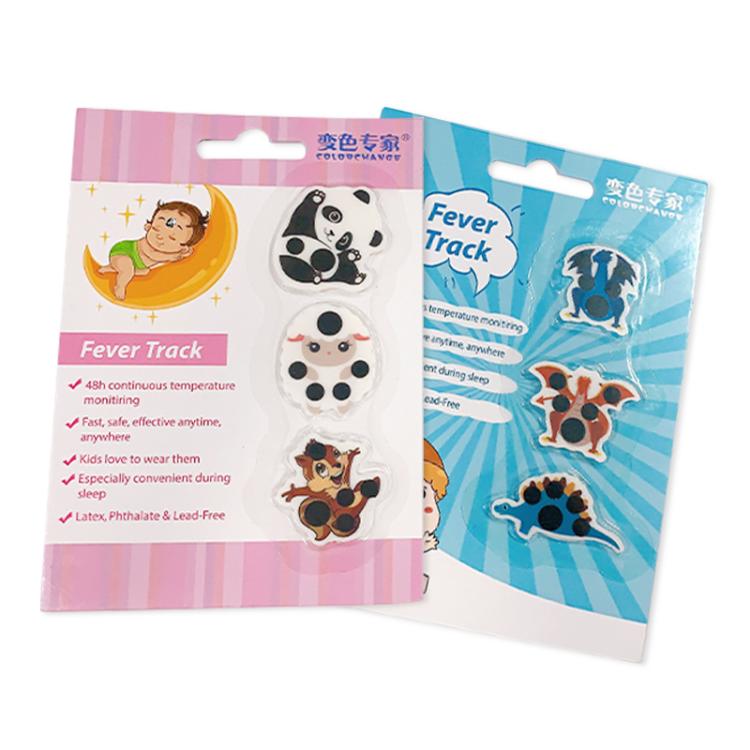
Thermometer stickers are useful for fast visual checks, but they should not be treated as the sole reference for food-handling decisions. They indicate the surface temperature of the keg and may respond differently from the temperature at the center of the beverage. When a reading appears abnormal or a documented check is required, verify the condition with a calibrated thermometer.
The ideal range depends on the operator's storage and serving process, local requirements, and equipment conditions. For many cold-brew applications, a custom scale centered around chilled holding temperatures is more useful than a broad generic range. Businesses should define their own operating limits and use a scale that makes deviations easy to identify.
Yes. Stainless steel is a common application surface for temperature-indicator labels. The keg should be clean, dry, and free from oil or residue before application. The correct adhesive and protective construction should be selected according to refrigeration, condensation, handling, and cleaning exposure.
No. Smart keg rings can provide remote data and alerts, but staff still need procedures for responding to alerts, checking refrigeration performance, verifying unusual readings, and maintaining sanitation. Technology supports operations; it does not eliminate the need for trained people and documented processes.
Yes. Custom liquid-crystal thermometer stickers can include logos, brand colors, temperature scales, handling reminders, batch fields, QR codes, private-label packaging, and other visual elements. The artwork should preserve strong contrast around the active temperature display so the reading remains clear.
Yes. A properly specified thermometer sticker can be used on kegs containing still or nitrogenated cold brew. It provides a convenient visual cue for keg temperature during storage and dispensing. For nitro systems, operators should also maintain correct gas, refrigeration, line-cleaning, and dispensing procedures to protect beverage quality.
Thermometer stickers typically cost far less per keg because they are passive printed indicators without electronic components, batteries, connectivity, or software. Smart keg rings can provide broader operational information, but their total cost should include devices, installation, subscriptions, maintenance, and staff training.
1. Maricopa County Environmental Services Department. [Cold-Brew Coffee Guidance]
2. SpotSee. [Liquid Crystal Thermometers]
3. LCR Hallcrest. [Thermographics Technology: Thermochromic Liquid Crystals and Leuco Dyes]
4. U.S. Patent and Trademark Office / Google Patents. [Thermochromic Liquid Crystal Temperature Indicator]
5. Tea & Coffee Trade Journal. [Cold Brew Coffee Safety & Compliance]
6. Royal New York. [FSMA Part 3: Cold Brew Safety]
7. Micro Matic. [Coffee on Tap and Nitro Cold Brew Dispensing Equipment]
8. Beer CO. [Cold Brew Coffee Cooling and Dispensing Equipment]


