+86 18560646018

Views: 257 Author: Focus Color Publish Time: 2026-11-04 Origin: Site


Content Menu
● How Do Scratch and Sniff Stickers Work?
>> Step 1: Fragrance Is Enclosed in Microscopic Capsules
>> Step 2: The Capsules Become a Printable Coating
>> Step 3: Scratching Releases the Fragrance
● What Ingredients Make Scented Stickers Smell Like Fruit, Flowers, or Food?
● Why Microencapsulation Matters More Than Simply Adding Perfume
>> Scratch-Activated and Continuously Scented Products Are Different
● How Long Do Scratch and Sniff Stickers Last?
>> Why the Smell Becomes Weaker
● What Determines the Quality of Custom Scratch and Sniff Stickers?
>> Capsule and Coating Compatibility
● A Practical Sample-Approval Protocol for Buyers
>> 2. Approve a Physical Fragrance Reference
>> 4. Record Separate Performance Criteria
>> 5. Recheck After Relevant Storage
● Common Scent Problems and What to Check
● Are Scratch and Sniff Stickers Safe?
● Developing a Custom Scented Sticker Project
>> What Makes Scratch and Sniff Stickers Smell When You Scratch Them?
>> Can You Use Scratch and Sniff Stickers More Than Once?
>> Why Does My Scratch and Sniff Sticker No Longer Smell?
>> Do Scratch and Sniff Stickers Contain Real Fruit?
>> Can a Custom Sticker Match My Brand's Fragrance?
>> Does Adding More Fragrance Always Improve the Sticker?
What makes scratch and sniff stickers smell? The answer is microencapsulation: tiny capsules hold fragrance inside a protective shell, and gentle scratching breaks some of those capsules open. The released fragrance evaporates into the air, allowing your nose to detect the scent. The sticker does not create a new smell when scratched; it releases fragrance stored in its surface coating.
That simple interaction depends on careful material selection and manufacturing control. The fragrance must smell right, the capsules must survive production, and the finished coating must release scent without requiring excessive force.
At Qingdao Focus On Color Industry & Trade Co., Ltd., our manufacturing perspective comes from more than 13 years of experience with specialty products, including photochromic, thermochromic, liquid crystal thermometer, and fragrance products. For custom projects, we approach scent as a product-development requirement—not simply a finishing effect.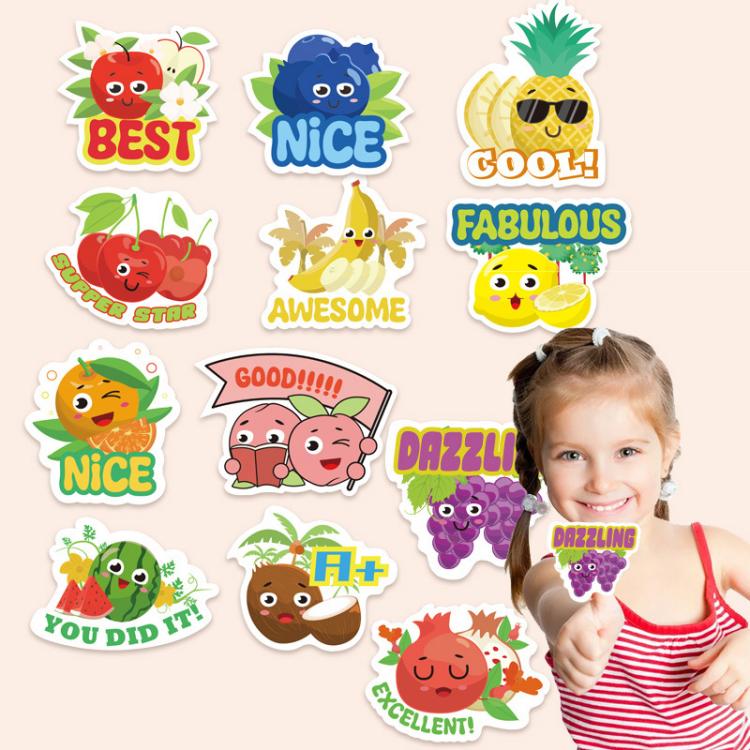
A typical scratch and sniff sticker combines a printed label with a coating containing fragrance-filled microcapsules. Each component has a different job.
| Component | Main function |
|---|---|
| Fragrance core | Provides the intended smell |
| Capsule wall | Protects the fragrance before activation |
| Binder | Holds the capsules on the sticker surface |
| Printed substrate | Carries the design and scented coating |
| Adhesive and liner | Allow application and protect the adhesive before use |
During microencapsulation, fragrance-containing droplets receive a thin surrounding wall. The resulting capsules are too small to identify individually during normal handling.
Shell materials and production methods vary. Technical descriptions include gelatin and polymer-based systems, but there is no single capsule chemistry used for every scented sticker.
The important principle is separation: the capsule wall helps protect the fragrance from immediate exposure to the surrounding environment.
The capsules are incorporated into a suitable coating or printing formulation. A binder helps attach them to the substrate.
The formulation must balance two competing requirements:
- Survive mixing, printing, drying, converting, and shipping.
- Break readily enough when the customer rubs the intended area.
This explains why adding fragrance oil to ordinary ink is not equivalent to engineering a controlled-release scented coating.
When you rub the surface, mechanical pressure and friction rupture some capsule walls. Fragrance escapes, and volatile molecules travel through the air to the nose.
Scratching therefore acts as a release mechanism. It is not the heat from your finger that normally creates the smell, and the printed picture itself is not responsible for the fragrance.
The smell comes from the fragrance composition inside the capsules. The capsule wall protects that composition; it does not determine whether the sticker smells like strawberry, rose, or coffee.
A fragrance can contain natural ingredients, synthetic aroma materials, or a combination. A strawberry illustration does not establish that the coating contains strawberry juice or fruit extract.
For a custom project, the useful question is not simply, "Can you make strawberry?" It is, "What kind of strawberry should customers recognize?"
Possible directions include:
- Fresh, slightly green strawberry.
- Sweet strawberry candy.
- Strawberry jam.
- Creamy strawberry dessert.
These descriptions represent different sensory targets. We recommend agreeing on an approved physical scent sample before production, because a fragrance name alone leaves too much room for interpretation.
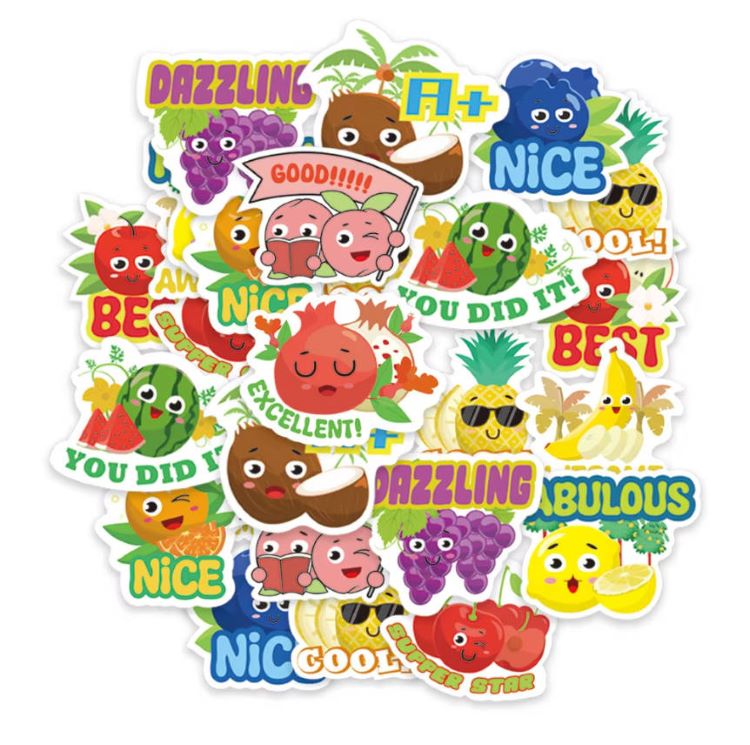
An unprotected fragrance can escape into the surrounding air without deliberate activation. Microencapsulation helps preserve a reserve that users release through touch.
However, encapsulation is not an absolute seal or a guarantee of permanent performance. Capsule integrity, fragrance composition, coating quality, handling, and storage all influence the result.
Some scented products release fragrance gradually without rubbing. Others are designed primarily for mechanical activation.
For buyers, this distinction affects the product specification:
| Intended experience | Development priority |
|---|---|
| Noticeable smell before touching | Passive fragrance release |
| Stronger smell after rubbing | Scratch-activated release |
| Repeated interactive use | Remaining intact capsules and repeatability |
| Controlled fragrance sampling | Recognizable scent after deliberate activation |
A scratch-activated sticker may still have some background odor. The more useful performance measure is whether rubbing produces the intended, repeatable change.
There is no universal lifespan for scratch and sniff stickers. Industry descriptions report performance ranging from months to years, but those ranges are not a warranty for an individual formulation.
Two different questions need separate answers:
1. How long will an unused sticker retain acceptable performance?
2. How many times can a user activate it before the scent becomes too weak?
An unopened, properly stored sticker and a repeatedly scratched display sample face very different conditions.
A broken capsule does not refill itself. Later scratching can release fragrance from capsules that remain intact, but the available reserve is finite.
Performance also depends on:
- The amount of scented coating applied.
- The number and integrity of the capsules.
- Fragrance stability.
- Exposure to heat, light, and air.
- Accidental abrasion during handling.
- The customer's activation method.
Store finished stickers in suitable protective packaging, away from excessive heat and direct sunlight. Ask the manufacturer for storage guidance and a shelf-life claim supported by the actual product—not a generic statement about microencapsulation.
From a manufacturing perspective, the strongest initial smell is not necessarily the best result. A useful sticker must balance scent quality, controlled activation, durability, and appearance.
A powerful smell has limited value if users cannot identify the intended scent.
For product sampling, compare the activated sticker with the approved reference. The goal should be an agreed sensory match, rather than an unsupported claim that the sticker reproduces a finished product perfectly.
The binder must hold capsules securely without preventing useful activation. Printing and drying conditions must also suit the formulation.
A coating that releases too readily may lose fragrance during handling. One that resists activation too strongly may frustrate customers.
The scented area should be easy to find and touch. A short instruction such as "Rub here to release the scent" can make the interaction clearer.
Avoid assuming that every laminate, varnish, or protective finish is compatible. A layer placed over the active area may interfere with access to the capsules. Confirm the complete construction through sampling.
One valuable improvement to a sourcing process is replacing "smells good" with a repeatable approval procedure. The following is a proposed purchasing workflow, not a universal industry test standard.
Specify whether the sticker will appear on a retail pack, educational sheet, promotional card, or fragrance sample.
Also identify the destination market, intended age group, application surface, and expected storage conditions.
Select a reference and record its sample identifier. Describe the desired character, such as "sweet citrus" or "roasted coffee," alongside that reference.
Written descriptions help communication, but they should not replace physical evaluation.
Use the same rubbing method, evaluation timing, and handling conditions when comparing samples. Keep different scents separated to reduce interference.
Include an unused comparison sample where practical.
A simple evaluation sheet can distinguish problems that would otherwise be grouped together.
| Evaluation item | Question to record |
|---|---|
| Background odor | Is the unused sticker acceptably quiet? |
| Activation | Does gentle rubbing release enough scent? |
| Recognition | Does it resemble the approved reference? |
| Repeat use | Is performance acceptable after further activation? |
| Appearance | Does rubbing damage the artwork excessively? |
| Adhesion | Does the sticker remain attached to the intended surface? |
Assess retained samples after agreed storage intervals. If warm shipping conditions are expected, discuss a suitable exposure test with the manufacturer.
Accelerated testing can support development, but it should not automatically be converted into a multi-year shelf-life claim without a justified method.
Troubleshooting works best when the supplier receives clear observations rather than only "the smell is weak."
| Observation | Possible area to investigate |
|---|---|
| Strong odor before scratching | Premature capsule damage or background release |
| Weak odor after rubbing | Coating amount, activation resistance, or fragrance loss |
| Correct strength but wrong character | Fragrance selection or stability |
| Uneven smell across the sheet | Coating consistency or uneven activation |
| Good sample, weak delivered stock | Storage, transport, handling, or production variation |
These are investigation starting points, not diagnoses. Comparing retained samples, production records, and shipping conditions helps narrow the cause.
For business buyers, this process also separates fragrance problems from adhesion, printing, and handling problems.
Safety depends on the complete product, intended use, exposure, and destination-market requirements. A pleasant smell is not evidence that a sticker is edible, suitable for skin contact, or appropriate for every child.
Request documentation relevant to the actual application, including:
- Fragrance information and applicable restrictions.
- An appropriate IFRA conformity document where relevant.
- Available material and product safety information.
- Testing required for the intended market and product category.
- Clear handling instructions and any necessary warnings.
IFRA does not issue conformity certificates itself. These documents are prepared by fragrance suppliers, and they do not replace a finished-product safety assessment or applicable legal requirements.
Likewise, "natural" does not automatically mean non-allergenic or safer. Evaluate the actual formulation and exposure rather than relying on a broad marketing label.
A productive OEM/ODM brief connects the sensory target with practical manufacturing requirements.
For Qingdao Focus On Color Industry & Trade Co., Ltd., the starting point is understanding what the finished product must do. Our broader specialty-product background supports discussions about appearance, interaction, customization, and intended application. Scratch-activated fragrance should nevertheless be specified separately from heat-activated or light-activated effects.
Prepare the following before requesting a quotation:
- Desired fragrance and reference sample.
- Sticker dimensions, shape, and artwork.
- Scented area and activation instructions.
- Application surface and adhesive needs.
- Quantity, packaging, and delivery requirements.
- Target market and intended users.
- Required documentation and acceptance criteria.
To begin a tailored project discussion, send our team your artwork, target fragrance, application details, and estimated quantity. Ask for an OEM/ODM proposal and an agreed sample-approval plan before committing to bulk production.
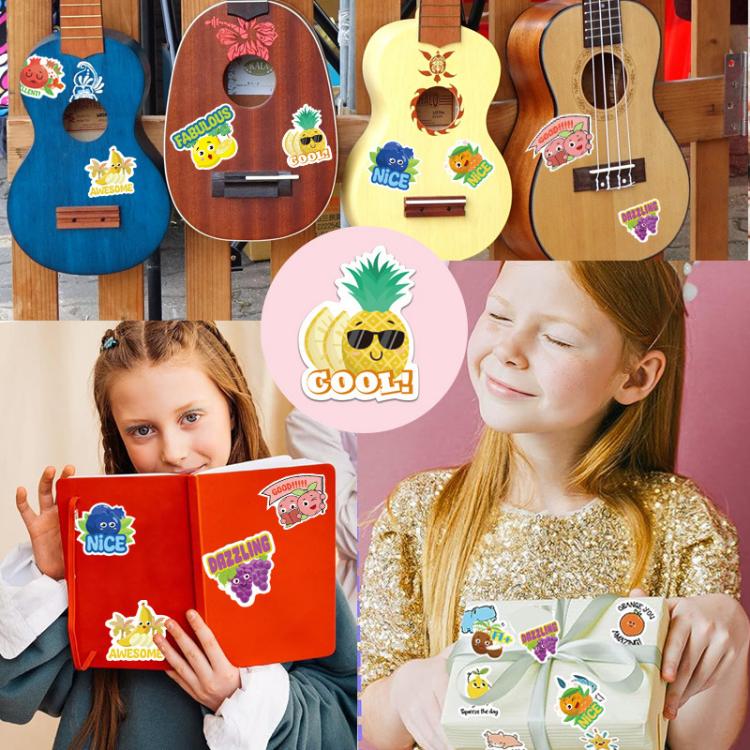
Scratching breaks fragrance-filled microcapsules in the surface coating. The released fragrance evaporates into the air, making the smell detectable. The rubbing action releases an existing fragrance rather than generating one.
Usually, yes, while intact capsules remain. Each activation consumes part of the fragrance reserve, so repeated scratching eventually reduces performance. The number of useful activations depends on the product and how it is handled.
Possible reasons include depleted capsules, aging fragrance, unfavorable storage, or an activation problem. Compare a fresh, unused sample under the same conditions before deciding whether the issue affects the entire batch.
Not necessarily. Fruit scents come from fragrance compositions that may contain natural ingredients, synthetic aroma materials, or both. A fruit illustration does not establish ingredient content or make the sticker edible.
A matching project can be evaluated, but success depends on the fragrance and its behavior after encapsulation, printing, and storage. Approve the activated finished sticker against a reference rather than judging only the original fragrance oil.
No. A stronger initial impression does not automatically improve recognition, durability, or usability. Evaluate the complete coating system and intended interaction instead of choosing by fragrance intensity alone.
- [Encyclopedia.com — "Scratch and Sniff"]. Manufacturing overview covering fragrance encapsulation, shell materials, printing methods, and quality checks. [encyclopedia]
- [Indiana Public Media, A Moment of Science — "Scratch-and-sniff"]. Explanation of capsule rupture, fragrance release, and odor detection. [ipm]
- [Follmann — "Microencapsulation: How It Works and Where It Is Used"]. Industrial explanation of capsule formation, mechanical release, and scented printing applications. [follmann]
- [Discount Labels — "How Do Scratch & Sniff Stickers Work?"]. Commercial manufacturing guidance on activation, storage, and factors affecting scent longevity; lifespan ranges are general descriptions, not product-specific guarantees. [discountlabels]
- [International Fragrance Association — "Certification of IFRA Standards"]. Authoritative clarification of supplier-issued conformity documents, their limitations, and the need to meet applicable regulations. [ifrafragrance]


