+86 18560646018

Views: 282 Author: Focus Color Publish Time: 2026-08-15 Origin: Site


Content Menu
● What Is an Aquarium Temperature Sticker?
● What Is an Aquarium Thermometer?
● Aquarium Sticker vs. Thermometer: Core Differences
● Why Large Aquariums Develop Temperature Gradients
● Can an Aquarium Sticker Detect Temperature Gradients?
● Why Thermometers Are Better for Gradient Tracking
● Recommended Placement for Large Aquarium Monitoring
>> Aquarium Temperature Sticker Placement
>> In-Water Thermometer Placement
● A Practical Monitoring Setup
● Expert Insight: Visibility Influences Maintenance Behavior
● How to Test for a Temperature Gradient
● Choosing the Right Product for Your Market
● Custom Liquid Crystal Aquarium Stickers
● FAQ
>> Is an aquarium temperature sticker accurate enough for a large aquarium?
>> Where should I place an aquarium thermometer in a large tank?
>> How many thermometers does a 200-liter aquarium need?
>> Can I use several aquarium stickers to check different areas?
>> Why does my aquarium thermometer show a different value from my sticker?
>> Should an aquarium thermometer be placed next to the heater?
For a large aquarium, an aquarium temperature sticker and an in-water thermometer serve different purposes. A sticker offers fast, low-cost visual monitoring from outside the tank, while a submerged or probe-based thermometer measures the water more directly and is the better choice for identifying meaningful temperature gradients across a large aquarium.
At Qingdao Focus On Color Industry & Trade Co., Ltd., we have spent more than 13 years developing thermochromic products, including liquid crystal temperature indicators and customized color-changing solutions. From a product-manufacturing perspective, the key question is not simply "sticker or thermometer?" It is whether the temperature-reading method matches the aquarium's size, water flow, heating layout, livestock sensitivity, and daily maintenance routine.

An aquarium temperature sticker—also called a liquid crystal aquarium thermometer strip—is applied to the outside surface of aquarium glass. Its thermochromic liquid crystal layer changes color within a selected temperature range, allowing users to view a temperature indication without placing a device inside the tank.
A typical aquarium temperature sticker is popular because it is:
- Easy to install
- Low cost
- Waterproof from the outside
- Battery-free
- Highly visible for daily checks
- Suitable for branding, private-label packaging, and custom temperature ranges
The color bar usually highlights one temperature value and may show neighboring values in different colors. This gives fishkeepers a quick visual indication of whether the tank appears warmer, cooler, or within the expected operating range.
However, a sticker reads temperature through the aquarium wall. That means the reading can be influenced by glass thickness, room temperature, sunlight, airflow, and the difference between water-side and room-side conditions. It is useful as a visible reference point, but it should not be the only measurement tool for large aquarium temperature gradients.
An aquarium thermometer is designed to measure water temperature directly or as close to the water as possible. Common options include:
- Submersible glass thermometers
- Floating alcohol thermometers
- Digital probe thermometers
- Wireless temperature sensors
- Controller-integrated temperature probes
- LCD thermometers with internal sensors
For large aquariums, a thermometer placed in the water provides a more representative reading of the conditions experienced by fish, plants, coral, shrimp, and beneficial bacteria. A multi-point setup can reveal whether heat is moving evenly from the heater to the far end of the aquarium.
This distinction matters. A 180 cm aquarium may look stable at one end while a colder zone develops near dense hardscape, weak circulation areas, or an external filter return path. A single temperature reading may confirm that a heater is operating, but multiple readings help confirm that the entire aquarium is being heated evenly.
| Feature | Aquarium Temperature Sticker | In-Water Aquarium Thermometer |
|---|---|---|
| Measurement location | Outside the aquarium glass | In the water or with a submerged probe |
| Main benefit | Fast visual temperature check | Direct water-temperature measurement |
| Best use | Routine screening and display visibility | Accuracy checks and gradient monitoring |
| Installation | Adhesive application on clean outer glass | Suction cup, probe mount, floating design, or controller connection |
| Battery requirement | No | Depends on product type |
| Visibility | Excellent from the front or side panel | Depends on placement and display design |
| Sensitivity to room conditions | Higher | Lower when correctly positioned |
| Ability to monitor large tanks | Limited as a single point | Strong when multiple units or probes are used |
| Custom branding potential | Very high | Varies by thermometer type |
| Recommended role | Secondary visual indicator | Primary temperature-monitoring tool |
The most effective solution for many aquarium brands and distributors is not an either-or choice. It is a combined monitoring system: an external liquid crystal aquarium sticker for instant visual awareness, plus one or more in-water thermometers for confirmation and troubleshooting.
A temperature gradient is a difference in water temperature between areas of the same aquarium. Large aquariums are more likely to develop gradients because heat does not distribute instantly or perfectly.
Common causes include:
- Heater placement near one end of the tank
- Insufficient water circulation
- Long aquarium dimensions
- Dense plants, rocks, driftwood, or background structures
- Uneven filter return flow
- Open-top tanks exposed to drafts
- Chillers, cooling fans, or air-conditioning nearby
- Direct sunlight on one section of the glass
- Different water depths and circulation patterns
For example, a heater may maintain 26°C near the heater chamber while the opposite end of a long aquarium operates closer to 24°C. The average might appear acceptable, but livestock in the cooler zone may experience a different environment.
A large aquarium should therefore be evaluated as a water system, not as a single temperature point.
An aquarium sticker can indicate surface-related temperature changes at its installation point, but it cannot reliably map the water-temperature conditions throughout a large aquarium.
If several liquid crystal strips are installed at different positions, they may offer a useful visual comparison. For example, placing stickers at the left, center, and right sections of the aquarium can help identify whether one exterior area appears noticeably warmer or cooler.
Still, this method has limitations:
- Each sticker responds through the glass.
- Exterior room conditions may affect one side differently.
- A sticker does not measure temperature at different water depths.
- It cannot verify internal flow patterns.
- It may react more slowly than a direct probe to sudden water changes.
Therefore, aquarium temperature stickers are best used as an early visual signal, not as final proof of an internal temperature gradient.

A thermometer with a submerged sensor measures the water where it is placed. This makes it more suitable for checking whether the heater, circulation system, and filtration layout are maintaining even conditions.
For large tanks, use at least two measuring points:
1. Place the first thermometer in an area of normal circulation, away from direct heater output.
2. Place the second thermometer at the far end of the aquarium.
3. Position both around mid-water level where possible.
4. Compare readings after the system has been operating normally.
5. Recheck after water changes, aquascaping work, heater replacement, or seasonal room-temperature shifts.
For high-value aquatic systems, such as planted display tanks, marine aquariums, breeding systems, shrimp tanks, or retail installations, three points may be more useful:
- Near the heater zone
- At the center of the tank
- At the far end or lower-flow zone
The goal is not to create unnecessary complexity. The goal is to identify whether the water temperature is consistent where aquatic life actually lives.
Correct placement has a major effect on the usefulness of both an aquarium sticker and a thermometer.
Install the sticker:
- On a clean, dry outer glass surface
- Below the normal water line
- Away from direct sunlight
- Away from heating vents, air-conditioning vents, and fans
- In a location that is easy to read during routine maintenance
- On a flat, unobstructed panel
Avoid placing a liquid crystal aquarium thermometer strip directly beside the heater. It may indicate localized warmth rather than the broader condition of the tank.
Place the main in-water thermometer:
- At mid-water depth
- In a zone with gentle, consistent water movement
- Away from the heater body
- Away from direct filter outflow
- Away from stagnant corners
- Away from the substrate where flow can be lower
For a second thermometer, choose the opposite end of the aquarium. This setup provides a practical way to compare the heating source area with the most distant water zone. Guidance from aquarium care resources consistently recommends positioning thermometers away from heaters and using multiple measurement points in larger tanks.
For aquarium retailers, private-label brands, maintenance companies, and advanced hobbyists, the following configuration is practical and easy to explain to end users.
| Aquarium Size | Recommended Monitoring Setup | Main Purpose |
|---|---|---|
| Up to 60 L | One thermometer plus optional sticker | Basic daily temperature observation |
| 60–200 L | One primary thermometer and one visible sticker | Cross-checking and convenient inspection |
| 200–500 L | Two in-water thermometers plus one or two stickers | Detecting end-to-end variation |
| Over 500 L | Multiple probes or thermometers, external stickers, and temperature control system | Managing heat distribution and equipment performance |
A sticker can make temperature awareness more immediate. A thermometer provides measurement confidence. Together, they help users notice problems earlier and verify them more accurately.
From a product-design and user-behavior perspective, an instrument that is easy to see is more likely to be checked. This is one of the strongest advantages of a liquid crystal aquarium sticker.
A fishkeeper may overlook a thermometer hidden behind plants, equipment, or aquarium decoration. A visible color-changing strip on the front or side panel creates a quick visual prompt during feeding, cleaning, or customer demonstrations.
That convenience does not replace an in-water reading. But it can improve routine attention.
For this reason, many successful aquarium accessory programs can position temperature stickers as:
- A quick-view visual indicator
- A low-cost add-on for aquarium kits
- A branded retail accessory
- A supplementary indicator for thermometer sales
- A customized promotional product for pet and aquatic brands
For OEM and ODM projects, the liquid crystal color range, scale format, packaging, logo treatment, adhesive structure, size, and target market language can all be customized to meet specific brand and retail requirements.
Use this simple process when commissioning a large aquarium or investigating uneven heating.
1. Stabilize the system. Allow the heater, filter, and circulation equipment to operate under normal conditions for several hours.
2. Measure multiple zones. Record temperatures near the heater, in the center, and at the far end of the aquarium.
3. Check the water column. If the aquarium is deep, compare mid-water and lower-water measurements where practical.
4. Observe flow patterns. Look for areas blocked by rockwork, dense plants, large ornaments, or low-flow corners.
5. Review external influences. Check for windows, sunlight, air-conditioning, fans, cold walls, or nearby heat sources.
6. Adjust equipment gradually. Reposition the heater, improve circulation, or add a second heater only after confirming that the original setup is causing uneven performance.
7. Verify with a second instrument. If a reading appears unusual, compare it with another thermometer before making major changes.
For tanks larger than approximately 55 gallons, multiple thermometers at opposite ends are commonly recommended to check consistency across the aquarium.
Choose an aquarium temperature sticker when your product priorities include simple installation, clear visual display, zero batteries, low retail cost, custom branding, and retail-kit compatibility.
Choose a submerged thermometer or digital probe when your priorities include direct water measurement, multi-zone monitoring, high-value livestock protection, troubleshooting, or integration with heater-control systems.
Choose both when you want a stronger user experience: immediate visual awareness from the sticker and dependable verification from the in-water thermometer.
For distributors and aquarium brands, this combined approach also creates a clearer product ladder. An entry-level aquarium kit can include a customized liquid crystal strip, while premium kits can add a digital thermometer or multi-probe monitoring solution.
Qingdao Focus On Color Industry & Trade Co., Ltd. supplies color-changing temperature-indicator products for customers seeking reliable, customizable solutions. With more than 13 years of manufacturing experience, we support OEM, ODM, and tailored product development for global markets.
Our customization options can include:
- Temperature display ranges
- Size and shape
- Multi-language scales
- Brand logo and graphic design
- Adhesive backing options
- Retail packaging
- Bulk and promotional formats
- Product combinations for aquarium accessory brands
A well-designed aquarium temperature sticker is not only an indicator. It can become a visible, branded touchpoint that supports customer confidence and encourages regular aquarium care.
Need a customized liquid crystal aquarium temperature sticker for your aquarium brand, pet retail program, promotional campaign, or OEM product line? Contact Qingdao Focus On Color Industry & Trade Co., Ltd. to discuss temperature ranges, dimensions, branding, packaging, and production requirements. Our team can help develop a practical, market-ready color-changing indicator solution for your target customers.
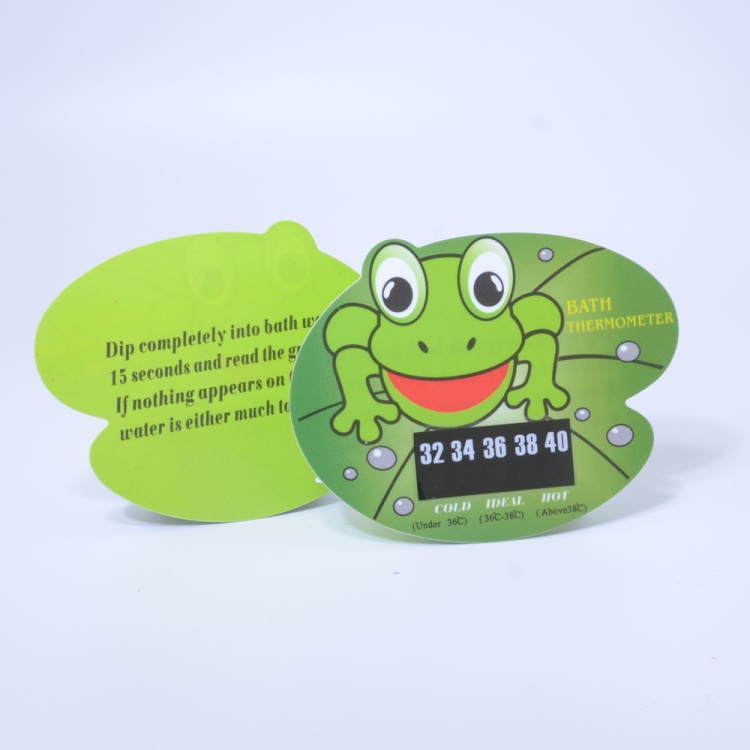
An aquarium temperature sticker is useful for quick visual checks, but it should not be the only tool used in a large aquarium. Because it reads through the glass, room temperature and installation conditions can influence its result. Use it alongside in-water thermometers for more dependable monitoring.
Place the primary thermometer at mid-water level in an area with normal circulation and away from direct heater output. Place a second thermometer at the opposite end of the tank to identify possible temperature differences.
A 200-liter aquarium can often benefit from two thermometers, especially if it is long, heavily decorated, heated from one side, or has uneven circulation. One reading near the main water flow and another at the opposite end is a practical starting point.
Yes. Multiple stickers can provide a visible comparison between exterior glass panels. However, they should be treated as supplementary indicators because they do not directly measure water temperature at different depths or internal flow zones.
The thermometer may be measuring water directly, while the sticker is responding through the glass and may be affected by room air, sunlight, glass thickness, or local external conditions. Compare both devices in stable conditions and prioritize a properly positioned in-water thermometer for decisions.
No. A thermometer next to the heater may measure a localized warm area rather than the general water temperature. Place it away from direct heater output and use another thermometer at the far end of a large aquarium.
1. [MB Store — Aquarium Thermometer: Placement Tips and Large Aquarium Guidance]
2. [The Spruce Pets — The Pros and Cons of Every Type of Aquarium Thermometer]
3. [GAIMC — Aquarium Temperature Sensors and Placement Guidance]
4. [Fish Tanks Savvy — Guide to Fish Tank Thermometers]
5. [Gensou — Digital, Glass, and Stick-On Aquarium Thermometers Compared]
6. [Pet Science Review — Aquarium Thermometer Placement Protocol]


