


Views: 219 Author: Focus Color Publish Time: 2026-10-16 Origin: Site


Content Menu
● What Happened to Scratch and Sniff Stickers Over the Years?
>> What the TREND Closure Announcement Actually Said
● How Scratch and Sniff Stickers Work
>> Why Spraying Perfume on a Sticker Is Different
● Where Did Scratch and Sniff Technology Come From?
● Why Do Scratch and Sniff Stickers Seem Less Common?
>> Specialized Production Adds More Variables
>> A Familiar Brand Can Disappear Without the Category Disappearing
● Modern Scratch and Sniff Applications: Beyond Sticker Albums
>> Industry Case: Rare Beauty's Scratch and Sniff Campaign
● How Long Do Scratch and Sniff Stickers Last?
● A Manufacturer's Checklist for Custom Scratch and Sniff Stickers
>> Step 1: Define the Use and Audience
>> Step 2: Describe the Fragrance Precisely
>> Step 3: Evaluate the Complete Construction
>> Step 4: Compare Samples Consistently
>> Step 5: Check Production and Delivery Requirements
● Safety and Compliance: Ask About the Finished Product
● Developing a Custom Concept With Qingdao Focus On Color
>> Are Scratch and Sniff Stickers Still Made?
>> Did Scratch and Sniff Stickers Get Discontinued?
>> Why Do Old Scratch and Sniff Stickers Lose Their Smell?
>> Can Scratch and Sniff Stickers Be Reused?
>> Can I Make Scratch and Sniff Stickers With Perfume?
>> Can Businesses Order Custom Scratch and Sniff Stickers?
What happened to scratch and sniff stickers? They never completely disappeared. The scented stickers many people remember from school rewards and childhood collections still exist, but the businesses, buying habits, and applications surrounding them have changed.
One development made that question particularly relevant: in July 2025, TREND enterprises, a familiar name in scented classroom stickers, announced plans to close by the end of that year. However, one company's announcement does not mean the entire product category vanished.
The more useful explanation is evolution. Scratch and sniff technology now appears not only in collectible stickers but also in fragrance sampling, printed promotions, and interactive packaging.
At Qingdao Focus On Color Industry & Trade Co., Ltd., our perspective comes from more than 13 years of manufacturing experience across photochromic, thermochromic, liquid crystal thermometer, and fragrance-related products. For buyers exploring scented products, the important questions extend beyond nostalgia: how does the scent work, what affects its durability, and how can a custom concept become a reliable product?
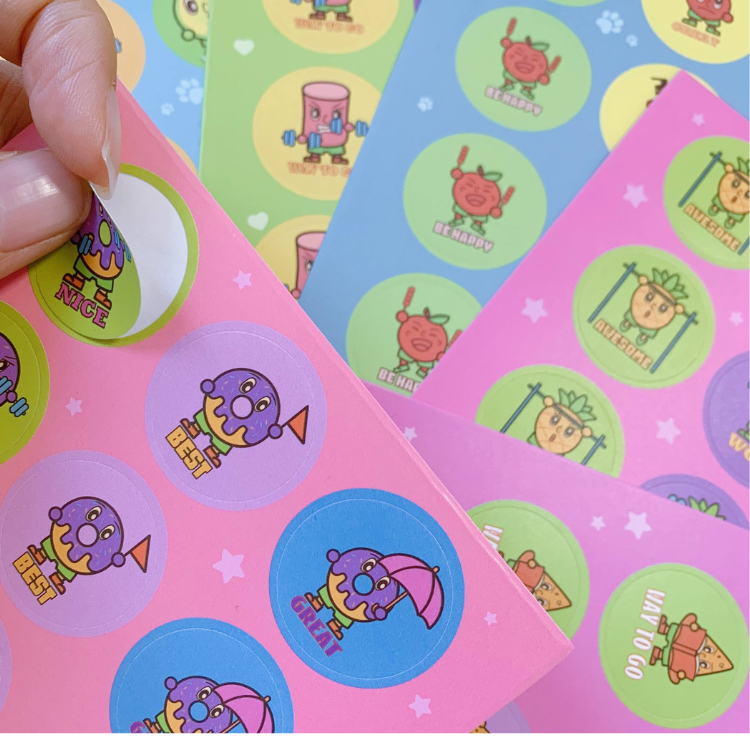
Scratch and sniff stickers became closely associated with childhood during the late 1970s and 1980s. Teachers used them as rewards, children traded them, and sticker albums turned small scented pictures into collectibles.
Their appeal was straightforward. A strawberry illustration could smell fruity. A popcorn design could release a buttery aroma. The sticker offered an interaction that ordinary printed artwork could not.
Today, scented stickers remain available through specialist sellers and retail listings. However, availability varies by brand, design, and stock.
It is therefore important to separate three questions:
- Does scratch and sniff technology still exist? Yes.
- Are scented stickers still sold? Yes.
- Can buyers still obtain every familiar vintage brand and design? Not necessarily.
The technology's survival does not guarantee continuity for individual manufacturers.
On July 10, 2025, TREND announced its intention to close by the end of 2025 after more than 55 years in business.
Its statement cited rising material, manufacturing, and shipping costs, lingering pandemic effects, changing consumer habits, and declining demand for traditional classroom décor.
That explanation concerned the company's wider business. It should not be presented as proof that demand for all scratch and sniff stickers collapsed.
There is also a verification limitation: TREND's accessible website still displays retro scented sticker listings. A live catalog alone does not establish current production, fulfillment capacity, or ownership status.
For commercial buyers, the practical lesson is simple: confirm supply directly rather than treating an old listing as evidence of ongoing manufacturing.
The distinctive mechanism is microencapsulation.
Tiny quantities of fragrance oil are enclosed inside microscopic capsules. These capsules are incorporated into a printable coating or other suitable application medium.
When someone gently scratches or rubs the coated area, some capsules rupture and release their fragrance.
This creates a controlled interaction:
1. The intact capsules help protect the fragrance before use.
2. Rubbing breaks a portion of the capsules.
3. The released fragrance becomes noticeable.
4. Later rubbing may release fragrance from remaining intact capsules.
The scent is not endlessly renewable. Each activation consumes part of the available fragrance reservoir.
A sticker sprayed with perfume may smell immediately, but that does not make it a true scratch and sniff sticker.
Without an appropriate encapsulation system, exposed fragrance can dissipate before the intended interaction.
For buyers, "scented," "scratch and sniff," and "continuous fragrance release" should not be treated as interchangeable specifications.
Ask the supplier to explain the release mechanism. A product intended to smell continuously may require a different formulation from one designed to release aroma when rubbed.
Scratch and sniff grew out of research into carbonless copying.
During the 1960s, researchers developed methods of enclosing tiny droplets inside capsules. Pressure could break those capsules and release their contents, allowing copies to form without conventional carbon paper.
The same principle could hold fragrance rather than copying ingredients.
Accounts of the technology's development identify 3M chemist Gale Matson as an important figure. Microencapsulation subsequently supported scented printing, stickers, and other interactive materials.
This history explains why scratch and sniff is more than a novelty. Its underlying principle is a material-delivery system: protect a substance until a physical action releases it.
That distinction matters when developing modern products. The artwork attracts attention, but the encapsulation and coating determine whether the experience works.
There is no single, well-established explanation for the entire category.
Brand closures, changing retail availability, and shifts in classroom purchasing can affect how visible these products feel. However, those observations should not be converted into unsupported market-wide statistics.
A conventional sticker primarily needs acceptable printing, cutting, and adhesive performance.
A scratch and sniff sticker adds fragrance selection, capsule integrity, coating compatibility, and scent-release performance.
For product developers, this means the cheapest printed sample may not represent the best finished product.
A colorful sticker that releases little recognizable fragrance has failed its central purpose. A strongly scented sample that damages easily or performs inconsistently may also disappoint customers.
Many nostalgic searches are really about a particular sticker series.
When buyers cannot find the popcorn, fruit, or birthday sticker they remember, they may assume manufacturers stopped making scented stickers altogether.
The better distinction is between category availability and exact-product availability. Other suppliers may offer comparable concepts without reproducing the original fragrance, artwork, or collecting experience.
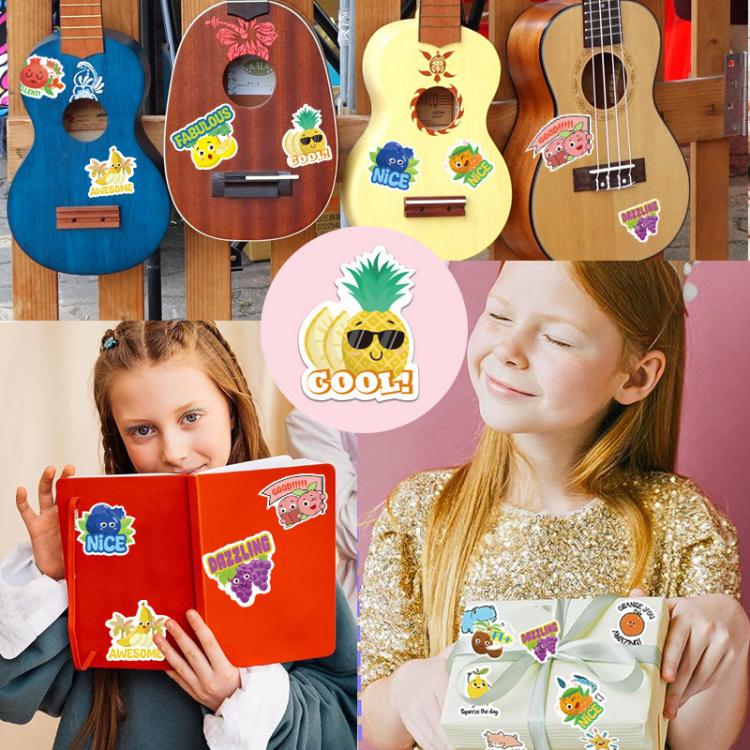
Today's applications show why the technology remains relevant.
Printed scent gives users information that a photograph or written description cannot fully deliver. That makes it useful where fragrance itself is part of the product proposition.
| Application | Purpose of the scent | Main development question |
|---|---|---|
| Classroom reward stickers | Add an interactive reward | Is the product suitable for the intended age group? |
| Collectible sticker sets | Combine artwork with scent discovery | Are fragrances distinctive and consistent? |
| Fragrance sampling labels | Preview a fragrance before purchase | Does the printed sample represent the intended scent? |
| Promotional mailers | Encourage interaction with printed material | Will the coating survive handling and delivery? |
| Packaging features | Let shoppers explore a scent concept | Is the scented area compatible with the packaging? |
These are potential applications, not guarantees of stronger sales or customer engagement.
In 2025, Rare Beauty partnered with Shopify's Shop app on a fragrance campaign using scratch-and-sniff billboards in New York City.
Passersby could experience the fragrance, then scan a QR code to access a sample request through a location-based process.
The campaign illustrates a useful connection: physical scent discovery can support a digital next step.
It does not prove that every scented promotion will increase conversions. Its value as a development example lies in the sequence:
- Offer a relevant sensory experience.
- Explain what the user should do.
- Provide a clear route to sampling or purchasing.
For a smaller brand, a scented label or printed card could apply the same interaction principle at a different scale.
There is no universal shelf-life figure that applies to every scented sticker.
Performance depends on the capsule system, fragrance formulation, coating, storage conditions, and frequency of activation.
Microencapsulation helps preserve fragrance, but it does not make the product permanent.
Heat, light, and exposure can affect fragrance performance. Repeated rubbing also reduces the number of intact capsules available for later use.
For personal collections:
- Store stickers in a cool, dry place.
- Keep them away from direct sunlight.
- Avoid rubbing the entire scented area repeatedly.
- Protect sheets from unnecessary abrasion.
- Keep different strongly scented products separated when practical.
For commercial orders, request a documented storage recommendation and a product-specific shelf-life basis.
"Long-lasting" is not a complete specification. Ask what duration, packaging condition, and test method support the claim.
From a manufacturing perspective, the most useful starting point is not a scent name. It is the intended customer experience.
"Strawberry" could mean fresh fruit, sweet candy, or a bakery-style fragrance. Those interpretations may produce very different samples.
A clear brief reduces avoidable revisions.
Specify whether the product is a classroom reward, retail collectible, promotional label, or fragrance sample.
Include the target market, expected handling, intended users, and application surface.
These details guide material selection and the compliance questions that need review.
Provide a fragrance direction and, where appropriate, a reference sample.
State whether the scent should be immediately recognizable, subtle, realistic, or deliberately playful.
Do not approve production based only on an attractive scent name.
Review the artwork, substrate, adhesive, fragrance coating, and packaging together.
Ask whether the scented area remains accessible after any protective finishing. A coating must be evaluated as part of the finished design, not in isolation.
Use the same rubbing method and evaluation conditions for each sample.
Record:
- Fragrance character before activation.
- Recognition after activation.
- Visible coating damage.
- Performance after repeated activation.
- Adhesion on the intended surface.
Agree on acceptance criteria before placing a bulk order.
Confirm minimum order quantities, lead times, artwork approval stages, packaging, documentation, and repeat-order expectations.
For fragrance-sensitive products, batch consistency deserves as much attention as print color consistency.
A pleasant scent does not establish that a sticker is suitable for every user or application.
Fragrance selection must account for intended use, exposure, destination-market requirements, and the complete product construction.
The International Fragrance Association's Standards provide a risk-management framework for fragrance ingredients. They restrict, prohibit, or set conditions for certain materials.
However, these standards do not replace applicable laws or finished-product assessment.
For products intended for children, request relevant documentation and determine which requirements apply in the destination market.
Avoid broad claims such as "completely allergy-free" or "safe for everyone." A fragrance-sensitive user may prefer an unscented alternative.
Qingdao Focus On Color Industry & Trade Co., Ltd. offers OEM, ODM, and personalized customization services across its specialty product ranges.
Our manufacturing background includes photochromic, thermochromic, liquid crystal thermometer, and fragrance-related products.
These technologies create different interactions. Photochromic materials respond to light, thermochromic materials respond to temperature, and scratch and sniff coatings release fragrance through mechanical activation.
They should not be assumed to share identical processing requirements.
For a proposed combined concept, compatibility, feasibility, and production specifications need review before commitments are made.
To discuss a custom scented sticker or fragrance-related product, send our team your artwork, fragrance direction, target market, application surface, expected quantity, and packaging requirements. Request a feasibility review and sample plan before approving bulk production.

Yes. Specialist sellers and retail listings continue to offer scented scratch and sniff stickers. Availability depends on the supplier, design, and stock position. For larger orders, verify current production and fulfillment directly.
The entire category was not discontinued. Individual brands or product lines may become unavailable. TREND's 2025 closure announcement concerned that company, not every manufacturer using scratch and sniff technology.
Fragrance can deteriorate over time, and repeated scratching breaks more capsules. Storage conditions also influence performance. An old sticker may retain some scent, but its appearance alone cannot establish how much usable fragrance remains.
They can often be activated more than once while intact fragrance capsules remain. That does not necessarily mean the adhesive is repositionable. Scent reactivation and adhesive reuse are separate product characteristics.
Applying perfume may create a temporarily scented sticker, but it does not reproduce a controlled microencapsulated release system. A commercial scratch and sniff product requires an appropriate fragrance formulation and application process.
Yes, custom development is possible through suitable suppliers. Buyers should confirm fragrance options, materials, sampling, minimum quantities, compliance documentation, and production feasibility rather than assuming every concept is immediately manufacturable.
1. [Encyclopedia.com — "Scratch and Sniff"]. Background on microencapsulation, carbonless-paper origins, scented printing, and manufacturing processes. [encyclopedia]
2. [University of Delaware — "Scratch-and-Sniff Books"]. Historical context for scented stickers and books, with an explanation of fragrance release. [sites.udel]
3. [PEOPLE — "Company Behind '80s Favorite Scratch 'n Sniff Stickers to Close After Over 55 Years"], July 11, 2025. Reporting and quoted company statements concerning TREND's announced closure and business pressures. [people]
4. [TREND enterprises — Official Website]. Accessible retro scented-sticker listings; these listings do not independently establish current production or fulfillment status. [trendenterprises]
5. [Discount Labels — "How Do Scratch & Sniff Stickers Work?"], June 26, 2024. Industry explanation of scent-release mechanisms and factors affecting fragrance longevity. [discountlabels]
6. [Orlandi — "The Science Behind Scented Slurry for Printed Products"], November 7, 2024. Manufacturer explanation of microencapsulated fragrance coatings and printed applications. [orlandi-usa]
7. [Shopify — "Shop and Rare Beauty Reimagine Sampling Through Scent"]. First-party campaign account connecting scratch-and-sniff billboards with location-based digital sampling. [shopify]
8. [Modern Retail — "Rare Beauty Partners With Shopify's Shop App on Scratch-and-Sniff OOH Fragrance Campaign"], July 31, 2025. Campaign timing and implementation details. [modernretail]
9. [International Fragrance Association — "IFRA Standards"]. Authoritative explanation of fragrance ingredient restrictions, intended-use considerations, and the relationship between industry standards and legal obligations. [ifrafragrance]


