


Views: 282 Author: Focus Color Publish Time: 2026-08-22 Origin: Site


Content Menu
● What Are Color Changing Cups?
>> How Thermochromic Cups Work
>> Best Uses for Color Changing Cups
● What Are Temperature Stickers?
>> How Temperature Stickers Support Café Operations
● Color Changing Cups vs. Temperature Stickers: Key Differences
● Safety: What Each Product Can—and Cannot—Do
>> Color Changing Cups: Safety Strengths
>> Temperature Stickers: Safety Strengths
● The Most Important Technical Question: What Temperature Is Being Indicated?
>> Practical Validation Checklist
● High-Volume Café Workflow Comparison
>> When Color Changing Cups Fit Best
>> When Temperature Stickers Fit Best
● Cost, Procurement, and Customisation Considerations
● Recommended Selection Framework
>> Choose Color Changing Cups If You Need
>> Choose Temperature Stickers If You Need
>> Choose Both If You Need Layered Protection
● Working With a Custom Indicator Manufacturer
● Create a Safer, More Distinctive Takeaway Experience
>> Are color changing cups safe for hot coffee?
>> Can temperature stickers measure the exact temperature of coffee?
>> Which is better for a busy coffee shop: color changing cups or temperature stickers?
>> Do color changing cups work with double-wall paper cups?
>> Can temperature stickers be used on cup lids?
>> What information should cafés provide to a custom manufacturer?
For busy cafés, takeaway drink safety depends on more than a "Caution: Hot" message. Color changing cups and temperature stickers give customers and staff a visible temperature cue, but they serve different operational purposes.
In high-volume service, the right choice depends on whether the priority is customer-facing safety communication, staff temperature control, brand visibility, or a combination of all three. From a manufacturer's perspective, the most effective programme is usually not about choosing the most eye-catching indicator—it is about matching the indicator's response range, placement, durability, and workflow to the actual beverage service environment.
Hot coffee and tea are often served at temperatures that can create a scald risk during spills or direct contact. Research has found that hot beverages are commonly served around 71–85°C, while consumer preference for black coffee tends to peak at approximately 58–66°C. This gap explains why cafés need clearer, more intuitive ways to communicate heat risk during takeaway service.
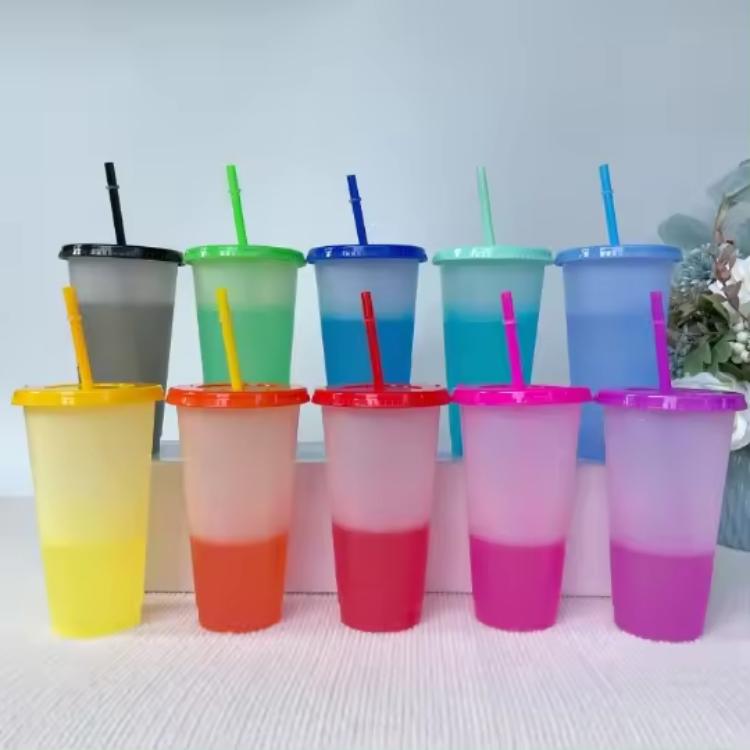
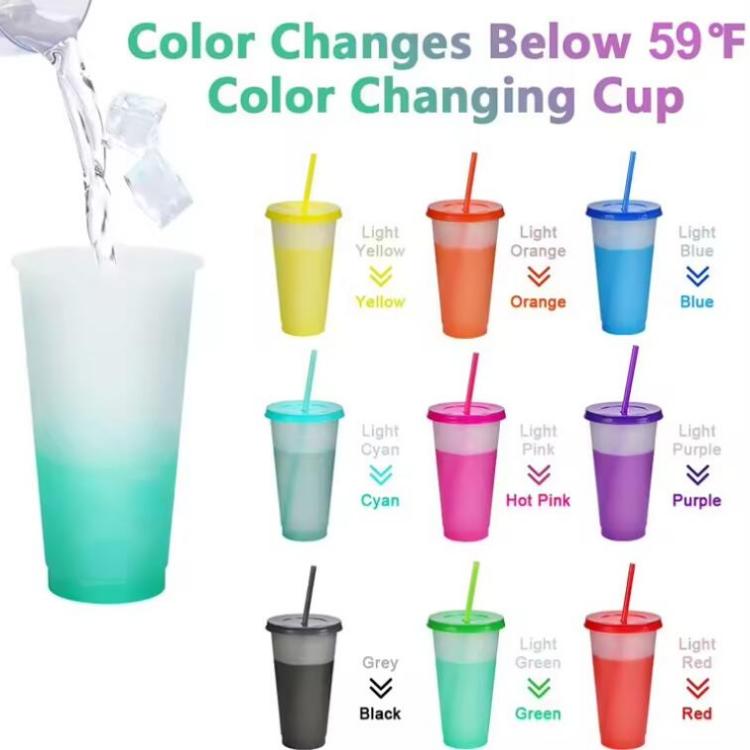
Color changing cups are drinkware items printed or coated with thermochromic materials. The graphic, logo, pattern, or full cup surface changes colour when exposed to a selected temperature range.
For cafés, a common design approach is to use a heat-sensitive visual that appears when a hot beverage is poured into the cup. For example, a dark cup design may reveal a warning icon, brand message, or heat-reactive graphic when the beverage reaches a defined temperature.
Unlike a conventional warning label, a colour-changing effect creates an immediate visual signal. It can make customers pause before drinking, holding, or handing a drink to a child.
Thermochromic pigments respond to temperature changes by altering their visible colour state. Depending on the material system and product design, the effect may be:
- Reversible, changing back when the cup cools.
- Irreversible, designed to show that a temperature event has occurred.
- Customised, with selected activation ranges and colour effects.
- Applied as a printed graphic, rather than covering the entire cup.
For takeaway applications, the final design must account for cup substrate, print method, beverage temperature, external handling, storage conditions, and expected product life.
Color changing cups are especially effective when a café wants to combine safety messaging with a memorable customer experience.
They work well for:
- Premium coffee chains and branded beverage launches.
- Seasonal promotions and limited-edition packaging.
- Child- or family-oriented beverage programmes.
- Drinks where the customer benefits from a visual "still hot" reminder.
- Social-media-friendly campaigns that encourage user-generated content.
- Reusable cups, promotional cups, and insulated drinkware.
A thermochromic cup is not a calibrated measuring device. It is best positioned as a customer communication layer that helps make heat more visible.
Temperature stickers are adhesive labels that show temperature information through a colour change, colour bar, number display, or segmented indicator. They can be placed on cups, lids, beverage containers, delivery bags, dispensing equipment, or quality-control records.
For high-volume cafés, temperature stickers can be designed to identify a target range, an upper threshold, or a cooling point. A simple example is a sticker that changes appearance when the outer cup surface is above a selected temperature.
Temperature stickers are more flexible than colour changing cups because they can be applied only where needed. A café may use the same standard cup across its menu, then apply different stickers for hot chocolate, tea, coffee, or specialty drinks.
This flexibility supports operational consistency:
- Staff can identify drinks requiring extra caution.
- Managers can test different beverage temperature ranges without replacing cup inventory.
- Delivery orders can receive a visible heat indicator.
- Cafés can apply stickers to lids, sleeves, or outer packaging.
- Multi-location businesses can standardise a simple visual safety process.
For foodservice equipment, temperature indication can also be important for holding and dispensing controls. NSF/ANSI requirements for some temperature-controlled food dispensers include temperature-indicating devices accurate to within ±1°C. This requirement concerns equipment and product holding conditions, not a cup sticker, but it reinforces the value of reliable temperature visibility in foodservice systems.
| Decision factor | Color changing cups | Temperature stickers |
|---|---|---|
| Primary role | Customer-facing heat awareness and branding | Flexible visual temperature indication |
| Visual impact | High; can transform a logo, graphic, or cup design | Moderate to high; depends on sticker format |
| Customisation | Strong for colour effects, branding, and campaigns | Strong for thresholds, shapes, wording, and placement |
| Application | Integrated into cup printing or coating | Applied separately to cup, lid, sleeve, or packaging |
| Best for | Brand-led cafés, promotions, reusable drinkware | High-volume operations, testing, delivery, and workflow controls |
| Inventory flexibility | Lower once cups are produced | Higher; one cup format can support several drink types |
| Cost structure | Higher development and printing complexity | Often lower entry cost and easier phased deployment |
| Temperature precision | Visual cue; not a precision instrument | Can be designed around specific temperature bands, but should still be validated for the intended use |
| Sustainability planning | Depends on cup material and print system | Requires consideration of label substrate, adhesive, and disposal route |
| Customer experience | Memorable and interactive | Functional, direct, and easy to understand |
The practical distinction is simple: colour changing cups turn temperature into part of the brand experience, while temperature stickers turn temperature into a controllable operational signal.

Neither option replaces safe beverage preparation, secure lids, suitable cup insulation, employee training, or clear handling procedures. A cup indicator should support a broader safety system rather than carry the entire responsibility.
Research on hot beverage service shows the need for that wider system. One published analysis identified approximately 57.8°C as a balance point between drinkability and reduced scald hazard, while a separate consumer-preference study found the strongest acceptance for black coffee at 58–66°C.
A colour-changing cup can improve safety communication because it is difficult to ignore. The changing visual is immediate, visible, and more engaging than fine print.
Key benefits include:
- Fast customer recognition of a hot beverage.
- Stronger connection between a heat warning and the drink itself.
- Better visibility for customers who may not read a printed warning.
- A natural conversation point for baristas serving children, older adults, or customers on the move.
- A branded alternative to generic "hot contents" graphics.
However, a thermochromic colour transition should not be presented as proof that a drink is safe to consume. Perceived colour can vary with lighting, cup colour, viewing angle, beverage volume, ambient temperature, and the selected activation range.
Temperature stickers are more suitable when the café needs a visual threshold connected to a defined operational decision. For instance, a location may use a sticker to identify beverages that need an additional sleeve, a handoff warning, or a short cooling period before delivery.
Their main advantages are:
- Targeted placement on the cup, lid, sleeve, or delivery packaging.
- Easy implementation with existing cup inventory.
- Different indicator specifications for hot and cold products.
- Potential use in training and standard operating procedures.
- Easier testing before committing to a full packaging redesign.
The limitation is that a sticker's displayed state must be validated under actual café conditions. The temperature of the cup exterior may differ substantially from the temperature of the beverage inside, particularly with double-wall cups, sleeves, insulated cups, or varying fill levels.
This question is often missed during procurement.
A cup indicator may react to:
- The external surface temperature of the cup.
- The temperature of the liquid inside, transferred through the cup wall.
- A short-term heat exposure rather than a stable beverage temperature.
- A selected activation point with a transition band rather than a single exact temperature.
These are not the same measurement.
For example, a double-wall paper cup may keep its outer wall more comfortable while the beverage remains very hot inside. In that situation, an external colour change may be delayed, reduced, or designed around a different safety goal. Conversely, a thin single-wall cup may show an external heat response quickly, even before the customer receives the drink.
Before a full rollout, test the proposed cup or sticker in real service conditions:
1. Define the target beverage types, fill volumes, and serving temperatures.
2. Test with the actual cup, lid, sleeve, and printing area—not just a flat material sample.
3. Measure the beverage temperature and outer-wall temperature at regular intervals.
4. Observe indicator colour at the counter, pickup station, drive-through window, and delivery handoff.
5. Test under different ambient conditions, including summer heat and air-conditioned indoor service.
6. Confirm that the visual message remains clear after normal handling, condensation, friction, and stacking.
7. Train staff on the meaning of the indicator and the required action.
This process creates a more dependable result than choosing an activation temperature from a catalogue alone.
High-volume environments reward simplicity. During a morning rush, staff need systems that can be applied consistently in seconds.
Choose colour changing cups when your café has a stable menu, consistent cup formats, and a clear desire to turn packaging into a visible brand asset.
They are particularly valuable when:
- Your brand invests in custom printed takeaway cups.
- You want a visual "hot drink" reminder without adding an extra assembly step.
- You operate a premium concept where packaging contributes to perceived value.
- You want differentiated packaging for a new product launch.
- You use reusable cups, where the colour-changing experience can be used repeatedly.
For a chain using one standard 12 oz and 16 oz hot cup, a carefully positioned thermochromic logo can deliver a consistent message across thousands of daily orders.
Choose temperature stickers when flexibility and speed of implementation matter more than fully integrated packaging.
They are a stronger option when:
- You have multiple beverage categories with different target temperatures.
- You need to trial a safety communication concept at selected locations.
- You use standard unprinted cups from several suppliers.
- You operate delivery, catering, pop-up, or seasonal service channels.
- You want different handling instructions for different order types.
A regional café group could keep its existing branded cup inventory, then pilot a "hot at handoff" sticker on delivery orders for four weeks. The team can gather staff feedback, customer comments, and operational observations before investing in a custom cup programme.
The total cost should be evaluated beyond unit price. A low-cost solution that slows service, creates confusion, or fails to communicate clearly can become expensive in practice.
| Procurement issue | Color changing cups | Temperature stickers |
|---|---|---|
| Development process | Requires artwork, colour selection, activation-range planning, and production testing | Requires label design, adhesive selection, temperature-range planning, and application testing |
| Minimum order planning | Often more important because custom print production is involved | Usually more flexible for trials and staged deployment |
| Storage | Must protect printed cups from unsuitable heat and light exposure where relevant | Must protect labels from dust, moisture, pressure, and temperature extremes |
| Staff labour | No additional application step if supplied as finished cups | Requires application unless pre-applied by the supplier |
| Brand consistency | Excellent for permanent programmes | Excellent for promotions, but placement consistency must be managed |
| Change management | More difficult after production | Easier to revise wording, range, or placement |
For OEM and ODM buyers, ask suppliers for clear documentation on the indicator material, intended temperature range, recommended substrate, storage conditions, colour tolerance, food-contact considerations for the finished item, and performance-testing approach.
Use this simple decision process before ordering.
- A high-impact branded takeaway cup.
- A memorable visual experience.
- A built-in heat-awareness message.
- Consistent cup formats and stable order volumes.
- A long-term packaging identity rather than a short test.
- Fast deployment with current cup inventory.
- Variable indicators for different drinks or service channels.
- A low-risk pilot before a major packaging commitment.
- Operational prompts for staff and delivery teams.
- Flexible placement on cups, lids, sleeves, or packaging.
For many high-volume cafés, the most robust approach is a two-layer system:
- A colour changing cup for broad customer-facing heat awareness and brand differentiation.
- A temperature sticker for specific workflow triggers, such as delivery handoff, catering orders, or limited-time products.
This arrangement separates communication from control. The cup provides a memorable, visible heat message. The sticker supports a defined operational decision.
The best custom solution starts with an application brief, not a colour sample.
At Qingdao Focus On Color Industry & Trade Co., Ltd., product development can be built around the practical requirements of café operators, distributors, and packaging brands. With more than 13 years of manufacturing experience in thermochromic products, temperature indicators, liquid crystal temperature products, and customised sensory materials, the focus should be on making the indicator work reliably within the customer's actual usage environment.
Prepare the following information before requesting a quotation:
- Cup material, size, wall construction, and surface finish.
- Hot beverage categories and usual filling temperatures.
- Desired visual effect, such as hidden logo, warning symbol, colour bar, or temperature window.
- Whether the response should be reversible or irreversible.
- Intended use: takeaway, dine-in, delivery, promotion, or reusable drinkware.
- Artwork files, brand colour requirements, and placement area.
- Expected order volume, target market, and packaging requirements.
- Any relevant food-contact, labelling, or market-entry requirements.
A technically aligned sample process can reduce avoidable rework and help ensure that the final indicator supports both customer experience and café operations.
The right temperature-indication solution should make hot drinks easier to understand at a glance—without disrupting barista speed or diluting your brand.
Whether you need custom color changing cups, flexible temperature stickers, liquid-crystal temperature indicators, or a combined solution, Qingdao Focus On Color Industry & Trade Co., Ltd. can support OEM, ODM, and personalised development for global café, beverage, packaging, and promotional-product buyers. Share your cup specifications, desired temperature response, artwork, and order requirements to begin a tailored sampling discussion.
They can be designed for hot-drink applications, but suitability depends on the complete cup construction, printing system, intended temperature range, and applicable food-contact requirements. Always confirm the finished product's intended use with the supplier and test it with the actual beverage service process.
Most temperature stickers provide a visual indication across a temperature point or range. They should not automatically be treated as laboratory-grade instruments. Validate their response against a calibrated thermometer when your process requires temperature control.
For brand visibility and a built-in customer warning, colour changing cups are often stronger. For flexible testing, operational prompts, and different beverage categories, temperature stickers are usually more practical. High-volume cafés may benefit from using both.
They can, but performance must be tested on the exact cup. Double-wall construction may reduce heat transfer to the outer surface, which can alter response speed and visible colour change.
Yes, provided the sticker material, adhesive, placement, moisture resistance, and heat exposure are appropriate for the lid material and service conditions. Avoid placement where it interferes with drinking openings, vents, sealing surfaces, or customer handling.
Provide cup specifications, drink types, serving temperatures, target response range, artwork, expected order quantity, market destination, packaging needs, and the intended purpose of the indicator. This information helps the manufacturer recommend a more suitable material and construction.
1. Brown, F., Diller, K. R., & others. "Calculating the Optimum Temperature for Serving Hot Beverages." *Burns*, 2008. [PubMed record]
2. Ristenpart, W. D., et al. "Impact of Beverage Temperature on Consumer Preferences for Black Coffee." *Scientific Reports*, 2022. [Nature article]
3. NSF. "Food Equipment Standards." [NSF standards overview]
4. Foodservice Equipment Distributors Association. "Keeping Dispensing Equipment Clean." [FEDA guidance]
5. ANSI Blog. "NSF/ANSI 4-2025: Commercial Cooking Equipment." [ANSI overview]


