+86 18560646018

Views: 289 Author: Focus Color Publish Time: 2026-10-02 Origin: Site


Content Menu
● Are Scratch and Sniff Stickers Still Available?
● How Do Scratch and Sniff Stickers Work?
>> What affects scent performance?
● Where Are Scented Stickers Used Today?
>> A practical packaging example
● How to Order Custom Scratch and Sniff Stickers
>> Questions worth sending with your inquiry
● A Sample Test Before You Commit
>> What to record during approval
● Safety and Compliance Depend on Use
● Which Supplier Is Right for Your Project?
>> Do they still make scratch and sniff stickers like the old ones?
>> Can I order scratch and sniff stickers with my own logo?
>> How long does the scent last?
>> Can a sticker match my candle or perfume exactly?
>> Will laminating the sticker make it last longer?
>> Are scratch and sniff stickers safe for children?
● Bring Your Sticker Idea to Life
>> What details should I include when requesting a quote?
Yes, they still make scratch and sniff stickers. You can find ready-made designs for rewards and collecting, as well as custom scented stickers for packaging, promotions, and product sampling. If you remember scratching a colorful sticker to reveal a surprise scent, that experience is still available. What has changed is the range of ways businesses can use it.
For a buyer, however, availability is only the first question. Will the scent match the product? Will the sticker survive storage and shipping? Will the adhesive work on the intended surface? And if children will use it, what safety requirements apply? This guide answers those questions so you can move from a nostalgic idea to a workable product brief.
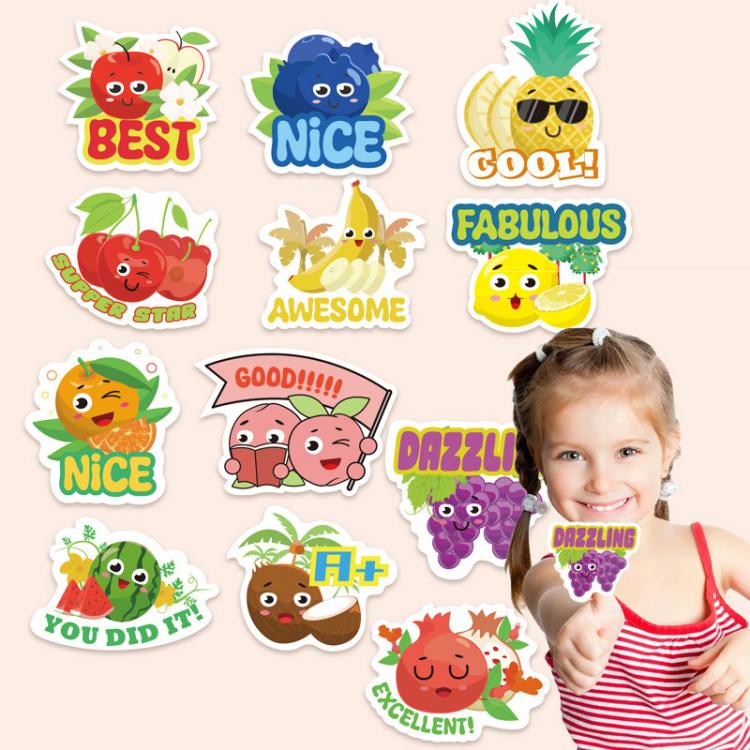
Yes—and they serve more than one market. TREND enterprises continues to list Scratch 'n Sniff Stinky Stickers, including themed variety packs. Specialty printers also offer custom scratch and sniff labels and printed pieces for commercial projects.
The easiest way to shop is to separate two needs:
- Ready-made stickers suit classrooms, rewards, gifts, and collectors who want existing artwork and scents.
- Custom scented stickers suit brands that need a particular fragrance, shape, printed design, adhesive, or packaging format.
- Scented labels and sample cards help customers preview a fragrance without opening the product itself.
A retail sticker pack can answer "Do they still exist?" A custom order answers a harder question: "Can this scent experience work consistently for my customers?" That requires attention to materials, handling, testing, and the intended use.
Most scratch and sniff designs use microencapsulation. Tiny capsules hold fragrance within a coating applied to the printed piece. When someone rubs the scented area, some capsules break and release their contents into the air.
This controlled release is why a sticker can remain relatively quiet until it is activated. It also explains why repeated scratching eventually weakens the effect: once a capsule has broken, it cannot refill. Other scent-printing methods exist, but a supplier should explain which method is proposed for your project and what performance you can reasonably expect.
The fragrance alone does not determine whether a finished sticker works well. Buyers should consider:
- Capsule and coating quality: These influence how reliably the scent releases when rubbed.
- Activation-zone placement: A patch exposed to constant abrasion during packing or transit may release scent before the customer receives it.
- Finishing: A laminate over the scented area can prevent the user from reaching the coating.
- Storage: Heat, light, moisture, and handling can affect the finished product.
- Usage: A frequently scratched sticker will generally lose intensity sooner than an untouched one.
There is no universal shelf-life promise that fits every fragrance and construction. Ask for a sample made with the proposed materials, then test it after realistic storage and shipping conditions rather than relying on a generic "long-lasting" claim.
Scratch and sniff stickers still have a place in classrooms, but their commercial value extends beyond novelty. A scent can make a printed item interactive or help a customer understand a fragrance-led product before buying it.
| Application | What the scent adds | A question to settle before production |
|---|---|---|
| Classroom rewards | A sensory element to a familiar sticker | What age group will use it? |
| Candle or air-freshener packaging | A way to preview a fragrance | How closely must the patch match the product? |
| Promotional postcards | A physical interaction with the message | Will mailing and handling rub the patch? |
| Event handouts | A memorable product demonstration | How will the pieces be packed and distributed? |
| Sample cards | A way to compare scent options | Must several scents remain separate? |
Match the format to the purpose. A collectible reward sticker needs appealing artwork and easy handling. A fragrance sample card needs an accurate scent impression. A label also needs an adhesive and size suited to its container. Treating all three as the same purchase can lead to an attractive sample that fails in use.
Imagine a candle brand launching two scents. Putting the same pleasant fragrance on both labels might attract attention, but it would not help shoppers choose between the candles. A better brief identifies each scent separately, asks the printer to mark a clear activation area, and checks the printed samples against the actual products.
That example is a planning scenario, not a claim about a completed customer project. Its lesson is simple: define what the scent must communicate before deciding how the sticker should look.
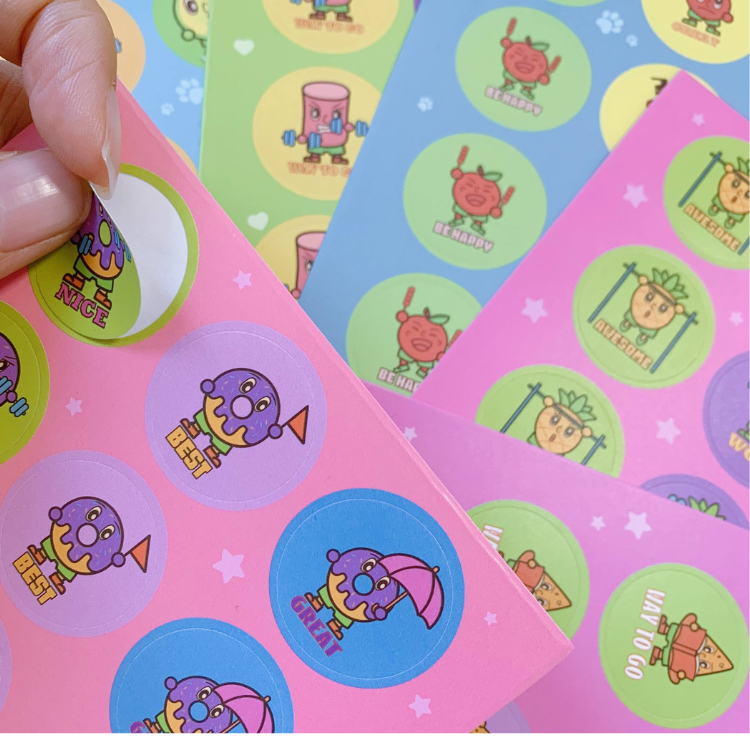
Custom production works best when the first inquiry includes more than a logo. The supplier needs to know how the sticker will be used, what it will stick to, and what the customer should smell.
1. Define the audience and application. Is this a classroom reward, a promotional giveaway, a fragrance sample, or a label on retail packaging?
2. Describe the scent. Give the supplier a reference product or a clear scent direction. If an exact match matters, say so before artwork and pricing are finalized.
3. Specify the physical format. Share the dimensions, shape, quantity, sheet or roll preference, and intended application surface.
4. Choose the activation area. Make it easy to find and rub, but avoid a location likely to be scraped during transport.
5. Request a production-relevant sample. Evaluate the artwork, adhesive, scent impression, and rubbing experience together.
6. Agree on acceptance criteria. Record what the approved sample represents and which details must remain consistent in the final order.
OEM/ODM and personalized customization can help align a scented sticker with a wider product range. Qingdao Focus On Color Industry & Trade Co., Ltd. works across fragrant products, photochromic and thermochromic products, and liquid crystal thermometers. The company describes more than 13 years of production experience and offers customized solutions for global customers.
A buyer should still confirm the capabilities and specifications of the *particular* sticker being quoted. Ask which scent options, constructions, printing finishes, order quantities, and documentation are available for your project rather than assuming every option applies to every design.
- What material and adhesive do you recommend for the intended surface?
- Will the scented patch remain accessible after finishing?
- Can you provide a sample using the proposed fragrance and artwork?
- How should the finished stickers be packed and stored?
- What information do you need to assess the destination market and intended age group?
These questions make quotations easier to compare. They also reveal whether a proposed sticker has been designed for its actual use rather than selected solely because its artwork looks right.
A sample should do more than smell good the moment its packet is opened. Use a short, repeatable review to identify problems before approving a larger order.
Start with the customer experience. Can someone see where to scratch? Does a light rub release a recognizable scent? Is the smell appropriate to the image or product? Check whether the printed design remains readable after activation.
Then test the complete item. Apply the sticker to the intended carton, card, or container. Check adhesion and appearance. If a label will be applied by machine, tell the supplier about the application method before choosing sheets or rolls.
Finally, retain an unopened sample and compare it with one that has been handled under conditions resembling your distribution process. This is a practical comparison, not a substitute for formal shelf-life testing. It helps you decide whether the pack format protects the scented patch and whether any performance claim needs further evidence.
Keep the approved artwork and sample together with a brief note covering the fragrance description, substrate, adhesive, activation-zone position, packaging format, and evaluation date. Scent judgments are subjective, so a written reference helps buyers and suppliers discuss changes more precisely.
If the sample disappoints, identify *which* part failed. "The scent is wrong," "the scent is too faint," and "the coating was rubbed during shipping" call for different solutions. A useful approval process turns those observations into specific revisions.
A scented sticker is not automatically suitable for every audience simply because it can be purchased. Product classification matters. In the United States, a product designed or intended primarily for children aged 12 or younger can be a children's product. If it is classified as a children's toy, additional toy requirements may apply, including applicable testing and certification obligations.
That does not mean every promotional label must meet toy rules, or that one test report covers every scented sticker. The design, presentation, intended age group, materials, and destination market all affect what needs to be reviewed. For a children's project, raise these questions while the product is still being specified—not after printing.
For fragrance selection, ask the supplier what supporting information is available for the proposed formula and intended use. Do not use a broad phrase such as "safe for kids" in product copy unless the finished item and its claims have been assessed appropriately. Likewise, do not assume a printed scent patch is suitable for direct food contact.
For sales into the European Union, review the applicable toy requirements if the finished item is a toy. Requirements and implementation dates can change, so the importer and manufacturer should check the rules relevant to the destination and product before placing an order.
Choose according to the result you need—not just the lowest unit price. A ready-made sticker supplier may be ideal for a small classroom purchase. A custom printer or manufacturer is more relevant when scent accuracy, branded artwork, label construction, or repeat supply matters.
When comparing quotes, give each supplier the same brief. Ask them to distinguish confirmed specifications from options that still require sampling. Compare the proposed fragrance, material, adhesive, print format, packing method, production quantity, and any documentation needed for your intended market.
A useful supplier conversation also covers what happens when the sample needs adjustment. Can you change the artwork without changing the fragrance? Would a different coating affect the look of the label? Who approves the final sample? Clear answers reduce the chance that a promising prototype becomes a disappointing delivery.
Scratch and sniff stickers are still made, but the most successful custom projects begin with a clear purpose. Decide what the customer should smell, where they will interact with the patch, and how the finished piece will reach them. Then validate those decisions with a relevant sample.
For a branded project, contact Qingdao Focus On Color Industry & Trade Co., Ltd. with your artwork, target scent, intended use, quantity, and destination market. Request a customized proposal and sample plan so you can evaluate the complete sticker—not just the fragrance—before moving ahead.
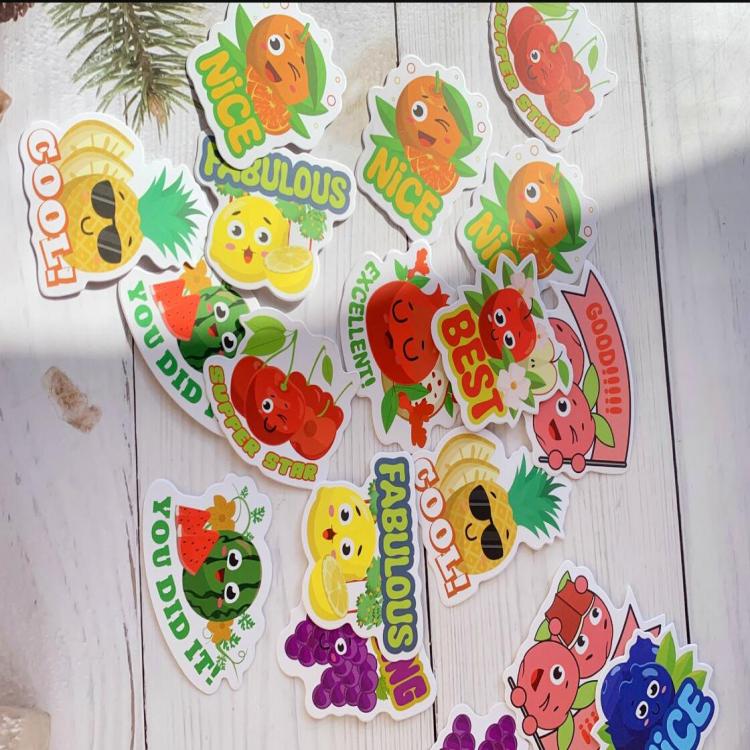
Yes. Ready-made scratch and sniff designs are still listed for sale, including retro-style products. If you want a specific older design, check the seller's description: a newly made retro sticker is not necessarily a vintage original.
Yes, custom producers offer branded printing. Send your logo or artwork along with the desired size, scent, quantity, and application details. Ask for a sample before approving the production version.
There is no single answer for every sticker. The coating, fragrance, storage conditions, transport, and frequency of scratching all matter. Ask your supplier to support any shelf-life claim for the proposed construction and test a sample under conditions relevant to your project.
You can request a close match, but do not promise an exact match before sampling. A fragrance experienced from a rubbed print coating may differ from one experienced in a candle, perfume, or other finished product. Compare physical samples side by side.
Not if the laminate covers the area people need to scratch. A protected design can still have an exposed activation patch, but its position and finish should be agreed before production.
That depends on the finished product, its materials, intended age group, and market. Ask for the relevant documentation and have the product's classification reviewed. Do not treat a general statement about scented stickers as proof that a particular item meets children's product requirements.
Provide the intended use, destination market, audience, fragrance direction, artwork, dimensions, quantity, application surface, and preferred delivery format. If timing or scent matching is critical, state that at the start.
1. [TREND enterprises — Scratch 'n Sniff Stinky Stickers collection]. Manufacturer collection showing currently listed scented sticker products. [trendenterprises]
2. [Discount Labels — How Do Scratch & Sniff Stickers Work?]. Industry explanation of scent-release methods and factors affecting longevity. [discountlabels]
3. [Alpine Packaging — Scratch and Sniff Labels]. Industry details on label applications, microencapsulated coatings, materials, finishing, storage, and sampling considerations. [alpinepackaging]
4. [Print-A-Scent — Scratch 'N Sniff]. Examples of custom scented stickers, labels, promotional print, and fragrance options. [print-a-scent]
5. [Qingdao Focus on Color Industry & Trade Co., Ltd. — Made-in-China company profile]. Public company profile describing its fragrant and color-changing product categories and customization offering; the more-than-13-years experience statement was supplied in the brief. [made-in-china]
6. [U.S. Consumer Product Safety Commission — Children's Products]. Guidance on how intended use affects children's product classification and related obligations. [cpsc]
7. [U.S. Consumer Product Safety Commission — Toy Safety Business Guidance]. Guidance on applicable toy safety requirements, testing, and certification. [cpsc]
8. [European Commission — Toy Safety]. Official overview of European toy-safety legislation and harmonised standards. [single-market-economy.ec.europa]


