


Views: 257 Author: Focus Color Publish Time: 2026-09-16 Origin: Site


Content Menu
● Why Arabian Buyers Source Globally
● Top Wine Thermometer Manufacturers and Suppliers Serving Arabia
>> 1. Qingdao Focus On Color Industry & Trade Co., Ltd.
>> 2. China-Based Liquid Crystal Thermometer OEM Factories
>> 3. Promotional Product Manufacturers with Thermometer Capability
>> 4. Wine Accessory OEM Suppliers
>> 5. UAE and Saudi Promotional Product Distributors
>> 6. Printed Packaging and Gift-Card Manufacturers
● Supplier Comparison: Capacity, MOQ, and Compliance
● Wine Thermometer Technical Requirements
>> Key material considerations
● Common Sourcing Problems and How to Avoid Them
>> 1. Inconsistent liquid crystal response
>> 2. Temperature range does not match the artwork
>> 3. Adhesive failure in hot climates
>> 4. Misleading certification claims
>> 5. Poor packaging protection
● An Insider Tip Many Buyers Miss
● Buyer's Guide for Arabian Importers
>> Step 1: Define the commercial use
>> Step 2: Prepare a complete RFQ
>> Step 3: Verify the supplier
>> Step 4: Approve samples properly
>> Step 6: Plan logistics for Arabia
● FAQ
>> 1. How can I verify whether a supplier's ISO certificate is still valid?
>> 2. Does a wine thermometer require CE or RoHS documentation?
>> 3. What MOQ should I expect for a custom wine thermometer?
>> 4. How should I test sample accuracy?
>> 5. What should be included in a pre-shipment inspection?
For buyers in Saudi Arabia, the UAE, Qatar, Kuwait, Oman, Bahrain, Jordan, and other Arabian markets, sourcing a wine thermometer is rarely just about finding the lowest unit price. A dependable long-term supplier must be able to maintain temperature-reading consistency, stable adhesive performance, print durability, compliant materials, and repeatable delivery schedules across multiple production runs.
Wine thermometers—particularly liquid crystal wine thermometer strips—remain widely used in wine retail, gift packaging, winery promotions, hospitality, and branded accessories. They are compact, lightweight, easy to distribute, and suitable for private-label programs. However, the product's simplicity can create a misleading sourcing risk: a thermometer strip can look acceptable at first glance while delivering inconsistent color transitions, poor bonding, inaccurate temperature ranges, or weak packaging performance in hot Gulf-region logistics conditions.
This article evaluates manufacturers and suppliers that can serve buyers in Arabia, including sourcing partners in China and regional distributors. It is designed for procurement managers who need practical information on product capability, customization scope, documentation, MOQ flexibility, and quality verification.

The suppliers below were assessed using criteria that matter in actual B2B procurement rather than promotional claims alone:
- Relevant product capability: Experience with liquid crystal thermometers, temperature-sensitive materials, wine accessories, promotional products, or branded packaging.
- Customization depth: Ability to support logo printing, custom temperature scales, artwork adaptation, packaging, barcode labeling, multilingual instructions, and private-label programs.
- Quality-control discipline: Use of incoming-material checks, visual inspection, temperature-response testing, adhesive evaluation, and finished-goods inspection.
- Documentation readiness: Ability to provide product specifications, material declarations, test reports, packing lists, invoices, certificates where applicable, and traceable production records.
- MOQ flexibility: Suitability for both small branded trials and larger distributor or retail orders.
- Communication and export support: Responsiveness, clear artwork approval procedures, English-language communication, shipping coordination, and experience with international buyers.
- Supply stability: Consistency in raw materials, printing quality, lead time, and repeat-order performance.
A wine thermometer is not a medical measuring instrument unless specifically designed, tested, registered, and marketed as one. For standard promotional or consumer wine thermometer strips, buyers should request clear statements on intended use, temperature range, accuracy tolerance, materials, and applicable product-compliance requirements for the destination market.
Arabia is an important destination market for premium gifting, hospitality, retail packaging, tourism, food-service accessories, and private-label promotional products. While the region has strong import, distribution, retail, and packaging networks, specialized liquid crystal strip manufacturing is more commonly sourced from established Asian supply chains.
China remains particularly relevant because its manufacturing ecosystem combines:
- Liquid crystal temperature-indicator materials
- Screen printing and offset printing resources
- PET/PVC/cardboard converting capability
- Custom packaging production
- Promotional-gift manufacturing
- Export-oriented assembly and inspection services
- Major port infrastructure for international shipments
For wine thermometer buyers, the most important advantage is not simply price. It is the ability to coordinate several production processes—liquid crystal application, substrate selection, adhesive lamination, printing, die-cutting, packaging, and export packing—within a scalable supply chain.
Qingdao is also a practical export location for buyers seeking northern-China sourcing options. Its proximity to Qingdao Port can support regular international shipping arrangements, especially where buyers are consolidating printed products, promotional items, or packaging materials from multiple Chinese suppliers.
The following companies represent different sourcing models. Some are direct manufacturers with relevant liquid-crystal and temperature-sensitive product capabilities, while others are established suppliers or distributors that may be suitable for specific procurement requirements.
| Supplier | Location | Core Focus | Suitable Buyer Profile | Customization Strength |
|---|---|---|---|---|
| Qingdao Focus On Color Industry & Trade Co., Ltd. | Qingdao, China | Liquid crystal thermometers, thermochromic, photochromic, fragrance and promotional products | Small and mid-sized brands, importers, private-label projects | High |
| Thermometer Site / UK Promotional Thermometer Suppliers | United Kingdom | Promotional thermometers and branded temperature indicators | UK-linked distributors and European supply-chain buyers | Medium |
| Alibaba / Made-in-China Verified Export Suppliers | China | Multi-supplier sourcing marketplace | Buyers comparing designs, MOQs, and export terms | Varies |
| Wine Accessory Brands and OEM Partners | Europe / China | Wine accessories, gift sets, retail presentation | Retail chains, wineries, premium gift distributors | Medium to high |
| Regional Promotional Product Distributors | UAE / Saudi Arabia | Local branding, fulfillment, and corporate gifts | Shorter lead-time and local-market buyers | Medium |
| Packaging and Promotional Gift Manufacturers | China | Printed cards, sleeves, labels, gift packaging | Buyers combining thermometer strips with packaging | High |
| Liquid Crystal Indicator Material Specialists | China / Asia | Thermochromic and liquid-crystal material applications | Technical buyers and custom indicator programs | High |
Qingdao Focus On Color Industry & Trade Co., Ltd. is a China-based supplier specializing in liquid crystal thermometers, photochromic products, thermochromic products, fragrance-related products, color-changing promotional items, and customized printing applications. The company is positioned as a practical choice for buyers that need more than a generic wine thermometer strip: it can support product adaptation, branded visual presentation, and cross-category promotional product development.
Public supplier information indicates that the company was established in 2013 and has more than 13 years of export experience. Its listed product range includes liquid crystal thermometers for wine, rooms, baths, milk bottles, aquariums, clothing, and other applications, alongside color-changing and fragrance-related promotional products.
For Arabian importers, the company is particularly relevant for projects that require flexibility. Rather than focusing only on very large standardized orders, Qingdao Focus On Color can be a suitable partner for small and medium-sized brands, distributors, promotional-product companies, and packaging buyers that need support with customized designs.
Core strengths
- Experience in liquid crystal thermometer and color-changing material applications.
- Wine thermometer strip customization with logo, artwork, scale layout, backing card, and retail packaging options.
- Capability to combine thermometer products with promotional packaging, printed inserts, scratch-and-sniff elements, or color-changing marketing concepts.
- Communication suited to export buyers requiring English-language artwork confirmation and order follow-up.
- Location in Qingdao, near a major export port, which can support international shipping and consolidation planning.
- Suitable for OEM and ODM inquiries where buyers need custom temperature ranges, branded color schemes, retail cards, multilingual instructions, or private-label packaging.
Typical OEM/ODM possibilities
- Custom wine thermometer strip dimensions.
- Celsius-only, Fahrenheit-only, or dual-scale temperature displays.
- Brand logo and graphic printing.
- Private-label paper cards, sleeves, envelopes, and gift boxes.
- Arabic and English packaging copy.
- Custom product bundles for wine retailers, wineries, hotels, restaurants, distributors, and promotional campaigns.
- Branded thermometer designs for corporate gifts and hospitality programs.
Potential buyer fit
Qingdao Focus On Color is especially suitable for buyers that value cost control, responsive communication, customized packaging, and practical development support. This includes regional distributors launching a private-label wine accessory range, wineries creating branded merchandise, promotional agencies sourcing event gifts, and online sellers testing a customized product line before scaling up.
A public supplier listing identifies the company as a manufacturer/factory and trading company with liquid crystal thermometers among its main product categories. Another public listing describes the business as supplying LCD thermometers, photochromic products, thermochromic products, and fragrant products to international markets. [made-in-china]
Important procurement note: Buyers should still request product-specific documentation for every order. A company-level certification or platform verification does not automatically confirm that a specific wine thermometer model meets all destination-market requirements.
China-based liquid crystal thermometer manufacturers are often the primary source for standard wine thermometer strips, self-adhesive temperature labels, aquarium strips, room thermometers, and customized temperature indicators. Their advantage is usually production integration: they can combine liquid-crystal film, printed substrate, adhesive layers, die-cutting, and consumer packaging.
For Arabian buyers, this source category is appropriate when the order requires:
- Large-scale branded giveaways.
- Private-label retail products.
- Custom temperature ranges for wine, beverages, food packaging, or hospitality use.
- Multiple product variants under one brand.
- Competitive unit pricing at medium to high volume.
- Mixed shipments containing printed promotional materials.
What to verify
Not all factories that advertise "liquid crystal thermometer" have equal technical control. Ask whether the supplier manufactures or converts the liquid crystal display material in-house, purchases semi-finished sheets, or simply resells finished strips. Each model can work, but the answer affects lead time, technical flexibility, batch traceability, and pricing.
Buyers should request:
- Temperature range and displayed increment.
- Declared accuracy tolerance.
- Response-time expectations at controlled conditions.
- Operating-temperature and storage-temperature limits.
- Adhesive specification and substrate type.
- Artwork proof and pre-production sample.
- Batch inspection report.
- Packaging drop-test or transit-packing information for large orders.
Promotional-product factories can be valuable when a wine thermometer is part of a broader campaign rather than a standalone retail product. They may offer printed cards, magnets, fridge accessories, wine gift sets, bar tools, bottle-neck tags, and point-of-sale displays in addition to the thermometer itself.
This category is useful for:
- Corporate gift suppliers.
- Beverage-brand promotions.
- Hotel and restaurant chains.
- Exhibition giveaways.
- Seasonal gift-box campaigns.
- Winery merchandise programs.
However, buyers should determine whether the promotional factory controls the thermometer component or buys it from a third-party source. If the wine thermometer is the critical functional element, request a traceable specification and test sample rather than evaluating only the appearance of the final promotional card.
Wine accessory suppliers commonly produce bottle stoppers, pourers, openers, aerators, cooling sleeves, wine charms, gift boxes, and thermometer-related accessories. They can be a strong option for retail brands that want a complete wine-gift assortment.
Their main strength is product presentation: coordinated materials, premium packaging, gift-box assembly, and retail-ready product development. However, their temperature-indicator capability may be outsourced. This is not necessarily a disadvantage, but it means the buyer should separately verify the thermometer strip's technical performance.
For a wine gift set destined for Arabia, confirm:
- Whether the product contains any restricted material for the intended market.
- Whether packaging graphics are appropriate for the sales channel and local regulations.
- Whether Arabic-language labeling is needed.
- Whether the product will face high temperatures during container transport or local warehousing.
- Whether the display strip has been tested after heat exposure.
Regional distributors in the UAE and Saudi Arabia can be useful for buyers who prioritize local invoicing, shorter final-mile delivery, existing relationships with corporate clients, or smaller replenishment orders. These suppliers may source thermometer products internationally while providing local branding, warehousing, and fulfillment.
Their role is usually distribution rather than specialized manufacture. Therefore, their key advantages are convenience and local service, while their limitations may include higher unit costs, fewer choices in temperature scale design, and less flexibility on deep product customization.
This sourcing route works best when:
- Delivery deadlines are short.
- The order is relatively small.
- Local printing or corporate-gift fulfillment is required.
- The buyer wants to avoid managing direct import documentation.
- A regional distributor already has an approved supplier relationship.
For long-term private-label programs, buyers may obtain a better combination of price, customization, and product control by working directly with a specialized manufacturer while using a local logistics or fulfillment partner.
Wine thermometers are often sold on a backing card or included in a wine gift package. For that reason, packaging capability can be almost as important as the strip itself. A supplier that can manage both the thermometer and the printed presentation may reduce artwork risk, packing inconsistencies, and coordination time.
Packaging-focused suppliers are useful for:
- Retail-ready hanging cards.
- Wine bottle neck tags.
- Folded instruction leaflets.
- Gift-box inserts.
- Brand story cards.
- Custom barcode labels.
- Arabic-English bilingual packaging.
- Seasonal display boxes.
Buyers should ask whether the printing inks, lamination, and adhesives are stable under high storage temperatures. This matters for goods shipped to Gulf countries, where heat exposure can occur during container transit, customs handling, last-mile delivery, or non-climate-controlled warehousing.
Because many manufacturers do not publish fully verified production capacities or fixed MOQs, the figures below should be treated as typical sourcing ranges to confirm directly during quotation. Actual capacity depends on strip size, printing complexity, package format, and production schedule.
| Supplier Type | Typical Monthly Output | Typical MOQ | Common Documentation | Best Use Case |
|---|---|---|---|---|
| Qingdao Focus On Color Industry & Trade Co., Ltd. | Confirm by project specification | Often suitable for flexible custom orders | Product specs, artwork proof, packing details, export documents; request model-specific reports | Customized wine strips, branded cards, promotional projects, private-label development |
| Specialized liquid crystal thermometer factory | 100,000–several million strips | 3,000–10,000 pieces for custom artwork | Specifications, inspection data, material declarations, test reports on request | High-volume standardized or branded strips |
| Promotional product factory | 10,000–500,000 finished units | 500–5,000 units depending on package | Artwork approval, packing list, product photos, basic QA documents | Event gifts, campaigns, bundled products |
| Wine accessory OEM supplier | 5,000–100,000 gift sets | 500–3,000 sets | Packaging specs, carton data, material information | Wine gift sets and retail bundles |
| UAE/Saudi distributor | Stock dependent | Small-to-medium local order quantities | Local invoice, product catalog, local branding files | Faster local delivery and corporate gift fulfillment |
| Packaging manufacturer | 20,000–1,000,000 cards or sleeves | 1,000–5,000 units | Paper/material specs, print proof, carton dimensions | Retail cards, instruction inserts, branded gift packaging |
Certifications should never be treated as a universal product guarantee. ISO 9001 generally relates to quality-management systems, while RoHS addresses restrictions on specified hazardous substances in applicable electrical and electronic equipment contexts. CE marking is not a generic certificate that automatically applies to all consumer products; applicability depends on the product category and relevant EU legislation. Buyers should ask the supplier to explain exactly which rule, test, declaration, or certificate applies to the specific model being purchased.
For paper and printed packaging, buyers may also request FSC chain-of-custody documentation when sustainable sourcing claims are part of the project. A public supplier profile for Qingdao Focus On Color lists an FSC certificate covering production and trade of paper products, valid from October 30, 2025 to October 29, 2030; buyers should verify the certificate status and scope directly before using it in procurement or marketing claims.
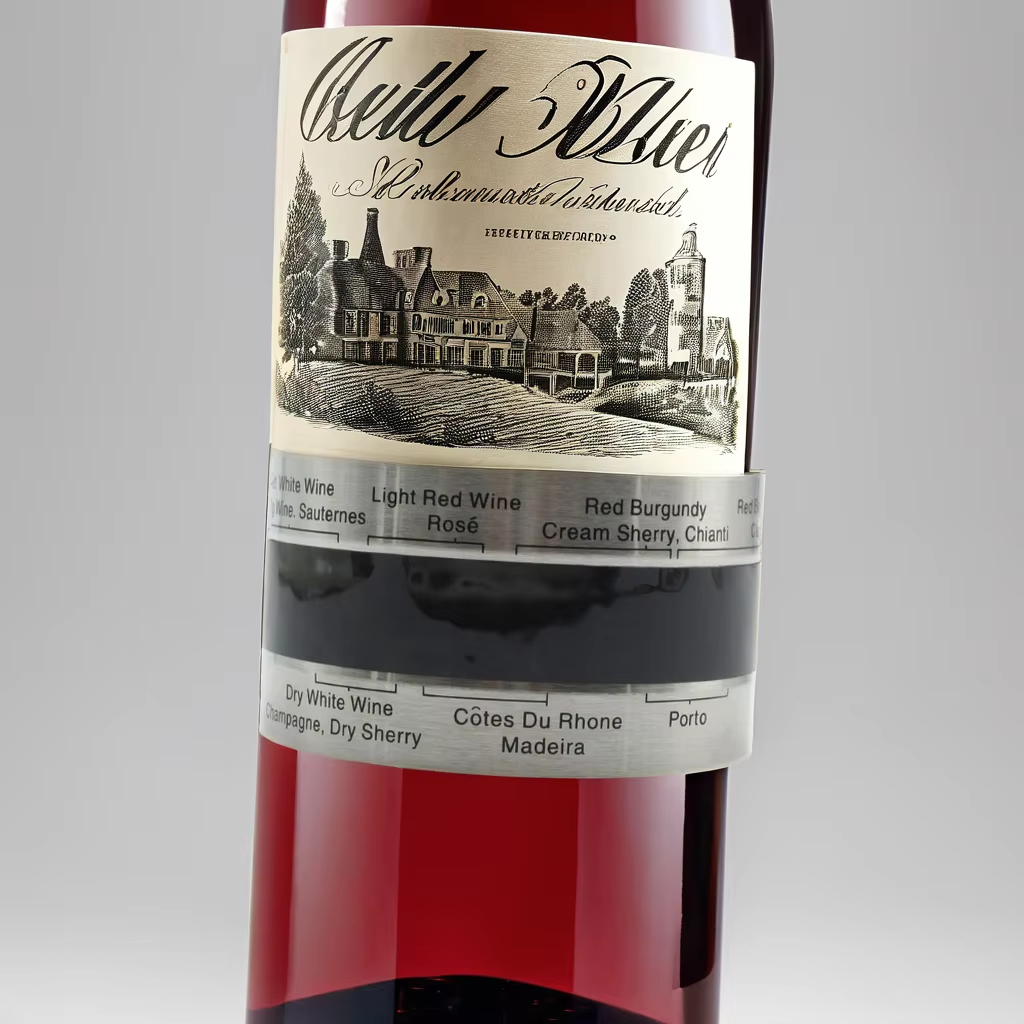
A quality wine thermometer must do more than display a color change. It should provide a readable, repeatable indication within its stated design range and remain functional after handling, packaging, transport, and normal consumer use.
A typical liquid crystal wine thermometer strip may include:
- A liquid crystal temperature-sensitive layer that changes optical appearance at different temperatures.
- A PET or similar polymer substrate.
- Printed graphics, icons, and temperature numbers.
- An adhesive layer for bottle application or a non-adhesive flexible strip format.
- A protective clear layer or surface coating.
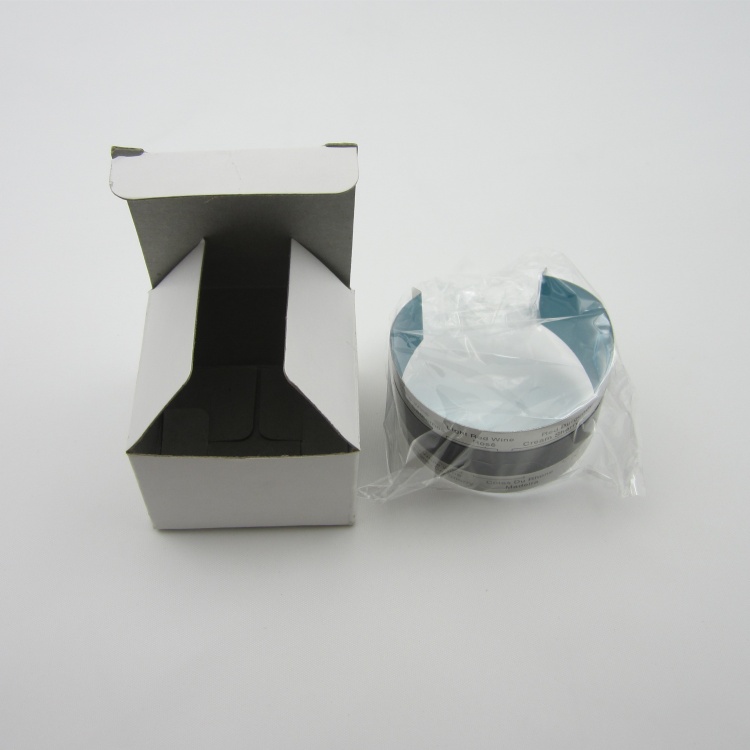
- Paperboard packaging, often with a printed instruction card.
The liquid crystal system is sensitive to temperature and light conditions. It is not designed to perform like a laboratory-grade probe thermometer. A buyer should therefore avoid promising unrealistic precision in retail claims.
Wine thermometer strips commonly display a limited range, often focused on serving temperatures relevant to white, red, sparkling, or rosé wines. Before approving artwork, confirm:
- Display range, such as 10°C–30°C or another intended range.
- Increment spacing, such as 1°C, 2°C, or 3°C.
- Celsius, Fahrenheit, or dual-scale format.
- Whether a single number or several adjacent colors appear during transition.
- Minimum font size and contrast for consumer readability.
- Whether the intended wine-type guidance matches the brand's market positioning.
Ask the supplier to state:
- Accuracy tolerance at specified test points.
- Test method and ambient conditions.
- Response time after applying the strip to a bottle.
- Required bottle-contact area.
- Storage conditions before use.
- Expected working life under normal retail conditions.
A practical requirement for a branded consumer product may be something such as "indication intended for serving-temperature guidance," rather than a claim of precision instrumentation. This protects both the buyer and the supplier from inappropriate performance expectations.
A strip may show vivid colors in a supplier's photo but respond unevenly across the temperature scale in actual use. This can result from inconsistent liquid crystal material, uneven coating, poor lamination, or inadequate batch control.
How to avoid it: Request samples from at least two production batches, not only one showroom sample. Test them on bottles at several controlled temperatures and record which numeral or zone becomes active.
Some suppliers may offer a standard strip design but modify printed numbers without changing the underlying liquid crystal response range. The result is a visually attractive product with incorrect temperature interpretation.
How to avoid it: Ask for a written link between the printed scale and the actual liquid crystal specification. Require a test video or report showing the finished artwork at multiple set temperatures.
High warehouse or transport temperatures can soften or weaken low-grade adhesive. This is especially important for shipments entering hot-climate markets.
How to avoid it: Specify the expected storage and transport environment. Ask for adhesive type, temperature-resistance data, and a heat-exposure test. Test samples after a controlled elevated-temperature period before placing a large order.
A supplier may display a generic certificate that is unrelated to the wine thermometer model or expired. In some cases, buyers assume CE or RoHS applies simply because those logos appear on a product page.
How to avoid it: Request the full certificate or declaration, issuing body, certificate number, validity dates, named legal entity, product scope, and test-report reference. Verify the issuing organization independently.
Thermometer strips can bend, scratch, stick together, or become visually damaged if packaging does not control pressure and friction during transit.
How to avoid it: Confirm inner-pack quantity, polybag specification, card thickness, export carton dimensions, gross weight, and pallet requirements. Request pre-shipment photos of the packed product, not only loose samples.
One of the least-discussed risks in sourcing wine thermometer strips is artwork approval without temperature-window validation.
Buyers often spend time approving logo placement, colors, packaging copy, and barcode layout, but fail to validate whether the final liquid crystal layer corresponds exactly to the printed temperature scale. In some supply chains, a factory may use a standard liquid crystal sheet and apply a new custom graphic over it. If the active temperature windows do not match the printed numbers, the product can appear professionally made while giving misleading guidance.
Before issuing a purchase order, ask for a finished pre-production sample using the final artwork, not a blank strip plus a separate paper proof. Then test that actual sample at a minimum of five temperature points covering the lower range, middle range, upper range, and transition zones.
For example, if the design displays 14°C, 16°C, 18°C, 20°C, and 22°C, test the final strip at temperatures near those points. Record the color response and compare it with the display. This one step can prevent a costly batch-level problem.
Before requesting quotations, clarify whether the product is intended for:
- Wine retail.
- Winery merchandise.
- Hotel or restaurant use.
- Corporate gifts.
- Promotional campaigns.
- E-commerce resale.
- Gift-box inclusion.
- A branded private-label accessory range.
Your intended use affects the required packaging, quality level, price target, MOQ, and legal labeling considerations.
A good request for quotation should include:
- Product type: adhesive strip, flexible wrap strip, card-mounted strip, or gift-set component.
- Required dimensions.
- Temperature range and scale.
- Celsius, Fahrenheit, or dual-scale requirements.
- Artwork files and logo colors.
- Packaging format.
- Required language versions.
- Target order quantity.
- Preferred Incoterm: EXW, FOB, CIF, DDP, or another agreed term.
- Destination port or final delivery city.
- Required delivery date.
- Required test reports or declarations.
- Desired sample quantity and approval timeline.
The clearer the RFQ, the more comparable the quotations will be.
Do not rely solely on a marketplace profile, a website, or a product photo. Conduct layered verification:
- Check the company's registered name and business address.
- Request a recent factory or production-area video call.
- Ask whether the supplier is the manufacturer, converter, trading company, or a combination.
- Review export experience to your target region.
- Request samples with batch identification.
- Check the supplier's ability to explain technical specifications clearly.
- Verify certificates with the issuer where needed.
- Confirm payment terms and dispute-resolution procedures.
A sample should be evaluated for both visual and functional performance.
Test:
- Temperature response.
- Readability under indoor and bright light.
- Adhesion to glass bottles.
- Resistance to handling.
- Packaging appearance.
- Barcode scan quality.
- Print alignment.
- Carton strength.
- Product odor or material smell.
- Performance after heat exposure where relevant.
Do not approve a large order based only on a digital proof or photo.
For larger orders, use a documented approval sequence:
1. Approved artwork.
2. Approved product specification.
3. Approved pre-production sample.
4. Confirmed production schedule.
5. In-process inspection or photo update.
6. Final inspection based on agreed AQL or quality criteria.
7. Packing approval.
8. Shipment document review.
Third-party inspection can be especially useful if the order value is significant or if the product will be sold under a premium retail brand.
Shipping options generally include air freight, express courier, LCL sea freight, and FCL sea freight. The best method depends on order volume, delivery deadline, product value, and warehouse capability.
For Gulf destinations, verify:
- Importer-of-record requirements.
- Customs documentation.
- Arabic labeling obligations where applicable.
- HS classification with your customs broker.
- Certificate-of-origin requirements.
- Insurance terms.
- Container and warehouse temperature exposure.
- Local last-mile delivery and storage conditions.
For repeat orders, consider keeping an approved reference sample and a written master specification. This reduces inconsistency when the supplier changes raw material batches, printing settings, or packaging suppliers.
Selecting a wine thermometer supplier for Arabia requires more than comparing quotations. The right partner should demonstrate consistent temperature-indicator performance, suitable material selection, transparent documentation, reliable artwork control, stable packaging quality, and clear communication throughout sampling and production.
For buyers seeking a flexible China-based supplier with experience in liquid crystal thermometers, color-changing materials, customized printing, and promotional product development, Qingdao Focus On Color Industry & Trade Co., Ltd. is worth including in the supplier evaluation process. Its product range covers wine thermometers and other LCD thermometer applications, while its customized OEM/ODM approach can suit distributors, private-label brands, wineries, hospitality buyers, and promotional-product companies. [made-in-china]
Before placing a volume order, request a detailed specification, test the final-artwork sample under controlled temperatures, verify all relevant documents, and agree on an inspection and packing standard in writing. This approach gives buyers a stronger foundation for stable repeat orders and reduces the risk of functional or branding issues after arrival.
Request the complete certificate, including the issuing certification body, certificate number, legal company name, address, scope, issue date, and expiry date. Then search the certification body's public database or contact the issuer directly. Also verify that the certified company is the same legal entity producing or supplying your wine thermometer order.
Not automatically. CE marking applies only when a product falls within the scope of relevant European legislation. RoHS relates to restricted substances in applicable electrical and electronic equipment. A standard non-electronic liquid crystal wine thermometer strip may not require these markings simply because it measures temperature. Ask a compliance professional or your importer for destination-specific guidance, and request a product-specific declaration from the supplier rather than accepting a generic logo.
MOQ depends on the strip size, liquid crystal range, number of print colors, custom packaging, and whether the design uses an existing base format. Custom orders commonly begin from several thousand pieces, but some flexible suppliers can support smaller trials, especially when using existing materials and simple packaging. Confirm MOQ separately for the strip, backing card, gift box, and special printing.
Use controlled temperature conditions rather than judging the strip by room-temperature observation alone. Test the final finished sample on a glass bottle or a comparable surface at several verified temperatures. Record the active display zone, compare it with the printed scale, and repeat the process across several samples. For a retail wine accessory, focus on consistent serving-temperature guidance rather than laboratory-grade precision.
The inspection should cover quantity, dimensions, print quality, scale visibility, color-response functionality, adhesive performance, packaging, carton marks, barcode readability, packing count, carton drop resistance where required, and random comparison with the approved sample. If the product will travel through hot climates, include a heat-exposure or storage-condition check in the agreed inspection plan.
- [International Organization for Standardization (ISO)]
- [European Commission: CE Marking]
- [European Commission: RoHS Directive]
- [World Customs Organization]
- [International Trade Centre Trade Map]


