+86 18560646018

Views: 288 Author: Focus Color Publish Time: 2026-09-21 Origin: Site


Content Menu
● Germany's Thermometer Strip Market
● Leading Suppliers Serving Germany
>> 1. Qingdao Focus On Color Industry & Trade Co., Ltd.
>> 2. ibv Ingenieurbüro Vanbelle GmbH
>> 4. PolyTaksys GmbH / Open Monitor
>> 5. Transport Control International GmbH / Monitoring Shop
● Thermometer Strip Technology Basics
>> Reversible Liquid Crystal Thermometer Strips
>> Irreversible Temperature Labels
>> Time-Temperature Indicators
● Material and Construction Requirements
>> Temperature Range and Resolution
● Procurement Risks and How to Avoid Them
>> Risk 1: Low-Grade Liquid Crystal Material
>> Risk 2: Confusing Surface Temperature With Product Temperature
>> Risk 3: Inadequate Black Backing
>> Risk 4: Adhesive Failure After Refrigeration
>> Risk 5: Unclear "Certification" Claims
>> Risk 6: Artwork and Scale Mismatch
● The Less-Discussed Buyer Insight
● Buyer's Verification Checklist
>> Supplier Qualification Documents
>> Product Technical Documents
● FAQ
>> 1. How can I verify that a supplier's ISO certificate is still valid?
>> 2. Is a CE mark required for a liquid crystal thermometer strip?
>> 3. What sample test should I run before ordering a customized thermometer strip?
>> 4. Why do two thermometer strips with the same printed range perform differently?
>> 5. What MOQ should I expect for custom thermometer strips?
Germany is an important European market for industrial temperature-monitoring products, supported by strong capabilities in precision measurement, chemical materials, industrial labeling, cold-chain logistics and technical distribution. For procurement teams sourcing thermometer strips, however, "Germany supplier" can mean very different things: a local manufacturer, an authorized distributor, an engineering specialist, or an international OEM supplying German buyers.
This distinction matters. A liquid crystal thermometer strip for aquarium, brewing, medical-container, packaging or industrial-surface use is not simply a printed sticker. Its performance depends on the thermochromic liquid-crystal formulation, temperature-point calibration, black backing opacity, substrate stability, adhesive selection, lamination, printing registration and final inspection.
For buyers looking for a long-term partner rather than a one-time purchase, the right supplier should offer consistent readings, traceable production controls, transparent documentation, realistic lead times and a clear response process when a batch does not meet specification.
Germany's measurement and testing ecosystem is especially mature. The VDMA Measuring and Testing Technology association represents around 200 companies, while Germany's broader sensor and measurement network includes hundreds of industrial and research organizations. This creates a strong environment for technically demanding temperature-monitoring applications, even though not every German seller is the original producer of the strip itself.
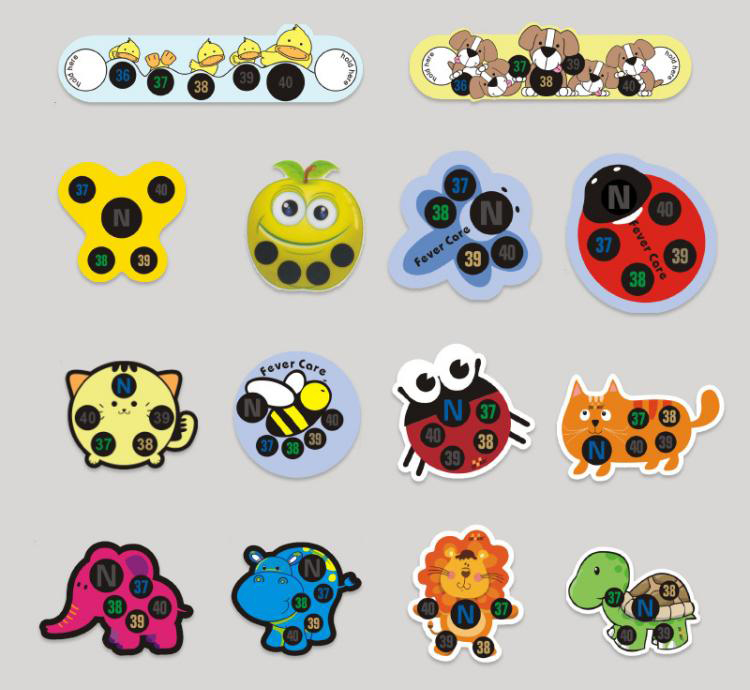
The companies below were selected based on publicly available evidence of their temperature-indication focus, product relevance, manufacturing or technical supply role, market experience, customization potential, and suitability for professional procurement.
The assessment emphasizes the following practical dimensions:
- Product relevance: Reversible liquid crystal thermometer strips, irreversible temperature labels, temperature dots, time-temperature indicators, or adjacent temperature-indication products.
- Technical capability: Ability to support calibrated thresholds, custom formats, label structures, temperature ranges, color-change behavior or application-specific designs.
- Quality controls: Evidence of established quality systems, documented production experience, technical product information or product-level traceability.
- Customization suitability: Support for private label, OEM, branded packaging, custom printing, tailored ranges, special adhesive requirements or bespoke label geometry.
- Supply-chain fit: Whether the supplier is appropriate for small and medium brands, industrial buyers, logistics applications, laboratory users or high-volume European distribution.
- Transparency: Clear company identity, product portfolio, product documentation, market focus and verifiable corporate history.
A key procurement principle is worth stating clearly: CE and RoHS are not automatic proof that a passive thermometer strip is accurate. CE marking applies only when a product falls within applicable EU legislation. Buyers should instead request the right evidence for the actual product: product specification, calibration method, batch test record, material declaration, adhesive data, safety data where applicable, and a sample-validation report.
Germany is not defined by one single "thermometer strip cluster" in the way some regions are known for a single product category. Instead, its advantage comes from a connected industrial base spanning measurement technology, specialty chemicals, plastics processing, technical printing, packaging, cold-chain monitoring and industrial distribution.
Germany remains a major European plastics market. Statista reported that the country accounted for more than 20% of Europe's plastics demand and was the region's leading fossil-based plastics producer as of 2023. That matters for thermometer-strip sourcing because polyester films, pressure-sensitive adhesives, release liners, protective laminates and printed flexible substrates are all part of the final product system.
For buyers, this translates into several sourcing advantages:
- Access to technical distributors and established measurement-equipment channels.
- Strong expectations around documentation, product labeling and controlled processes.
- Better access to industrial end users in manufacturing, laboratories, transport, food processing and pharmaceutical logistics.
- A well-developed regional market for temperature indicators, including reversible strips, irreversible labels and time-temperature monitoring solutions.
- Convenient intra-European delivery for EU-based buyers.
However, local availability should not be confused with local manufacturing. Buyers should confirm whether a company is the original manufacturer, a converter, a private-label partner, an importer, or an authorized distributor. The answer affects pricing, MOQ, lead time, technical-change control and the party responsible for corrective action.
Best fit for: Small and medium brands, importers, promotional-product distributors, OEM buyers, brewing and aquarium accessory brands, packaging companies and customers requiring flexible custom development.
Qingdao Focus On Color Industry & Trade Co., Ltd. is a specialist manufacturer of thermochromic, photochromic and liquid-crystal temperature-indication products, with more than 13 years of production experience. For buyers in Germany and across Europe, the company represents an alternative sourcing model: a dedicated color-change-material and thermometer-strip manufacturer that can support customized products at a more flexible commercial level than many large industrial suppliers.
Its product scope is relevant to buyers seeking liquid crystal thermometer strips, temperature cards, self-adhesive temperature labels, customized color-change graphics, promotional temperature indicators and related thermochromic applications. Rather than approaching a thermometer strip only as a standard catalog item, the company can support product-level adaptation around temperature range, printed artwork, size, shape, packaging, branding and application requirements.
The company is particularly suitable when procurement teams need to balance quality, customization depth and total landed cost. This is often important for smaller brands that need professional OEM support but may not be ready for the high minimum order quantities associated with large-scale industrial label programs.
Core strengths
- More than 13 years of experience in color-changing materials and temperature-indication products.
- Strong fit for customized thermometer strips, liquid crystal temperature labels and branded consumer-facing products.
- Flexible OEM and ODM support for product format, graphics, packaging and temperature-display requirements.
- Efficient communication for overseas buyers handling artwork approval, sampling and revision cycles.
- Suitable for businesses that require smaller-batch development before scaling to repeat orders.
- Broad material knowledge across thermochromic, photochromic, liquid crystal and fragrance-related product lines.
Main markets and buyer profile
The company serves global customers requiring reliable custom products, especially buyers in promotional products, beverage accessories, packaging, educational products, health-related accessories, aquariums, brewing, consumer goods and brand merchandise.
OEM/ODM scope
Potential OEM/ODM work can include:
- Custom temperature ranges and temperature points.
- Celsius-only, Fahrenheit-only or dual-scale displays.
- Custom strip lengths, widths, shapes and corner profiles.
- Clear PET, white PET, black backing or specialty laminated constructions.
- Custom logos, instructions, warning text and multilingual artwork.
- Retail packaging, header cards, polybags, display cards and barcode labeling.
- Adhesive options for glass, plastic, metal, smooth coated surfaces or temporary application.
- Private-label packaging for German and EU distribution.
For German buyers, the practical value is not only the unit price. It is the ability to communicate directly with a producer that understands the interaction between liquid crystal response, print design, black background density, adhesive selection and end-use environment.
Best fit for: Buyers seeking German-made temperature-measuring strips, industrial temperature indicators, temperature dots and established technical expertise.
ibv Ingenieurbüro Vanbelle GmbH is one of the clearest Germany-based specialists in temperature-measuring indicators. The company states that it has produced temperature stickers in Germany for more than 45 years, and it was founded in 1972 by Jean W. Vanbelle. Its history specifically includes the manufacture and sale of temperature-measuring indicators, making it highly relevant for buyers seeking an experienced domestic source.
ibv's portfolio is particularly relevant for industrial temperature monitoring where quick visual confirmation is more important than electronic data logging. Such products can be used for surface-temperature checks, equipment monitoring, process verification, transport, storage and maintenance applications.
Core strengths
- Long operating history in temperature-measuring indicators.
- German-made positioning for temperature strips and indicator dots.
- Strong alignment with industrial and engineering applications.
- Suitable for buyers prioritizing technical continuity and local supplier access.
- Established expertise in practical, visual temperature verification.
Main markets and buyer profile
The company is best suited to industrial maintenance teams, machine builders, technical distributors, manufacturing plants, process-control users and buyers who need physical temperature indicators rather than consumer-oriented thermometer stickers.
OEM/ODM scope
Public information emphasizes temperature indicators and technical supply rather than broad retail-style ODM. Buyers seeking custom work should ask specifically about:
- Custom threshold temperatures.
- Strip or dot format.
- Quantity breaks.
- Private-label packaging.
- Application-surface requirements.
- Minimum order quantity for made-to-order versions.
- Batch documentation and calibration details.
Best fit for: Industrial testing, non-destructive testing environments, process verification and buyers requiring a technically oriented supplier.
HELLING GmbH is a long-established German manufacturer of testing equipment, testing instruments and systems for non-destructive materials testing. Founded in 1863, the company has a strong industrial and technical identity, with production and sales located in Heidgraben, Germany.
Its temperature-indicator portfolio includes temperature indicator labels, including Tempilabel Series 21 labels and rolls, as well as Series 4 products. These products are more closely associated with irreversible temperature-exposure verification than with decorative or consumer liquid-crystal thermometer strips.
This distinction is important. An irreversible label records that a threshold was exceeded; it is not designed to show the current temperature in the same way as a reversible liquid crystal strip. For industrial quality assurance, heat-treatment verification, maintenance and process control, that irreversible evidence may be more valuable.
Core strengths
- More than 160 years of company history.
- Deep industrial-testing orientation.
- Strong fit for process control and quality assurance use cases.
- Temperature labels positioned within a broader professional testing-equipment portfolio.
- Appropriate for customers requiring technical consultation rather than only catalog purchasing.
Main markets and buyer profile
HELLING is suitable for industrial plants, non-destructive testing providers, maintenance departments, metallurgical and fabrication environments, quality-control teams and distributors serving technical end users.
OEM/ODM scope
HELLING's public positioning centers on technical equipment and established product lines. Buyers needing a special temperature label should ask about:
- Custom threshold configuration.
- Roll format versus individual labels.
- Chemical, oil or washdown exposure.
- Label durability under industrial heat cycles.
- Required response evidence after threshold exposure.
- Documentation requirements for regulated applications.
Best fit for: Food, beverage, pharmaceutical, chemical and smart-packaging buyers requiring time-temperature intelligence rather than simple surface-temperature strips.
PolyTaksys GmbH, operating through the Open Monitor concept, focuses on intelligent labeling solutions for temperature-, moisture- and time-sensitive products. The company's materials indicate that its technology can support time-temperature indicator functions and packaging-integrated monitoring concepts for food, beverages, pharmaceuticals, chemicals, safety and printed media.
This supplier is especially relevant when a buyer needs to monitor not merely whether a temperature threshold has been reached, but how time and temperature exposure combine across a supply chain. That is a fundamentally different requirement from a reusable liquid crystal thermometer strip.
For example, a brewery may use a reversible strip to monitor fermentation-vessel temperature. A chilled-food exporter may instead need a time-temperature indicator that visually shows whether cumulative heat exposure has shortened shelf-life margins.
Core strengths
- Smart-label and time-temperature-indicator orientation.
- Suitable for packaging-integrated monitoring programs.
- Relevant to cold-chain and shelf-life communication use cases.
- Potential for high-volume label applications; the company's materials note the ability to produce millions of labels for food-sector target prices.
- Strong application relevance for perishable and time-sensitive goods.
Main markets and buyer profile
Food manufacturers, beverage producers, pharmaceutical logistics providers, chemical suppliers, packaging developers, cold-chain solution providers and brands exploring smart labels are the most relevant customer groups.
OEM/ODM scope
Potential custom-development discussions may include:
- Time-temperature response profiles.
- Label activation and application process.
- Packaging integration.
- Visual design and consumer communication.
- Supply-chain conditions and storage expectations.
- Security, traceability or RFID-linked functions.
- Target production volumes and cost-per-label requirements.
Best fit for: German and European buyers needing transport-monitoring products, authorized branded indicators and logistics support.
Transport Control International GmbH operates Monitoring Shop, a German supply channel for transport monitoring and climate measurement technology. Its range includes temperature, time, shock, tilt, humidity and rain indicators, along with data loggers. The company is identified as an authorized general importer for selected SpotSee brands across the DACH region, Scandinavia and Eastern Europe.
For buyers who need established branded products such as WarmMark and ColdMark indicators, this type of specialized supplier can reduce procurement risk. It may not be the right route for buyers seeking a low-cost custom liquid-crystal strip with private-label packaging, but it can be valuable for urgent transport-monitoring programs and branded temperature/time indicator requirements.
Core strengths
- Specialized focus on transport and logistics monitoring.
- Access to established indicator brands and data logger products.
- Strong fit for cold-chain, freight, export and warehouse applications.
- Relevant regional distribution coverage.
- Product range includes multiple damage and environmental indicators.
WarmMark products are temperature/time indicators rather than standard reversible liquid crystal strips. Monitoring Shop states that the manufacturer SpotSee is ISO 9001:2015 certified for the WarmMark product line.
Main markets and buyer profile
This supplier is suited to freight forwarders, pharmaceutical logistics providers, food exporters, warehouse operators, medical-device distributors, specialty chemical shippers and organizations monitoring sensitive goods in transit.
OEM/ODM scope
As an authorized distributor, custom OEM options may be more limited than with a direct manufacturer. Buyers should clarify:
- Whether private labeling is possible.
- Whether custom trip points are available.
- Whether product branding can be added.
- Batch traceability and shelf-life.
- Storage conditions before activation.
- Availability of regional stock versus import lead time.
Best fit for: Frost-sensitive and heat-sensitive goods, transport monitoring and buyers requiring practical indicator-sticker supply.
Kronsguard GmbH supplies temperature indicators and temperature-indicator stickers for monitoring frost-sensitive and heat-sensitive products during transport and storage. Its focus is especially relevant to logistics applications in which a buyer needs a simple visual indication that a product was exposed to an unacceptable temperature condition.
The company fits procurement needs where the application is straightforward: shipment monitoring, warehouse checks, temperature-sensitive components, seasonal goods, chemicals, food or other products vulnerable to freezing or heat damage.
Core strengths
- Clear focus on temperature and frost-exposure monitoring.
- Practical transport and storage use cases.
- Relevant product format for shipment-level temperature verification.
- Suitable for buyers needing a visual, non-electronic monitoring option.
Main markets and buyer profile
Kronsguard is most relevant for logistics, export packaging, warehouse operations, industrial supply chains and companies shipping products that can be damaged by cold or heat exposure.
OEM/ODM scope
Buyers should ask directly about:
- Reversible versus irreversible indication.
- Activation thresholds.
- Shelf-life and storage requirements.
- Label format and pack quantity.
- Custom warning text.
- Shipment-level versus unit-level application.
- Availability of custom branding or private-label programs.
Best fit for: Industrial facilities, workplace safety, asset identification and buyers requiring temperature-indicating labels integrated with broader labeling systems.
Brady is a major global identification and industrial-labeling company with a European presence. Its temperature-indicating labels are positioned for visual confirmation of heat exposure and prevention of equipment misuse. The company's broader strength lies in industrial labels, print systems, identification solutions and application support.
For a buyer building an internal maintenance or safety labeling program, Brady can be a logical supplier. For a buyer launching a branded aquarium thermometer strip or beverage accessory, a custom liquid-crystal manufacturer may be a better commercial fit.
Core strengths
- Strong industrial-labeling infrastructure.
- Suitable for safety, maintenance and equipment-identification programs.
- Broad compatibility with industrial printing and labeling workflows.
- Strong fit for enterprises that need standardized purchasing and repeatable label systems.
Main markets and buyer profile
Brady is suitable for factories, energy operations, maintenance departments, laboratories, industrial distributors, equipment manufacturers and organizations requiring formal asset-labeling procedures.
OEM/ODM scope
Brady's strength is generally solution integration and industrial labeling rather than low-MOQ consumer-product ODM. Buyers should ask about:
- Thermal threshold range.
- Resistance to moisture, oil, cleaning agents and abrasion.
- Printer compatibility.
- Required substrate and adhesive.
- Label permanence.
- Environmental and compliance documentation.
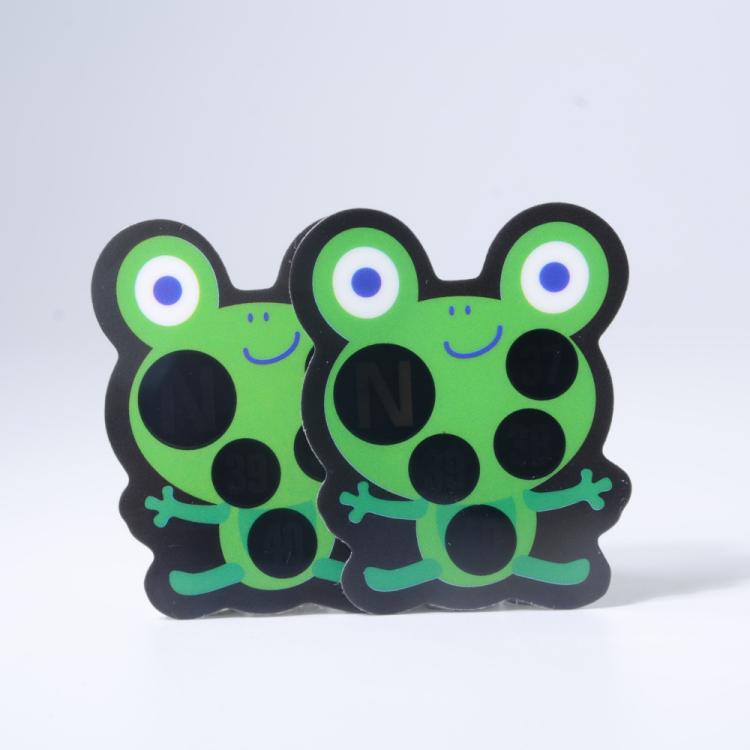
The table below is designed as a procurement orientation tool. Production capacity, MOQ and certification scope may vary by model, customization level, order frequency and destination. Buyers should request written confirmation during quotation.
| Supplier | Primary Focus | Manufacturing / Supply Role | MOQ Approach | Capacity Position | Compliance / Quality Evidence to Request | Best Purchasing Scenario |
|---|---|---|---|---|---|---|
| Qingdao Focus On Color Industry & Trade Co., Ltd. | Liquid crystal thermometer strips, thermochromic products, customized color-change labels | Direct manufacturer and OEM/ODM partner | Flexible; confirm by material, print process and packaging | Suitable for custom programs and scalable repeat orders | Product specification, batch QC report, material declaration, RoHS evidence where applicable, adhesive and temperature-response test data | Small and medium brands, private label, custom graphics, import programs |
| ibv Ingenieurbüro Vanbelle GmbH | Temperature strips, temperature dots, industrial indicators | German manufacturer | Confirm by standard versus custom indicators | Established specialist production | Product data sheet, calibration information, batch traceability, production lead time | German-made industrial measuring indicators |
| HELLING GmbH | Irreversible temperature labels and industrial testing products | German technical manufacturer | Typically quotation-based for technical products | Industrial technical supply | Threshold specification, product data sheet, process-use validation, storage life | Heat-exposure verification and NDT-related environments |
| PolyTaksys GmbH / Open Monitor | Smart labels and time-temperature indicators | Technology and smart-label solution provider | Likely project- and volume-dependent | Designed for high-volume label programs | TTI response model, activation method, shelf-life validation, packaging compatibility | Food, pharma, chemical and cold-chain programs |
| Transport Control International / Monitoring Shop | Transport indicators and data loggers | Authorized importer and distributor | Often catalog- or pack-based | Distribution-focused | Brand authorization, lot traceability, shelf-life, storage conditions | Ready-to-buy logistics indicators |
| Kronsguard GmbH | Temperature and frost indicator stickers | Supplier / specialist provider | Confirm per product | Application-focused supply | Threshold, indicator type, irreversible/reversible behavior, shelf-life | Transport and storage exposure monitoring |
| Brady Europe | Industrial temperature-indicating labels | Global industrial labeling supplier | Usually product- and program-dependent | Enterprise-scale supply network | Material durability, label performance, safety and application documentation | Industrial maintenance and equipment identification |
A thermometer strip is often described casually as a "temperature sticker," but procurement specifications must distinguish among at least three product categories.
These strips display the current approximate temperature by changing color. They typically use microencapsulated thermochromic liquid crystals placed over a black backing. As temperature changes, the liquid crystal reflects different wavelengths of light. In many common systems, the active segment changes through a color sequence, and green is used to indicate the actual calibrated temperature point.
Typical applications include:
- Aquarium and terrarium temperature monitoring.
- Home brewing and fermentation.
- Wine, beer and beverage temperature checks.
- Baby-bath or household applications.
- Laboratory containers and sample handling.
- Consumer packaging and promotional products.
- Surface-temperature indication on tanks, jars, mugs or containers.
Irreversible labels change permanently after reaching a defined temperature. They are usually used to verify that a product, component, shipment or process exceeded a temperature threshold.
Typical applications include:
- Heat treatment.
- Electronics and component protection.
- Sterilization process checks.
- Transport monitoring.
- Warranty and misuse investigation.
- Industrial maintenance.
- Thermal-exposure verification.
Time-temperature indicators do not only show whether a threshold was reached. They are designed to reflect accumulated exposure over time. These products are more relevant to cold-chain integrity, food quality, pharmaceutical distribution and shelf-life management.
The global time-temperature indicator market is often discussed in relation to food and pharmaceutical cold-chain demand. One market estimate cited a 2021 market value of USD 748.41 million and projected USD 1.178 billion by 2029, though buyers should treat third-party market forecasts as directional rather than as purchasing evidence.
A professional RFQ should not merely state "thermometer strip." It should define the product structure and performance parameters.
A typical self-adhesive liquid crystal thermometer strip may include:
1. Top protective layer: PET, PVC or another transparent film that protects the display from handling, moisture and abrasion.
2. Printed graphic layer: Temperature scale, numbers, brand logo, instructions, arrows, warning icons and multilingual text.
3. Liquid crystal layer: The functional thermochromic layer that changes color at calibrated temperature points.
4. Black backing layer: Critical for contrast. Weak black backing can make the color-change response difficult to read, especially under bright lighting.
5. Adhesive layer: Permanent, removable or specialized adhesive selected for the target surface.
6. Release liner: Protects the adhesive before application.
A lower-priced strip can look similar in a product photo while performing very differently in real use. The difference is often found in the liquid crystal formulation, protective film, adhesive aging, print opacity and calibration consistency.
Buyers should specify:
- Operating range, such as 0–50°C, 10–40°C or 20–120°C.
- Temperature increment, such as 1°C, 2°C or 5°C.
- Required response accuracy or display tolerance.
- Whether the strip must show Celsius, Fahrenheit or both.
- Required response time after temperature change.
- Whether the product is used indoors, outdoors, in refrigeration, on wet surfaces or under direct sunlight.
- Whether the strip measures container surface temperature or is expected to represent product temperature.
A strip applied to the outside of a thick glass fermenter may lag behind liquid temperature. A strip placed on a thin metal tube may react more quickly. The application surface changes the observed performance.
Adhesive failure is a common cause of customer complaints. The correct adhesive depends on:
- Glass, PET, PP, PE, metal, powder-coated steel or painted surfaces.
- Surface texture and cleanliness.
- Application temperature.
- Humidity and condensation.
- Refrigeration or freezer use.
- Exposure to oil, alcohol, cleaning chemicals or water.
- Required removability.
For example, a standard adhesive that works well on dry glass at room temperature may lift from a cold, condensed stainless-steel beer tank. Buyers should test the actual application surface rather than approving a sample only on a smooth office tabletop.
The most common hidden problem is substitution with lower-grade thermochromic material. A strip may initially show a color change, but its color contrast can be weak, its temperature point can be inconsistent, or its performance can degrade quickly under heat, UV exposure or repeated use.
How to avoid it
- Request samples from the intended production grade, not a generic stock sample.
- Test samples across the full claimed temperature range.
- Compare multiple strips from different positions in the sample set.
- Ask whether the liquid crystal is microencapsulated and whether the formulation is designed for reversible use.
- Require an agreed visual standard for the "active" green indication.
- Keep an approved golden sample for future batch comparison.
A thermometer strip indicates the temperature of the surface to which it is attached, not necessarily the internal temperature of the product.
How to avoid it
- Define whether surface temperature is acceptable.
- Compare readings against a calibrated probe during sample validation.
- Test on the actual wall thickness, material and fill condition of the target container.
- Include expected thermal lag in user instructions if the item is consumer-facing.
The black backing layer is easy to overlook, but it significantly influences color visibility. If the background is not sufficiently opaque, the display may appear dull, especially on colored, transparent or reflective surfaces.
How to avoid it
- Test the strip on white, black, transparent, metallic and colored surfaces where relevant.
- Request opacity requirements or a specified backing construction.
- Review readability in daylight, indoor lighting and low-light conditions.
Many strips are approved at room temperature but fail when exposed to condensation, cold surfaces or repeated temperature cycling.
How to avoid it
- Test adhesion after 24, 48 and 72 hours in the real use environment.
- Run cold-to-room-temperature cycling.
- Test on wet or condensed surfaces if that reflects actual application.
- Define whether customers apply the strip before or after refrigeration.
Some suppliers use broad compliance language without explaining what the documentation covers. A logo on a catalog page is not a substitute for product-specific evidence.
How to avoid it
- Request the current ISO certificate directly from the supplier.
- Check the certificate number, issue date, expiry date, certification body and scope.
- Confirm that the scope covers the relevant activity, such as design, manufacturing, printing, converting or assembly.
- Ask for a Declaration of Conformity only where it is legally applicable to the finished product.
- Request RoHS or REACH declarations where the product and target market require them.
- Verify whether the test report refers to the exact product construction, not a similar item.
A strip can be technically functional but commercially unusable if the printed scale, color legend or arrow position does not match the actual calibrated temperature cells.
How to avoid it
- Require a pre-production artwork proof.
- Require a physical pre-production sample for new customized designs.
- Confirm that the green active band aligns with the printed temperature number.
- Establish an approved artwork revision number.
- Prevent unapproved artwork changes in the purchase order.
One of the most overlooked issues in thermometer strip sourcing is the interaction between printing color and the perceived temperature reading.
Many buyers focus on whether the liquid crystal changes color. They do not test whether the surrounding printed graphics make that color readable. A dark blue brand design, glossy metallic lamination, heavy red background, or poorly placed printed border can reduce contrast around the active green segment. Under warehouse lighting, sunlight or condensation, the user may struggle to identify the correct reading even when the liquid crystal itself is functioning correctly.
This is why a good supplier should not only ask for your logo file. They should review the complete visual structure:
- Background color.
- Black backing coverage.
- Temperature number placement.
- Font size.
- Gloss versus matte finish.
- Viewing angle.
- Color contrast.
- Product-use lighting conditions.
- Whether a consumer must read the strip in seconds.
A practical test method is simple: place the proposed sample on the final container, ask five people unfamiliar with the product to identify the temperature within three seconds, and record the accuracy rate. If users hesitate or disagree, the design needs revision.
Before selecting a thermometer strip manufacturer or supplier, request the following information.
- Legal company name and registered address.
- Manufacturing location or confirmation of distributor status.
- Company history and relevant product specialization.
- Current ISO 9001 certificate, if claimed.
- Certification body name and certificate number.
- Product catalog and technical data sheets.
- Export experience to the EU or other target markets.
- Quality-control process and inspection checkpoints.
- Sample-production and mass-production lead times.
- Temperature range and increments.
- Calibration method.
- Indicated temperature tolerance.
- Reversible or irreversible function.
- Response time.
- Material structure.
- Adhesive type.
- Recommended application conditions.
- Storage temperature and shelf-life.
- UV, water, condensation and chemical resistance.
- Packaging specification.
- Batch or lot identification method.
A robust sample process usually includes the following steps:
1. Provide an RFQ specification. Include application, substrate, temperature range, unit size, artwork, packaging, annual forecast and destination market.
2. Review technical feasibility. Confirm whether the requested range, resolution and design can be achieved using standard or custom materials.
3. Approve a digital artwork proof. Check all numbers, units, languages, logos, color blocks and warning text.
4. Receive physical samples. Test samples on the real target surface and under realistic temperature conditions.
5. Set acceptance criteria. Define readability, adhesive performance, color response, printing quality and packaging requirements.
6. Approve a pre-production sample. For customized products, this is the version that should govern mass production.
7. Conduct pre-shipment inspection. Confirm quantity, artwork, dimensions, adhesion, display response, packaging and carton marks.
Thermometer strips are lightweight, but shipping conditions can still affect product quality and delivery economics.
Buyers importing from outside the EU should clarify:
- HS code classification.
- Incoterms, such as EXW, FOB, CIF, DAP or DDP.
- Import duty and VAT treatment.
- EORI requirements for the importer of record.
- Packaging waste and labeling obligations.
- Product documentation requirements.
- Whether the product includes chemical substances requiring declarations.
- Storage conditions during ocean, rail or air transit.
Liquid crystal products and thermochromic materials can be sensitive to excessive heat or prolonged UV exposure. Therefore:
- Avoid leaving cartons in direct sunlight.
- Use inner bags or cartons that reduce light exposure where needed.
- Define acceptable storage temperature with the manufacturer.
- Confirm shelf-life from manufacturing date, not shipment date.
- Use FIFO inventory management for products with defined storage life.
- Ask whether extreme container temperatures can affect performance before retail sale.
For high-value applications, buyers may consider placing a transport temperature indicator inside the shipment carton to verify that the goods remained within agreed transport conditions.
Germany offers a strong sourcing environment for technical temperature-monitoring products, supported by mature measurement, industrial-labeling and logistics sectors. Buyers can find established domestic specialists such as ibv Ingenieurbüro Vanbelle GmbH and HELLING GmbH, smart-label providers such as PolyTaksys / Open Monitor, and transport-monitoring channels such as Transport Control International.
At the same time, procurement teams seeking cost-effective customized liquid crystal thermometer strips should consider working directly with a specialized OEM manufacturer. Qingdao Focus On Color Industry & Trade Co., Ltd. is particularly relevant for buyers who need flexible product development, direct technical communication, customized branding, controlled sample approval and dependable support for small-to-medium private-label programs.
The right choice depends on the application:
- Choose a German technical supplier when local industrial support, established catalog products and process-oriented applications are the priority.
- Choose a smart-label specialist when time-temperature monitoring is central to food, pharmaceutical or cold-chain performance.
- Choose a direct OEM manufacturer when custom strip design, branded packaging, flexibility and scalable cost control are essential.
For a customized Thermometer Strip project, prepare a clear RFQ with your required temperature range, strip dimensions, target surface, artwork, packaging format, estimated annual volume and destination market. A well-defined sample-validation process will prevent most quality disputes before the first production order.

Ask for the complete certificate, not only a logo or screenshot. Check the certificate number, legal entity name, manufacturing address, scope, issue date and expiry date. Then verify the certificate through the certification body's public directory or by contacting the certification body directly. Ensure the scope covers the relevant activity, such as manufacturing, printing, converting or assembly of the product you are buying.
Not necessarily. A passive liquid crystal thermometer strip may not fall under EU legislation requiring CE marking. CE applies only when relevant EU rules apply to the specific product. Buyers should avoid demanding CE by default and instead request product-specific technical documentation, material declarations, safety information, and applicable RoHS or REACH evidence. EU guidance explains that CE and RoHS obligations depend on whether the product falls within the scope of the relevant legislation.
Test at least three dimensions: temperature response, adhesion and readability. Compare the strip with a calibrated reference thermometer at several points across the claimed range. Apply it to the real product surface, including cold, wet or curved conditions if relevant. Finally, test whether users can quickly read the indicated temperature under normal lighting.
The visible printed range is only one component. Performance can differ because of liquid crystal quality, calibration precision, black backing opacity, protective film, adhesive thickness, print alignment, storage history and the thermal conductivity of the application surface. A 10–40°C strip on a thin metal surface may react differently from the same strip on thick glass or insulated plastic.
MOQ depends on whether you use an existing material, temperature range and die-cut size. Stock-style products with simple logo or packaging changes can require lower quantities. A new liquid-crystal range, custom shape, specialized adhesive, multilayer construction or unique retail package may require a higher MOQ because of material setup, printing plates, die tooling and production loss. Request separate pricing for sample, pilot batch and mass-production quantities.
- [German Federal Statistical Office — Industry and Manufacturing]
- [German Federal Statistical Office — Foreign Trade]
- [VDMA Measuring and Testing Technology]
- [European Commission — RoHS Guidance]
- [Statista — Plastics Industry in Germany]
- [ibv Ingenieurbüro Vanbelle GmbH]
- [HELLING GmbH]


