+86 18560646018

Views: 236 Author: Focus Color Publish Time: 2026-08-25 Origin: Site


Content Menu
● Why Outdoor Wine Service Needs Two Measurements
● Wine Thermometer vs. Ambient Room Sensors
● When a Wine Thermometer Is the Better Choice
>> Serving Temperature Matters to Perception
>> Product Formats for Wine Thermometers
● When Ambient Room Sensors Are Essential
>> Ambient Sensors Do Not Replace Bottle Checks
● Outdoor Catering: Wine Quality and Food Control
● A Practical Two-Tool Setup for Events
>> Step 1: Map the Event Space
>> Step 2: Define Bottle-Service Targets
>> Step 3: Check Before the Pour
>> Step 4: Rotate Instead of Overloading Ice
● Buying Guidance for Custom Event Programs
● FAQ
>> 1. Is a wine thermometer more accurate than an ambient room sensor?
>> 2. Can ambient room sensors be used for outdoor wine tasting events?
>> 3. What is the best wine thermometer for promotional use?
>> 4. Why does wine warm so quickly at outdoor events?
>> 5. Can a wine thermometer be used for food safety checks?
>> 6. Should red wine be served at outdoor room temperature?
>> 7. What should be customized in an OEM wine thermometer project?
For outdoor catering and wine tasting events, a wine thermometer and an ambient room sensor solve two very different temperature-control problems. A wine thermometer measures the temperature of the wine itself, while an ambient room sensor tracks the changing conditions around the bottles, guests, food stations, and service area.
For event operators, sommeliers, caterers, promotional-product buyers, and hospitality brands, the best decision is rarely "one or the other." The most reliable outdoor setup uses a wine thermometer for serving decisions and ambient room sensors for anticipation, planning, and protection.

Outdoor events are difficult because the surrounding temperature can change quickly. Sun exposure, wind, humidity, tent coverage, ice-bucket placement, guest traffic, and the thermal mass of each bottle all affect the final drinking experience.
A sensor mounted under a canopy may show 24°C, while a bottle placed in direct sunlight can warm considerably faster. Conversely, a bottle removed from an ice bath may still be colder than the air for some time. This is why ambient readings alone should not be used to decide whether a wine is ready to pour.
The key distinction is simple:
- Wine thermometer: Measures the liquid or bottle temperature relevant to service quality.
- Ambient room sensor: Measures the surrounding environment relevant to event control.
- Food thermometer: Measures food temperature and should be treated as a separate tool for food-safety operations.
- Combined workflow: Uses environmental data to predict risks, then verifies the wine before service.
Wine is generally served across a wide spectrum, from roughly 6°C for some sparkling and sweet styles to around 18°C for fuller red wines. "Room temperature" for wine is traditionally closer to 15–18°C, not the temperature of many modern indoor spaces or a hot outdoor venue.
| Factor | Wine Thermometer | Ambient Room Sensor |
|---|---|---|
| Primary measurement | Wine, bottle surface, or liquid temperature | Air temperature around the event space |
| Best use | Confirming service readiness | Monitoring environmental changes |
| Ideal user | Sommelier, server, tasting host, bartender | Event manager, catering supervisor, operations team |
| Response to sunlight | Shows the result of heat exposure on the wine | Helps identify heat-risk zones before wine warms |
| Use with ice buckets | Verifies whether wine is too cold, ready, or warming | Tracks how quickly the surrounding area may affect stock |
| Value at tasting events | Supports consistent sensory presentation | Supports setup planning and stock protection |
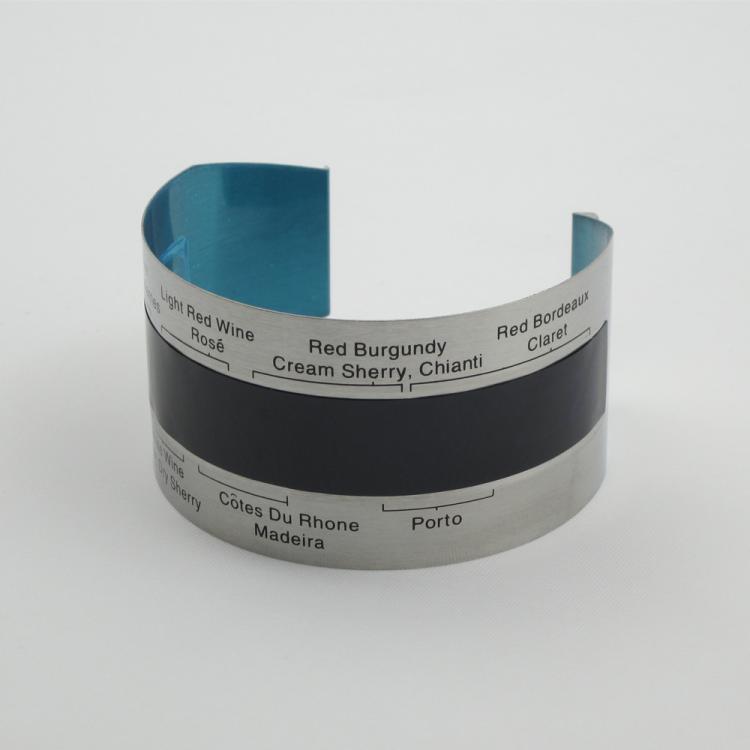
| Typical product format | Strip, label, probe, digital display, bottle wrap | Digital display, wireless monitor, data logger, station sensor |
| Limitation | Does not explain the broader environmental cause | Does not confirm the wine's actual serving temperature |
| Best purchase logic | Product-facing guest experience and pouring control | Venue-level environmental oversight |
A wine thermometer is the final decision tool. It answers, "Should this bottle be opened or poured now?" An ambient room sensor is the early-warning tool. It answers, "Will this station become too warm in the next 20 minutes?"
A wine thermometer is the better primary product when the event's main goal is wine presentation, guided tasting, premium hospitality, or branded guest interaction.
This is especially true for:
- Winery tastings and vineyard events
- Wine festivals and walk-around sampling
- Restaurant terraces and rooftop tastings
- Corporate wine receptions
- Retail tasting counters
- Gift sets, promotional campaigns, and wine-club merchandise
- Private events where a host wants an easy visual temperature check
For these settings, the temperature of the wine matters more than the temperature of the tent. A bottle-temperature indicator gives staff a direct, visible cue without requiring them to interpret surrounding conditions.
Temperature affects how guests perceive aroma, acidity, sweetness, alcohol, tannin, texture, and sparkling-wine freshness. Wine served too warm can feel softer, more alcoholic, and less refreshing. Wine served too cold can mute aroma and flavor complexity.
A practical event-service range includes:
| Wine Style | Useful Serving Range | Outdoor Service Note |
|---|---|---|
| Sparkling wine | 6–10°C / 43–50°F | Keep chilled; open in small batches |
| Light white wine | 7–10°C / 45–50°F | Protect from direct sun after removal from ice |
| Rosé | 7–10°C / 45–50°F | Use frequent bottle rotation during warm events |
| Full-bodied white | 10–13°C / 50–55°F | Avoid over-chilling before the tasting begins |
| Light red | 13–16°C / 55–60°F | A short chill can improve freshness outdoors |
| Medium to full-bodied red | 15–18°C / 59–64°F | Do not assume outdoor "room temperature" is appropriate |
These ranges are guidance rather than rigid rules. Bottle style, producer preference, wine age, glassware, food pairing, and local climate all influence the best serving point.
For manufacturers and private-label buyers, product selection should reflect how guests and staff will use the item.
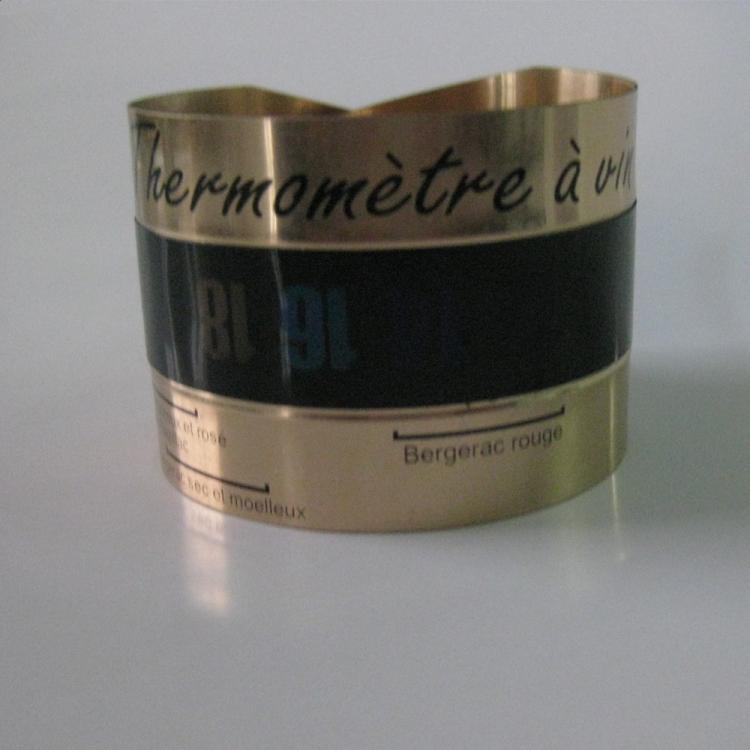
Liquid crystal wine thermometers are particularly suitable for visible, low-cost, easy-to-use bottle-temperature checks. They can be produced as strips, self-adhesive labels, wraps, or branded accessories.
Their advantages include:
- No battery requirement
- Quick visual interpretation
- Lightweight event distribution
- Easy custom printing and packaging
- Strong fit for winery promotions and gift programs
- Reusable value for consumers after the event
Qingdao Focus On Color Industry & Trade Co., Ltd. can support customized thermochromic and liquid crystal temperature-indicator solutions for private-label hospitality programs, wine accessories, promotional packs, and OEM/ODM projects. With more than 13 years of production experience, the company can help buyers align color-change ranges, branding, materials, packaging, and application format with the intended event environment.
Ambient room sensors become essential when an event team must manage more than wine service. They are valuable for temporary bars, outdoor kitchens, refrigerated holding areas, tented dining spaces, beverage-storage zones, and equipment stations.
At a large outdoor catering event, the team may need to know:
- Which tent section is receiving direct afternoon sun
- Whether a refrigeration unit is being opened too frequently
- Whether bottled wine stock is stored near a heat source
- Whether a shaded bar is becoming crowded and warmer
- Whether weather conditions require faster bottle rotation
- When to move inventory before product quality suffers
An ambient sensor helps a manager see the environmental trend, not only the present reading. This supports better staffing, ice replenishment, inventory movement, shade management, and cooler placement.
A common operational mistake is treating an air-temperature display as proof that wine is being served correctly. It is not.
For example, an ambient sensor can read 21°C in a shaded tent, while an opened red wine bottle near a busy bar has warmed above the intended target. In the opposite direction, a white wine bottle may remain below its ideal serving range after extended contact with ice.
Use the ambient sensor to predict. Use the wine thermometer to verify.
This distinction is particularly important during multi-hour events, where opening bottles, moving between stations, and exposure to sun can create uneven temperature conditions.
Wine service and food holding should be planned together, but they are not governed by the same operating target.
Wine temperature is primarily about product presentation and sensory quality. Food holding involves public-health requirements and must follow applicable local rules, food-code requirements, and the event's own safety plan.
The U.S. Food and Drug Administration advises keeping hot food at 60°C / 140°F or warmer and cold food at 4°C / 40°F or colder for buffet service. It also states that perishable food should generally not remain at room temperature for more than two hours.
For catering teams, this means:
- Use dedicated instruments for food-temperature checks.
- Do not rely on a wine thermometer to validate food safety.
- Do not use ambient readings as a substitute for measuring food temperature.
- Assign one team member to monitor cold storage, hot holding, and replenishment timing.
- Keep wine service tools separate from food-safety equipment.
A temperature-indicator program can improve operational visibility, but it does not replace calibrated instruments, staff training, documented procedures, or local compliance requirements.
The most effective outdoor workflow is a simple three-layer system: environment, product, and action.
Before guests arrive, place ambient room sensors at the locations most likely to create temperature variation:
1. Main wine bar or tasting counter
2. Backup bottle-storage area
3. Refrigeration or ice-bath station
4. Outdoor kitchen or buffet zone
5. Direct-sun or wind-exposed serving point
Avoid placing a sensor where it will be affected by a heat source, direct sunlight, or an enclosed pocket of stagnant air unless that specific condition is what you intend to monitor.
Create a short service card for the team. It should show wine styles, target ranges, storage location, and action points.
For example:
| Product | Target | Action if Too Cold | Action if Too Warm |
|---|---|---|---|
| Sparkling wine | 6–10°C | Rest briefly in shade | Return to ice bath |
| Sauvignon Blanc | 7–10°C | Remove from ice early | Rotate with chilled backup |
| Rosé | 7–10°C | Reduce ice contact | Use a fresh chilled bottle |
| Pinot Noir | 13–16°C | Allow to warm gradually | Move to a shaded cooler |
| Cabernet Sauvignon | 15–18°C | Hold at shaded station | Avoid direct sun; chill briefly if needed |
Check each bottle when it moves from storage to service, especially when:
- The outdoor temperature changes
- The bar moves from shade into sun
- A bottle has been on display for more than 15–20 minutes
- Staff report that a wine tastes flat, muted, or overly warm
- Guest traffic increases around the serving station
A visual liquid crystal wine thermometer can make this process fast enough for busy service. It also reduces the need for staff to guess.
Many operators keep every bottle deeply chilled until the moment of service. This can create the opposite problem: wines may be too cold to show aroma and texture.
Instead, use a rotation system:
- Keep reserve bottles chilled.
- Move only a controlled number to the service line.
- Measure the bottle temperature.
- Return warm bottles to cooling when needed.
- Let over-chilled wines temper in a shaded location before pouring.
This method reduces waste, supports more consistent guest experiences, and makes staffing easier during peak demand.
For wine brands, caterers, distributors, and hospitality suppliers, the selection process should start with the intended user journey rather than the product alone.
Choose a wine thermometer when you need:
- A branded giveaway with practical reuse
- Immediate visual temperature feedback
- A low-power or battery-free solution
- A compact accessory for bottles, gift boxes, or tasting kits
- A staff-facing guide for faster service consistency
Choose an ambient room sensor when you need:
- Venue monitoring across multiple zones
- Data trends for storage or service areas
- Alerting for heat exposure or refrigeration concerns
- A reusable operational tool for event teams
- Better control over temporary catering layouts
Choose both when the event involves premium wine, long service windows, outdoor conditions, multiple stations, or food-and-beverage coordination.
For custom development, buyers should define:
- Required temperature range
- Reading format and color-change design
- Bottle size or application surface
- Adhesive, wrap, card, or embedded product format
- Brand colors, logo placement, and packaging
- Reusability expectations
- Quantity, market, and compliance requirements
For outdoor wine tasting events, a wine thermometer should be treated as the product-level decision tool, while ambient room sensors provide the environmental intelligence needed to protect service quality across the venue.
The strongest setup is not a choice between the two. It is a coordinated process: monitor the surroundings, verify the bottle, and act before guests notice a problem.
Need a custom wine temperature indicator for a tasting kit, winery promotion, catering program, or private-label product line? Contact Qingdao Focus On Color Industry & Trade Co., Ltd. to discuss liquid crystal wine thermometers, thermochromic solutions, OEM/ODM development, customized temperature ranges, branded printing, and packaging options.
They do not measure the same thing. A wine thermometer is more relevant for deciding whether wine is ready to pour because it measures the bottle or wine temperature. An ambient sensor is better for tracking the surrounding conditions that can cause the wine to warm or cool.
Yes. They are useful for tracking changing conditions around tasting tables, storage areas, tents, refrigeration units, and exposed serving stations. However, they should not replace direct wine-temperature checks.
Liquid crystal wine thermometers are often a strong choice for promotional use because they are compact, visual, reusable, battery-free, and easy to customize with a brand logo, message, packaging design, or specified temperature range.
Direct sunlight, warm surfaces, wind patterns, frequent handling, warm glassware, and bottle placement all accelerate temperature change. A bottle can warm even when the general ambient area feels comfortable.
No. Wine thermometers are intended for wine-service control. Catering teams should use appropriate food thermometers and follow applicable food-safety procedures for hot holding, cold holding, transport, and service.
Not automatically. Traditional wine "room temperature" is often around 15–18°C, which can be much cooler than an outdoor summer setting. Many red wines benefit from shade and, in warm weather, a brief cooling period before service.
Key options include temperature range, thermochromic color sequence, substrate material, shape, bottle fit, branding, label design, instruction language, packaging, and retail or promotional presentation.
1. U.S. Food and Drug Administration. [Serving Up Safe Buffets].
2. ThermoWorks. [Thermal Tips for Wine and Cheese].
3. Wine Education Institute. [Storage and Service Temperatures].
4. Wine with Seth. [Wine Service Temperature].
5. Wine Guardian. [Why Bottle Probes Are Not the Solution].


