+86 18560646018

Views: 224 Author: Focus Color Publish Time: 2026-10-03 Origin: Site


Content Menu
● Color Changing Sticker vs. QR Code Indicators: Quick Comparison
● How a Color Changing Sticker Works in Food Packaging
>> Thermochromic Stickers: Showing Temperature Conditions
>> Time–Temperature Indicators: Recording Cumulative Exposure
>> Freshness Indicators: Responding to Spoilage-Related Changes
● How QR Code Indicators Work in Smart Food Packaging
>> Static QR Codes: Information Without Measurement
>> Connected QR Systems: Access to Monitoring Records
>> Sensor-Integrated QR Labels: Combining Both Approaches
● Which Technology Better Supports Freshness Decisions?
>> For Immediate Visual Checks: Color Changing Stickers
>> For Detailed Information: QR Code Indicators
>> For Food Safety: Neither Works Alone
● Cost Comparison: Evaluate the Whole System
● Three Illustrative Food Packaging Scenarios
>> Chilled Seafood: Investigating Freshness Changes
>> Dairy Distribution: Investigating Cold-Chain Exposure
>> Fresh Produce: Prioritizing Traceability and Instructions
● A Practical Six-Step Validation Plan
● Food-Contact Compliance and Packaging Design
● Working With Qingdao Focus On Color
>> Can a Color Changing Sticker Detect Food Spoilage?
>> Can a QR Code Tell Whether Food Is Fresh?
>> Does a Thermochromic Sticker Record Temperature Abuse?
>> Can Color Changing Stickers and QR Codes Be Combined?
>> Should an Indicator Replace the Printed Use-By Date?
>> What Should Buyers Request Before Mass Production?
Choosing between a color changing sticker and QR code indicators for smart food packaging freshness starts with one distinction: a responsive sticker can provide a visible signal, while a standard QR code provides access to information. Neither automatically proves that food is safe.
For food brands, retailers, and packaging buyers, the right choice depends on what needs monitoring, who must interpret the result, and how that result supports an operational decision.
At Qingdao Focus On Color Industry & Trade Co., Ltd., our manufacturing background includes more than 13 years of experience in photochromic, thermochromic, liquid crystal thermometer, and fragrance products, with OEM/ODM and personalized customization services. From this manufacturing perspective, we recommend defining the required measurement before selecting the label.
The most useful question is not simply "Which technology looks smarter?" It is "Which technology delivers actionable information for this food, package, and supply chain?"
A color changing sticker and a QR code address different needs. One can communicate a physical response directly; the other identifies a product or connects users to records.
| Comparison factor | Color changing sticker | QR code indicator |
|---|---|---|
| Primary function | Displays a response to a defined condition | Encodes information or connects to digital content |
| Freshness measurement | Possible with a validated freshness-sensing formulation | Requires a sensor, validated model, or external data |
| Consumer interaction | Visual inspection | Scanning, usually with a phone |
| Temperature history | Available with an appropriate time–temperature indicator | Available if linked to recorded monitoring data |
| Traceability | Limited when used alone | Supports product, batch, and serialized identification |
| Main limitation | Signal interpretation and product-specific calibration | Data quality, connectivity, and scanning participation |
| Best application | Immediate condition checks | Detailed records, instructions, and traceability |
For many projects, these technologies work better together than separately.
"Color changing sticker" describes a broad product category. Buyers should distinguish between temperature indication, cumulative exposure monitoring, and chemical freshness detection.
Thermochromic materials change appearance in response to temperature. Depending on the formulation, the change may be reversible or irreversible.
A reversible thermochromic sticker can communicate whether its location is within a selected temperature range. However, a package that warms and then cools may return to its original appearance.
That makes an important distinction: showing the current temperature condition is not the same as recording temperature abuse.
Liquid crystal temperature indicators can also display temperature information. They should not be presented as direct spoilage detectors unless a separate, validated relationship supports that claim.
A time–temperature indicator, commonly called a TTI, responds to exposure over time rather than simply displaying an instantaneous temperature.
Different systems use chemical, enzymatic, microbial, diffusion, or other mechanisms. Their response must be matched to the deterioration behavior of the target food.
For example, two chilled products may lose quality at different rates under the same transport conditions. An indicator suitable for one product should not automatically be transferred to the other.
A TTI estimates condition through exposure history. It does not directly measure every organism or hazard inside the package.
Freshness indicators can respond to changes in package headspace or food chemistry, including pH shifts and certain spoilage-associated gases.
Potential targets include carbon dioxide, volatile basic nitrogen compounds, and hydrogen sulfide. The useful marker depends on the food and packaging environment.
A fish freshness indicator, for instance, needs validation against the relevant deterioration process. Its performance cannot be assumed for dairy, produce, or bakery products.
Photochromic materials respond to light exposure. Without an appropriately engineered and validated system, a light-driven color change should not be described as evidence of food freshness.
A conventional QR code is a data carrier, not a physical freshness sensor.
It can contain information directly or open a digital destination. That destination might provide batch details, storage instructions, recall notices, or monitoring records.
A printed QR code can lead consumers to a product page explaining:
- Recommended storage conditions.
- Preparation and handling instructions.
- Product origin.
- Batch-related information.
- Customer support resources.
These functions improve access to information, but they do not establish the condition of an individual package.
Even a recently updated webpage cannot identify spoilage unless reliable package-specific evidence feeds that information.
A connected system can associate a QR code with temperature logger readings, inspection results, or other supply-chain records.
GS1 Digital Link provides a standardized approach to connecting product identifiers with online resources. Depending on implementation, identifiers can distinguish products, batches, or individual units.
However, identification precision and measurement precision are different.
A shipment-level logger may describe the conditions around a pallet. It does not necessarily establish the temperature experienced by every package inside it.
Some intelligent packaging concepts combine responsive materials with machine-readable codes.
In these systems, a color-changing region may be interpreted by a camera, while the code identifies the product or retrieves relevant calibration information.
This is different from an ordinary QR label. Buyers should request evidence covering the sensing material, image interpretation, lighting conditions, and food-specific performance.
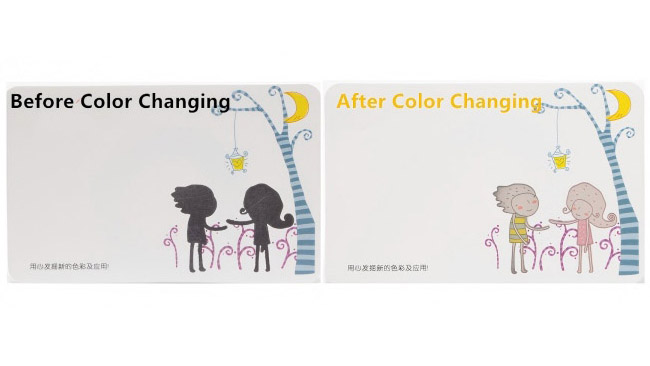
A well-designed sticker can communicate a condition without requiring scanning or internet access.
That can be useful during receiving, shelf inspection, or consumer handling. However, the meaning must remain clear under realistic lighting and viewing conditions.
Use a reference scale and short instructions. Do not rely exclusively on red–green distinctions, which can create accessibility problems.
Also avoid an unexplained "fresh/not fresh" message when the indicator only measures temperature.
QR systems suit situations requiring more explanation than a small label can provide.
A scan can lead to multilingual guidance, batch records, or a documented handling process. This allows the physical package to remain relatively simple.
The limitation is participation. A feature that requires scanning cannot help a user who does not scan.
Essential handling warnings should therefore remain visible on the package rather than appearing only on a linked page.
Freshness, quality, and safety are related but distinct.
A food may deteriorate visibly without presenting the same risk as another product containing an undetected pathogen. Conversely, a package may look normal while a hazard remains present.
Neither a favorable sticker color nor a reassuring digital page should override validated storage requirements, applicable date labels, recall instructions, or established food-safety procedures.
A basic printed QR code generally involves a different cost structure from a chemically responsive label. However, comparing printing prices alone can produce a misleading purchasing decision.
| Cost category | Color changing sticker system | QR-based system |
|---|---|---|
| Label production | Responsive material, conversion, protection | Printing, identification, and print verification |
| Development | Threshold selection and response calibration | Data architecture and destination design |
| Validation | Food-specific response and stability testing | Record accuracy and identification testing |
| Operations | Storage, activation, application, inspection | Data capture, hosting, maintenance, support |
| Connected measurement | Optional reader or logging integration | Sensors or monitoring inputs when needed |
Request quotations against the same functional requirement.
If one proposal only provides information access and another measures cumulative exposure, they are not equivalent alternatives.
A useful commercial measure is total cost per usable decision, including unreadable labels, missing records, inspection effort, and integration work.
The following scenarios are proposed applications, not reported customer projects or guaranteed outcomes.
For chilled seafood, a validated headspace-responsive indicator may provide information related to spoilage chemistry.
A QR code can add batch identification and handling guidance.
The development priority is correlating the indicator response with appropriate laboratory and sensory measurements under the intended packaging atmosphere.
For refrigerated dairy distribution, a calibrated TTI may help flag packages requiring review after cumulative temperature exposure.
A connected QR system can provide the associated shipment records.
The key question is whether the indicator and digital records refer to the same relevant exposure—not merely whether both appear on the package.
For fresh produce, QR codes may be useful when the immediate priority is origin information, batch identification, and storage guidance.
A freshness indicator requires a more specific development brief. Respiration, humidity, packaging atmosphere, and the selected deterioration marker can affect suitability.
Do not select one formulation for every produce category simply because the label fits the packaging.
Before ordering production quantities, build a pilot around measurable acceptance criteria.
1. Define the decision. Determine whether users need a temperature check, exposure warning, spoilage signal, or traceability record.
2. Specify the food and package. Document formulation, shelf life, package atmosphere, materials, headspace, and intended storage.
3. Establish reference measurements. Select appropriate temperature logging, laboratory testing, and sensory assessment methods with qualified specialists.
4. Challenge realistic conditions. Include normal storage, temperature excursions, condensation, lighting variation, and transport handling.
5. Measure errors and usability. Record false reassurance, unnecessary warnings, ambiguous colors, scan failures, and interpretation accuracy.
6. Approve operating rules. Define how staff respond to each result, what consumers see, and when additional inspection is required.
Agreement under ideal laboratory conditions is insufficient. The label must perform where purchasing and handling decisions actually occur.
A customized indicator is not automatically suitable for food packaging.
The assessment must consider the responsive chemistry, inks, adhesives, protective layers, placement, and intended conditions of use.
In the United States, food-contact substances that require authorization must be authorized for their intended use. In the European Union, intelligent food-contact materials fall within specific requirements alongside the broader food-contact framework.
External placement does not automatically eliminate every compliance question. Migration potential and the complete package construction still need assessment.
Request documentation that applies to the actual finished construction and intended market. A general material statement is not a substitute for an application-specific review.
Fragrance products should also remain separate from freshness-indication claims. Added fragrance must not be used to conceal deterioration or create a misleading impression of food condition.
Our experience in color-responsive products provides a manufacturing starting point for discussing customized visual indicators.
However, experience with thermochromic, photochromic, or liquid crystal products should not be confused with completed validation of a particular food-freshness sensor.
For a focused OEM/ODM discussion, provide:
- Food category and target market.
- Monitoring objective.
- Storage range and expected excursions.
- Package material and label position.
- Desired dimensions and artwork.
- Reversible or irreversible response requirements.
- Forecast quantities and application method.
Share these details with Qingdao Focus On Color Industry & Trade Co., Ltd. to request a feasibility review and sample-development discussion. Food-specific performance claims should follow testing, not precede it.

Some formulations respond to spoilage-related chemical changes. Others only indicate temperature or light exposure. Confirm the mechanism and validate its relationship to the specific food before making a freshness claim.
An ordinary QR code cannot sense freshness. It can display relevant information when connected to reliable measurements, records, or a validated predictive system.
Not necessarily. A reversible sticker may return to its original appearance after cooling. Cumulative exposure monitoring requires an appropriate TTI or another validated recording method.
Yes. A visual indicator can support immediate inspection, while a QR code supplies identification and supporting information. The two components should communicate consistent, clearly defined meanings.
Do not assume so. Treat it as supplementary unless the proposed labeling approach has appropriate scientific validation and meets the requirements of the destination market.
Request the mechanism description, response specifications, stability information, applicable compliance documentation, and a validation plan. Also confirm storage, activation, application, and interpretation requirements.
Source for indicator classifications, time–temperature mechanisms, and spoilage-related chemical markers. [pmc.ncbi.nlm.nih]
2. [GS1. "GS1 Digital Link" factsheet.]
Source for standardized product identification and links to batch, provenance, recall, and expiry information. [gs1]
3. [GS1 US. "Standards for Foodservice and Retail Grocery."]
Source for food-sector identification, traceability, and barcode applications. [gs1us]
Source for food-contact substance definitions and intended-use authorization requirements. [fda]
5. [European Food Safety Authority. "Active and Intelligent Materials."]
Source for intelligent packaging definitions and the European regulatory framework. [efsa.europa]
Source for regulatory distinctions and discussion of intelligent systems, including QR/colorimetric indicators. [khlaw]


