+86 18560646018

Views: 230 Author: Focus Color Publish Time: 2026-09-03 Origin: Site


Content Menu
● Understanding the Two Technologies
>> What Is a Liquid Crystal Sheet?
● Liquid Crystal Sheet vs. Thermal Camera: Core Comparison
● How Each Method Detects Electrical Hotspots
>> Liquid Crystal Sheets Show Local Temperature Change
>> Thermal Cameras Reveal Heat Patterns Across Components
● Accuracy, Interpretation, and Limitations
>> Liquid Crystal Sheet Limitations in Electrical Panels
>> Thermal Camera Limitations in Electrical Panels
● Safety Considerations for Energized Electrical Panels
>> Why Direct Contact Is a Major Concern
>> Thermal Imaging and Arc-Flash Planning
● Which Option Is Better for Electrical Panel Hotspot Detection?
>> Choose a Liquid Crystal Sheet When
>> Choose a Thermal Camera When
>> Layer 1: Passive Visual Temperature Indication
>> Layer 2: Scheduled Thermal Camera Inspections
>> Layer 3: Root-Cause Verification
● Expert Checklist Before Selecting a Solution
● FAQ
>> Can a liquid crystal sheet detect hotspots inside an electrical panel?
>> Are liquid crystal sheets safe to apply to live electrical components?
>> Is a thermal camera accurate on copper busbars?
>> What causes hotspots in electrical panels?
>> Can a liquid crystal sheet replace scheduled infrared inspections?
>> When should an electrical panel be scanned with a thermal camera?
>> Can liquid crystal sheets be customized for OEM projects?
Detecting abnormal heat early is one of the most practical ways to prevent electrical-panel failures, unplanned downtime, and potentially serious safety incidents. When maintenance teams compare a liquid crystal sheet with a thermal camera for electrical-panel hotspot detection, the real question is not simply which tool is cheaper—it is which method provides reliable information under the operating, access, safety, documentation, and maintenance conditions of the facility.
For more than 13 years, Qingdao Focus On Color Industry & Trade Co., Ltd. has developed thermochromic and liquid-crystal-based products for global customers requiring OEM, ODM, and tailored visual temperature-indication solutions. From a manufacturing perspective, liquid crystal temperature sheets can provide fast, intuitive, color-based thermal feedback on suitable surfaces. However, they should be evaluated carefully against infrared thermal cameras when inspecting energized electrical panels, busbars, breakers, terminals, cable joints, and other high-risk electrical components.
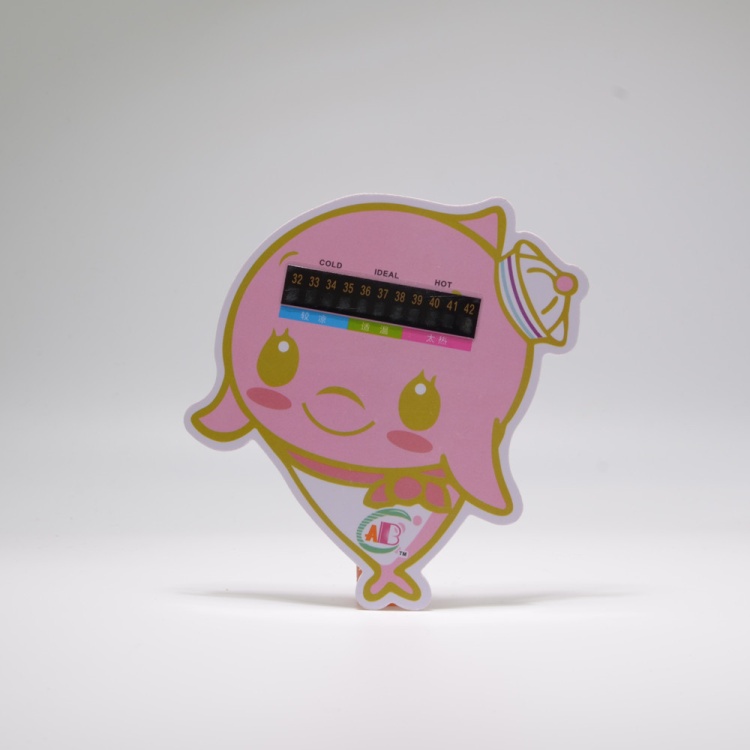
A liquid crystal sheet is a temperature-responsive visual indicator. It contains thermochromic liquid crystal materials that change reflected color as the sheet temperature changes. Depending on the formulation, the material may move through a visible color sequence as it reaches and passes through its designed activation range.
In practical terms, the sheet converts a surface-temperature change into a visible color pattern. It does not generate an infrared image. Instead, it provides a direct visual indication of temperature at the point where the sheet is placed or integrated.
Liquid-crystal temperature indicators can be formulated for different operating ranges, including low-, medium-, and higher-temperature applications. Some thermochromic liquid crystal materials can respond to temperature changes as small as 0.1°C under controlled conditions, although actual field performance depends on the substrate, thermal contact, viewing angle, illumination, sheet design, and calibration approach.
For electrical applications, liquid crystal sheets are most useful when the objective is to:
- Provide a simple visual warning at a known monitoring point.
- Indicate whether a surface has reached a preselected temperature band.
- Support quick checks of enclosed, non-energized, low-risk, or externally accessible components.
- Create a low-power visual indicator for routine observation.
- Add temperature awareness to products where a full infrared inspection system is not practical.
A thermal camera detects infrared radiation emitted from a surface and converts that information into a thermal image. It enables inspectors to see relative heat patterns across breakers, conductors, terminals, fuses, busbars, cable lugs, transformers, and other electrical components without physically touching them.
In electrical maintenance, thermal cameras are widely used to identify abnormal heat caused by:
- Loose or deteriorated electrical connections.
- Overloaded circuits.
- Phase imbalance.
- High-resistance joints.
- Failing breakers or fuses.
- Defective contacts.
- Uneven load distribution.
- Aging components that are heating abnormally.
A camera does not "see" electricity. It detects surface thermal patterns. Therefore, qualified interpretation remains essential: the inspector must consider load, component type, ambient temperature, emissivity, reflected temperature, and the condition of comparable phases or components.
The table below shows the practical differences between liquid crystal sheets and thermal cameras for detecting hotspots in electrical panels.
| Comparison Factor | Liquid Crystal Sheet | Thermal Camera |
|---|---|---|
| Detection principle | Color change caused by temperature response | Infrared radiation converted into a thermal image |
| Measurement style | Localized, surface-contact or near-contact visual indication | Non-contact inspection across a wider field of view |
| Coverage area | Limited to the sheet's installed position | Can scan many components within one panel |
| Best use | Known monitoring points and simple temperature alerts | Comprehensive inspection and diagnosis |
| Installation requirement | Usually needs placement on or near the target surface | No permanent installation required for handheld inspections |
| Use on energized parts | Generally unsuitable for direct application to exposed energized conductors or terminals | Can inspect from a safe distance when procedures permit |
| Temperature data | Often color-band or threshold indication | Can provide image-based temperature comparison and measurement settings |
| Trend reporting | Limited unless observed and recorded manually | Strong potential for stored images, reports, baselines, and comparison over time |
| Initial equipment cost | Usually lower | Usually higher |
| Operator skill | Easy for basic visual checks | Requires training and correct interpretation |
| Sensitivity to surface condition | Depends heavily on thermal contact and sheet placement | Affected by emissivity, reflections, focus, distance, and viewing angle |
| Electrical-panel suitability | Limited and application-specific | Strong for routine predictive maintenance programs |
| Main limitation | Cannot scan hidden or multiple electrical connections remotely | Can produce misleading readings if emissivity and reflections are not managed correctly |
The most important distinction is coverage. A liquid crystal sheet indicates what happens at the location where it is installed. A thermal camera allows the maintenance team to survey many possible fault locations during one inspection.
A liquid crystal temperature sheet can be designed to show a specific color response within a targeted temperature range. When used on an appropriate external surface, enclosure, or engineered monitoring location, it can help an operator identify a rising temperature condition without batteries, wiring, software, or specialized scanning equipment.
For example, a manufacturer may place a custom liquid crystal indicator near the external surface of an enclosure associated with a known heat-generating area. If the indicator moves from one color band to another, the operator receives a visible prompt to investigate.
This approach is useful because it is:
- Immediate: The color change is visible without powering up an instrument.
- Simple: Operators can understand a clearly defined color scale quickly.
- Passive: No external power source is required for the indication itself.
- Customizable: OEM buyers can specify dimensions, adhesive structure, visual design, activation range, packaging, and branding.
- Cost-conscious: It can be a practical addition to products that need visual thermal awareness rather than full diagnostic capability.
However, the sheet only represents the temperature at its installed location. A hot lug behind a panel cover, a failing breaker contact, or an overloaded phase may remain undetected if the thermal condition does not transfer clearly to the monitored sheet position.
A thermal camera is more suitable for finding unknown hotspots. During a panel inspection, the operator can scan multiple circuits, compare phase-to-phase temperatures, inspect conductors and terminations, and identify unusually hot areas that are not visible to the naked eye.
This is especially valuable because electrical faults often begin as small temperature differences. A high-resistance connection can warm under load long before it looks damaged. Thermal imaging can help maintenance teams identify these abnormalities before they develop into a failure, outage, or safety event.
A professional inspection typically includes:
1. Scanning the panel under representative operating load.
2. Comparing similar components, such as matching phases or equivalent breakers.
3. Capturing both visible-light and thermal images.
4. Recording load conditions, environmental conditions, and equipment identification.
5. Reviewing abnormal temperature differences.
6. Scheduling corrective work based on severity and operational risk.
7. Repeating inspections to establish a trend over time.
For meaningful results, electrical components should ideally be inspected under normal operating conditions. One practical recommendation is to inspect equipment at steady state and at least 40% of typical load, where possible, because a lightly loaded connection may not show its real thermal behavior.
It is important to avoid treating a liquid crystal sheet as a direct replacement for a professional thermal inspection. Its visible color response is influenced by several factors:
- Surface contact quality.
- Substrate material and thickness.
- Heat transfer path from the fault to the sheet.
- Ambient temperature.
- Air movement around the enclosure.
- The sheet's designed response range.
- Viewing angle and lighting.
- Exposure to chemicals, UV, abrasion, or mechanical damage.
- Whether the monitored surface represents the true hotspot location.
A sheet may show that a surface is warm, but it may not identify the source of the problem. For instance, a warm external enclosure wall could result from normal internal loading, a nearby heat source, or an actual fault. The visual indicator should therefore be used as a screening tool, not as the sole basis for critical maintenance decisions.
From an engineering viewpoint, the most successful liquid crystal sheet applications are designed around a known thermal pathway. In other words, the sheet should be positioned where a meaningful temperature change can reach it consistently and where the activation range matches the real operating environment.
Thermal cameras are more comprehensive, but they also require proper technique. The camera's apparent temperature reading can be distorted by emissivity and reflected infrared energy.
Shiny metals, including polished copper and aluminum, have low emissivity and can behave like thermal mirrors. This means the camera may detect reflected heat from surrounding objects rather than the actual temperature of the metal surface. Surface condition matters greatly: polished copper and oxidized copper can have very different emissivity behavior.
To improve inspection quality, experienced thermographers typically:
- Avoid making conclusions from a single isolated temperature number.
- Compare like-for-like components under similar load.
- Check whether a suspected hotspot changes position when the viewing angle changes.
- Use appropriate emissivity settings.
- Consider high-emissivity reference targets where safely and properly applied.
- Avoid excessive viewing angles when possible.
- Record the operating load and environmental conditions.
- Confirm that the image is focused before interpreting small temperature differences.
A thermal camera is therefore not an automatic "fault detector." It is a diagnostic instrument that supports informed maintenance decisions.
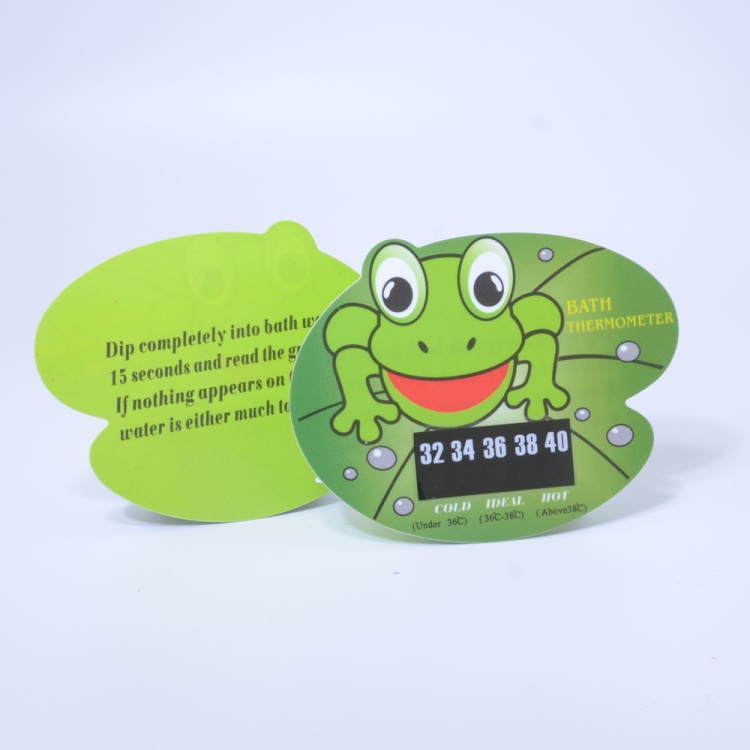
Electrical-panel inspections can involve energized conductors, exposed terminals, arc-flash risks, and restricted approach boundaries. No temperature-indicating product should be applied directly to exposed energized electrical components unless the application has been specifically engineered, validated, and approved by qualified electrical and safety professionals.
A liquid crystal sheet should not be casually placed on live busbars, terminals, or exposed conductors. Even a thin material can create unacceptable risks if it changes clearances, affects insulation, interferes with heat dissipation, traps moisture, or creates a path for contamination.
Safety must determine the method—not convenience.
In many situations, a liquid crystal solution is more appropriate for external housings, insulated surfaces, sealed devices, specially designed monitoring points, or non-electrical products. For open energized electrical panels, a non-contact thermal camera is generally the more practical diagnostic choice.
Thermal imaging is non-contact, but it does not eliminate electrical risk. Inspectors must follow the facility's electrical safety procedures, use qualified personnel, and assess whether opening a panel or removing a cover exposes personnel to energized hazards.
Guidance discussing electrical thermography notes that non-contact inspection outside the restricted approach boundary does not include opening doors or covers. Once covers are removed and energized components are exposed, appropriate safety planning and protective measures become essential.
For this reason, many facilities use infrared inspection windows. These purpose-designed windows can allow thermal scanning without opening the enclosure, but their transmission properties, installation quality, and suitability for the camera wavelength must be considered.
For most electrical-panel maintenance programs, a thermal camera is the better primary tool for detecting hotspots. It offers non-contact scanning, wide-area coverage, image documentation, repeatability, and the ability to inspect multiple components during one survey.
A liquid crystal sheet is better viewed as a complementary visual indicator, not as a substitute for full-panel infrared thermography.
A liquid crystal sheet may be the better option when you need:
- A low-cost visual temperature indication.
- A passive, battery-free warning feature.
- A custom indicator for an external or insulated surface.
- A simple visual check for a known temperature-sensitive zone.
- An OEM or private-label temperature-indication component.
- A product-level solution where users do not need a thermal image or detailed diagnostic report.
For example, an equipment manufacturer could integrate a custom temperature-sensitive indicator into a non-energized exterior monitoring point. If the temperature moves into a defined alert range, the operator can initiate a professional inspection.
A thermal camera is the better option when you need:
- Full-panel hotspot detection.
- Inspection of breakers, lugs, cables, fuses, busbars, and terminals.
- Identification of unknown faults.
- Comparative analysis between phases or circuits.
- Maintenance records and thermal-image reports.
- Trend analysis across repeated inspections.
- Non-contact screening of energized equipment.
- A predictive maintenance program for critical assets.
Facilities operating switchgear, motor control centers, UPS systems, transformers, production machinery, data-center distribution systems, and high-load panels will usually gain more diagnostic value from thermal imaging.
Industry guidance on electrical maintenance has emphasized regular thermographic inspection of electrical equipment, including annual inspections and more frequent inspection for equipment in poorer physical condition.
The strongest maintenance approach is often not "liquid crystal sheet versus thermal camera." It is liquid crystal sheet plus thermal camera, with each solution assigned the right role.
Use custom liquid crystal sheets or thermochromic labels on carefully selected, safe, and validated monitoring locations. These indicators can give operators a fast visual cue that a temperature condition may need attention.
This layer is especially useful for:
- Routine operator walk-throughs.
- Product-level thermal indication.
- External enclosure monitoring.
- Logistics and storage temperature monitoring.
- Equipment where a simple visual alert is helpful.
Use a professional thermal camera to inspect the full electrical system at scheduled intervals and during periods of representative load. Capture images, document findings, compare equivalent components, and use the results to prioritize maintenance.
When a hotspot is found, confirm the cause through appropriate electrical testing and maintenance procedures. A thermal image identifies an abnormal heat pattern; it does not automatically prove whether the root cause is a loose connection, overload, imbalance, defective component, or external environmental factor.
This layered approach improves visibility while keeping costs and operational complexity proportionate to the actual risk.
Before choosing liquid crystal sheets, thermal cameras, or a combined strategy, answer these questions:
1. What exactly must be detected?
Is the goal a general overheating warning, a specific temperature threshold, or unknown fault discovery across an entire panel?
2. Where is the target surface?
Is it externally accessible, insulated, enclosed, exposed, reflective, or energized?
3. What temperature range matters?
The activation range of a liquid crystal sheet must align with normal and abnormal operating temperatures.
4. Is documentation required?
If you need thermal images, measurements, baseline records, maintenance reports, or trend analysis, a thermal camera is the stronger option.
5. Who will use the system?
A color-changing sheet is easy for general operators to interpret. Thermal-camera results require a trained user who understands electrical systems and thermal measurement limits.
6. What is the safety environment?
Never compromise electrical clearances, insulation integrity, access boundaries, or arc-flash safety practices to install a temperature indicator.
7. Is customization important?
For OEM projects, liquid crystal sheet suppliers can tailor size, color sequence, activation temperature, adhesive, packaging, branding, and application structure to the product design.
For detecting hotspots in electrical panels, choose a thermal camera as the main diagnostic tool. It is the more capable option for scanning multiple components, finding unknown thermal anomalies, documenting conditions, and supporting a structured maintenance program.
Use a liquid crystal sheet where it delivers its greatest value: simple, passive, visible temperature indication at a carefully selected and safe monitoring point. When designed for the right application, a customized liquid crystal solution can improve operator awareness and provide an economical early-warning layer.
If you are developing an electrical, industrial, consumer, packaging, safety, or temperature-monitoring product that needs customized thermochromic materials, Qingdao Focus On Color Industry & Trade Co., Ltd. can help you evaluate liquid crystal sheet specifications, temperature ranges, visual effects, OEM branding, and practical integration options. Contact our team to discuss your application requirements and request a customized sample or solution proposal.
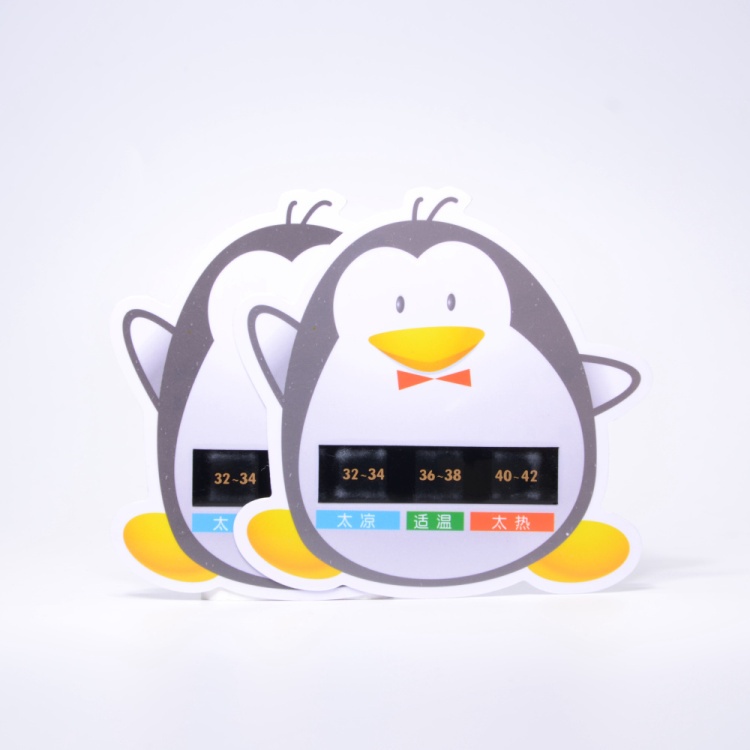
Usually, no. A liquid crystal sheet only indicates temperature at or near its installed location. It cannot scan internal components remotely or reveal a hidden hotspot unless enough heat transfers to the sheet through a known thermal path.
They should not be applied directly to exposed energized conductors, terminals, or busbars unless the entire application has been engineered, tested, and approved by qualified electrical and safety professionals. For most energized-panel inspections, non-contact thermal imaging is the more suitable method.
It can be useful, but shiny copper surfaces can be difficult because they have low emissivity and reflect surrounding infrared energy. Inspectors should evaluate viewing angle, reflections, surface condition, comparable components, and appropriate measurement settings before drawing conclusions.
Common causes include loose connections, corrosion, overloaded circuits, phase imbalance, damaged breakers, failing fuses, poor contact pressure, undersized conductors, and aging components. Thermal imaging can reveal the resulting abnormal heat patterns before visible damage occurs.
No. A liquid crystal sheet can provide a useful localized visual alert, but it cannot provide the broad coverage, non-contact access, image documentation, and comparative analysis of a thermal camera inspection.
The panel should be inspected under representative operating conditions, ideally after reaching steady-state temperature and while carrying meaningful load. One commonly used practical guideline is at least 40% of typical load, where operationally possible.
Yes. Qingdao Focus On Color Industry & Trade Co., Ltd. can support OEM, ODM, and customized thermochromic product development, including tailored sizes, shapes, visual designs, activation ranges, adhesive structures, packaging, and private-label requirements for suitable applications.
1. [Thermotropic Liquid Crystals for Temperature Mapping]
2. [NFPA 70B 2023: New Guidelines for Electric Inspections]
3. [Using Thermal Imaging Cameras for Electrical Inspections]
4. [Application Spotlight: Electrical Panel Monitoring and Inspection]
5. [Liquid Crystal Thermography and Infrared Thermography: A Comparison]
6. [Understanding NFPA 70B: How Thermal Imaging Supports Electrical Equipment Maintenance]
7. [Arc Flash Protection With Thermal Imaging]
8. [Liquid Crystal Formulations]
9. [A Practical Guide to Emissivity in Infrared Inspections]
10. [Infrared Thermography for Electrical Distribution Systems]


