+86 18560646018

Views: 220 Author: Focus Color Publish Time: 2026-08-27 Origin: Site


Content Menu
● Liquid Crystal Thermometer vs. Fermentation Carboy: Quick Comparison
● What Is a Liquid Crystal Thermometer?
>> Why Brewers Use Temperature Strips
● What Is a Craft Beer Fermentation Carboy?
● Why Fermentation Temperature Matters
● The Most Important Difference: Monitoring vs. Containment
● How Accurate Is a Liquid Crystal Thermometer on a Carboy?
● How to Apply a Liquid Crystal Thermometer to a Carboy
● Product Development Insights for Brewing Brands
>> Features Buyers Should Specify
● A Better Fermentation Monitoring Setup
>> Entry-Level Homebrewing Setup
>> Intermediate Temperature-Controlled Setup
● Why External Temperature Monitoring Reduces Unnecessary Handling
● Build a More Complete Fermentation Product Line
● FAQ
>> 1. Can a liquid crystal thermometer be used on a glass carboy?
>> 2. Does a liquid crystal thermometer measure the beer's internal temperature?
>> 3. Where should I place a fermentation temperature strip?
>> 4. Is a carboy thermometer suitable for beer, wine, kombucha, and cider?
>> 5. Can a liquid crystal thermometer replace a digital temperature controller?
>> 6. Can I customize a liquid crystal thermometer for my brewing brand?
A liquid crystal thermometer and a craft beer fermentation carboy are not competing products—they solve two different but closely connected brewing problems. The carboy provides the controlled vessel where wort becomes beer, while the liquid crystal thermometer gives brewers a fast, non-invasive way to observe the fermentation temperature on the vessel wall.
For homebrewers, small craft breweries, brewing-kit brands, and fermentation-equipment distributors, understanding this relationship is essential. A quality carboy protects the batch. A well-designed liquid crystal thermometer helps users notice whether fermentation is operating within the intended temperature range—without opening the fermenter.
| Feature | Liquid Crystal Thermometer | Craft Beer Fermentation Carboy |
|---|---|---|
| Primary purpose | Displays approximate temperature visually | Holds wort during fermentation |
| Typical form | Self-adhesive temperature strip or label | Glass or PET vessel with narrow neck |
| Contact with beer | No direct contact when applied externally | Direct contact with beer and fermentation gases |
| Main user benefit | Quick temperature check without opening the vessel | Hygienic fermentation space with visible batch condition |
| Installation | Applied to a clean, dry outer surface | Filled, sealed, and fitted with an airlock or closure |
| Power requirement | None | None, unless paired with active temperature control |
| Best use | Daily visual monitoring | Primary or secondary fermentation |
| Replacement cycle | Consumable accessory, depending on handling and environment | Reusable equipment when properly cleaned and maintained |
| Measurement role | Indicates vessel-wall temperature | Does not measure temperature by itself |
| Ideal buyer | Brewers, kit brands, beverage packaging suppliers | Homebrewers, nano breweries, fermentation-equipment buyers |
The strongest product strategy is usually not "thermometer or carboy." It is carboy plus temperature-monitoring strip as a more complete fermentation solution.
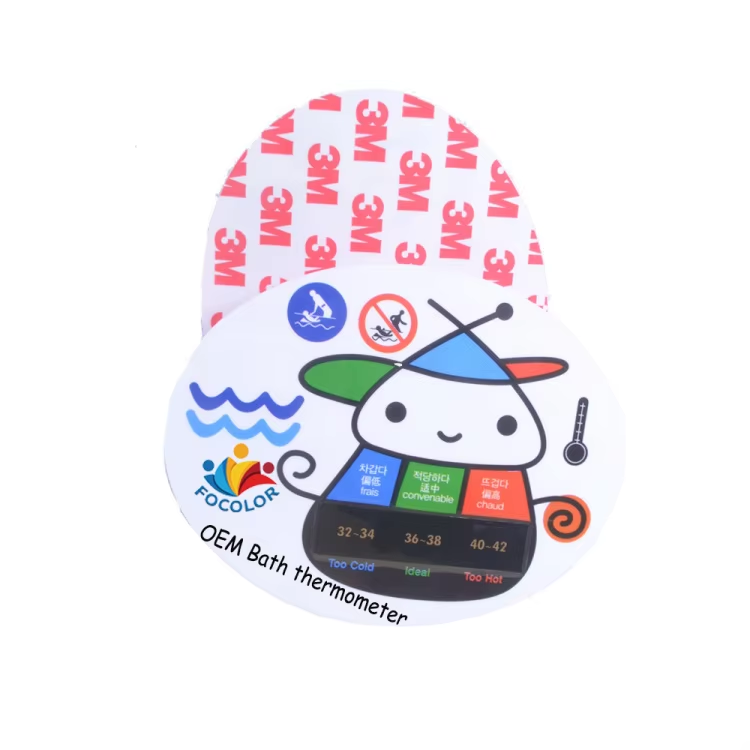
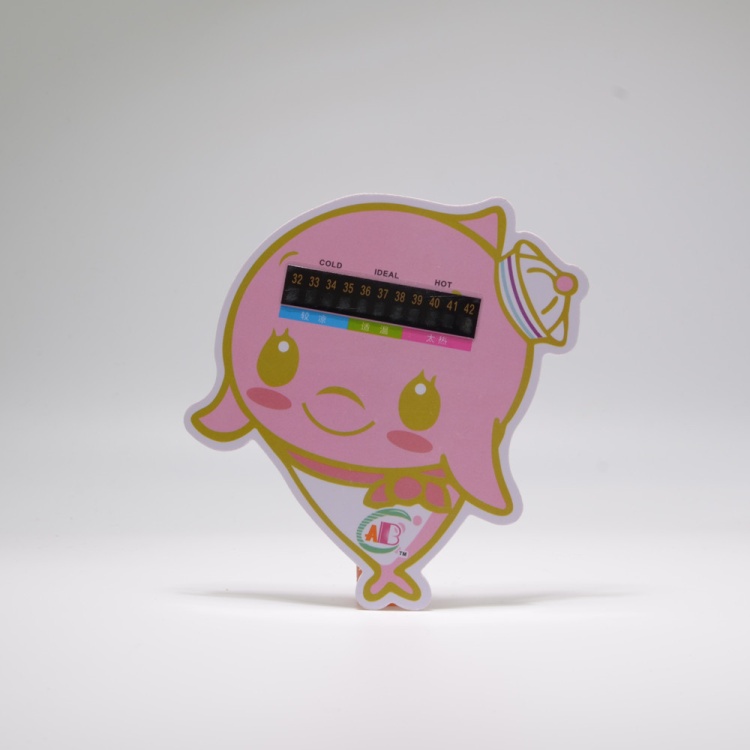
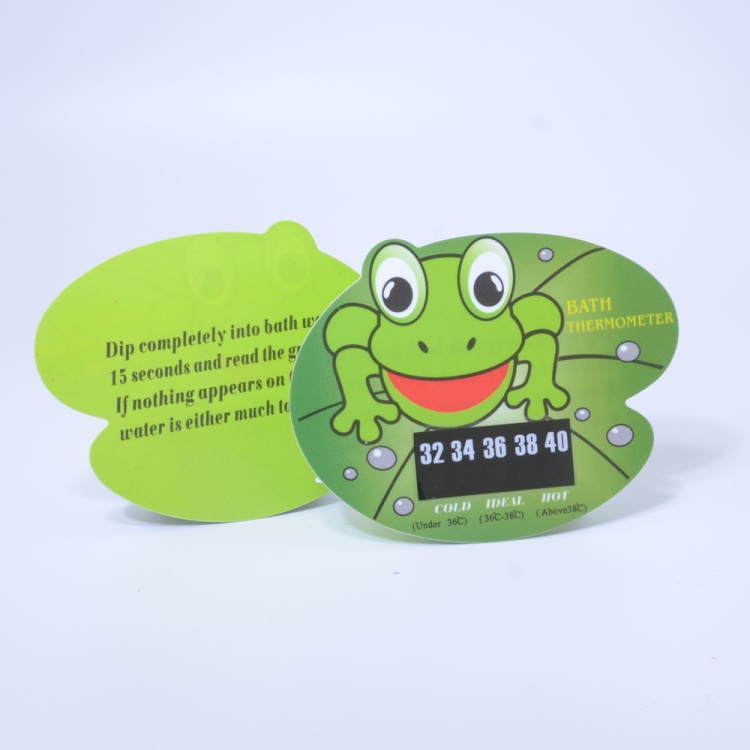
A liquid crystal thermometer is a temperature-indicating label that changes color as the surface temperature changes. It is usually applied to the outside of a glass, plastic, or metal vessel.
Thermochromic liquid crystals react to small temperature changes and produce a visible color response. Depending on the formulation and scale design, the active reading is often shown in green, while adjacent colors indicate temperatures slightly above or below the active point.
For fermentation use, the strip is commonly placed around the middle section of the carboy. This position is practical because it is easy to see and is closer to the bulk liquid level than the neck or shoulder.
A liquid crystal fermentation thermometer offers several operational advantages:
- No battery, wiring, or calibration routine for everyday visual checks
- No need to open the fermenter, helping reduce unnecessary exposure to air and contaminants
- Immediate visual feedback for homebrewers and production staff
- Low unit cost, making it suitable for brewing kits, promotional bundles, and private-label products
- Simple application on glass, PET, stainless steel, buckets, jars, and other fermentation containers
- Compact shipping format, useful for brands selling internationally
For a beginner brewer, the greatest benefit is often behavioral: the strip makes temperature visible. That encourages regular observation before an off-flavor, stalled fermentation, or unexpected fermentation speed becomes harder to manage.
A craft beer fermentation carboy is a vessel used to ferment wort after brewing. Traditional carboys are often made from glass, although PET versions are also common because they are lighter and less breakable.
A typical carboy setup includes:
- A glass or PET fermentation carboy
- A stopper, cap, or compatible closure
- An airlock or blow-off arrangement
- Sanitized transfer equipment
- A temperature-monitoring method
- Optional cooling, heating, insulation, or electronic control equipment
The vessel's job is not simply storage. It provides a clean, enclosed environment where yeast converts fermentable sugars into alcohol, carbon dioxide, flavor compounds, and aroma compounds.
| Consideration | Glass Carboy | PET Carboy |
|---|---|---|
| Visibility | Excellent | Excellent |
| Weight | Heavy | Lightweight |
| Breakage risk | Higher if dropped or mishandled | Lower |
| Scratch resistance | Strong | More vulnerable to scratching |
| Handling | Requires care, especially when full | Easier for many homebrewers |
| Temperature strip adhesion | Generally reliable on clean glass | Generally reliable on clean, smooth PET |
| Long-term use | Durable when handled safely | Durable when cleaned carefully |
A carboy must be cleaned and sanitized correctly before every use. A thermometer strip, however, remains outside the vessel. This distinction matters: an external temperature label does not need direct food contact because it does not touch the beer.
Fermentation generates heat. During active fermentation, the beer inside a carboy can be warmer than the surrounding room, particularly in larger batches or vigorous yeast strains. That is why ambient room temperature alone is not always an adequate proxy for the beer's condition.
For many ale fermentations, practical temperature targets commonly fall around 62–72°F (17–22°C), while many lager fermentations operate at lower temperatures, often around 48–54°F (9–12°C). The appropriate range always depends on the yeast strain, beer style, wort gravity, batch size, and desired flavor profile.
Temperature can influence:
- Fermentation speed
- Ester production
- Fusel alcohol risk
- Sulfur and yeast-derived flavor expression
- Attenuation performance
- Repeatability from batch to batch
A liquid crystal thermometer does not replace a controller, thermowell, or immersed probe when precision control is required. It provides something different: a highly accessible, at-a-glance temperature indication that makes daily monitoring easier.
The central comparison is straightforward.
A carboy contains the fermenting beer.
A liquid crystal thermometer monitors temperature externally.
The products work at different levels of the brewing process:
| Brewing Need | Best-Fit Solution |
|---|---|
| Hold and protect fermenting wort | Fermentation carboy |
| See temperature without opening the vessel | Liquid crystal thermometer |
| Maintain a narrow setpoint automatically | Digital controller with heating/cooling equipment |
| Measure internal liquid temperature precisely | Thermowell with probe |
| Build a simple entry-level fermentation kit | Carboy, airlock, stopper, and temperature strip |
| Improve professional process repeatability | Carboy or tank, probe, controller, and controlled environment |
For entry-level kits, a liquid crystal strip can be the most approachable first monitoring tool. For advanced brewers, it can still serve as a convenient secondary visual check beside a probe-based control system.
A liquid crystal thermometer reads the outside surface temperature of the carboy, not a direct core reading from inside the fermenting beer. That means it should be understood as a practical monitoring device rather than a laboratory instrument.
Performance depends on several conditions:
- The strip should adhere flatly to a clean and dry surface
- It should be positioned away from direct sunlight and external heat sources
- The indicator should not sit directly in an ice bath or under a heating wrap unless the brewer understands the effect on surface readings
- The carboy should be allowed time to equilibrate after a major environmental change
- The display range should match the expected fermentation range
When temperature control becomes highly sensitive—such as lager fermentation, commercial pilot trials, high-gravity fermentation, or tightly specified recipe development—use a probe in a thermowell or a correctly insulated external probe as the primary control reference.
Use the liquid crystal strip for fast visual awareness. Use an internal probe system for tight process control.
This combined approach supports a better user experience. The strip gives a quick confirmation when walking past the fermenter. The probe and controller provide the data and automation needed for exact temperature management.
Correct placement can improve consistency and reduce user confusion.
1. Clean the carboy exterior. Remove dust, moisture, oil, labels, and cleaning-residue film.
2. Dry the surface completely. Adhesive performance is reduced on wet or cold-condensed surfaces.
3. Choose a mid-body location. Apply the strip around the middle area where the beer level will normally remain during fermentation.
4. Avoid seams and excessive curvature. A flat, smooth application helps the strip display correctly.
5. Press firmly across the full label. Ensure there are no lifted edges or air pockets.
6. Wait for stabilization. Let the carboy and strip reach a stable temperature before judging the reading.
7. Read the active color. Follow the product's color legend and temperature scale.
For brands supplying complete brewing kits, clear placement instructions can reduce returns and improve customer confidence. A small printed diagram on the package or insert is especially useful for first-time brewers.
For brewing-supply companies, OEM brands, and kit assemblers, a liquid crystal thermometer is more than a low-cost accessory. It can improve the perceived completeness and practical value of a fermentation package.
When sourcing a custom liquid crystal thermometer for fermentation carboys, clarify:
- Temperature range: For example, a range suited to common ale, lager, wine, kombucha, or cold-brew applications
- Scale format: Celsius, Fahrenheit, or dual scale
- Increment size: Whole-degree readability or a more detailed display format
- Color design: Strong contrast for easy interpretation in low-light brewing spaces
- Adhesive type: Suitable for glass, PET, stainless steel, or other intended surfaces
- Label size and shape: Sized for carboys, buckets, tanks, jars, or brewing equipment
- Branding: Custom logo, packaging, instructions, barcode, and private-label presentation
- Environmental durability: Resistance to normal humidity, handling, and routine cleaning around the vessel exterior
A manufacturer with experience in thermochromic materials can help tailor the active range and visual design to the buyer's target users. For example, a compact beer-fermentation strip may prioritize the middle fermentation range, while a beverage-distribution indicator may require an entirely different temperature window.
A practical setup should match the brewer's scale and control needs.
- Fermentation carboy
- Airlock and stopper
- External liquid crystal thermometer
- Dark, stable-temperature storage location
- Basic cleaning and sanitation tools
This setup provides a simple and low-barrier way to observe temperature trends.
- Carboy or PET fermenter
- Liquid crystal thermometer for visible checks
- External temperature probe
- Insulation over the probe
- Fermentation chamber, refrigerator, or water bath
- Heating belt or heating wrap where needed
- Dual-stage temperature controller
This approach balances convenience and control. The external strip acts as a visual reference while the controller manages the fermentation environment.
- Carboy or purpose-built fermenter
- Thermowell with immersed probe
- Calibrated digital controller
- Dedicated fermentation chamber
- Heating and cooling capacity
- Logged fermentation data
- Standard operating procedures for cleaning, temperature targets, and batch review
This option is more appropriate when repeatability, recipe development, and production consistency are major priorities.
Every time a brewer opens a fermenter, transfers the beer, or inserts equipment, they create another opportunity for contamination, oxidation, or process inconsistency. Not every opening causes a problem, but unnecessary handling adds avoidable risk.
An adhesive liquid crystal thermometer lets the brewer inspect the approximate fermentation temperature without removing an airlock, lifting a stopper, or introducing a probe into the liquid. This makes it particularly useful for beginner brewing kits and operations where simple, visual workflow tools improve user compliance.
The goal is not to replace rigorous sanitation or professional measurement. The goal is to make routine observation easier and safer.
Choose a liquid crystal thermometer when you need:
- A low-cost, non-powered temperature indicator
- A quick visual check on a carboy or fermentation bucket
- A custom-branded accessory for a homebrewing kit
- A non-invasive supplement to a digital control system
- A simple product suitable for OEM or private-label programs
Choose a fermentation carboy when you need:
- A vessel for primary or secondary beer fermentation
- Clear visibility of beer, sediment, krausen, and fermentation activity
- A reusable container compatible with airlocks and closures
- A foundation for a complete homebrewing or craft-beverage kit
Choose both when the goal is an accessible, better-supported fermentation workflow.
For brands, distributors, and brewing-kit suppliers, pairing a reliable fermentation carboy with a custom liquid crystal thermometer creates a more practical customer experience. Users gain a visible temperature reference immediately, while your product line gains a lightweight, customizable accessory with strong cross-selling potential.
Qingdao Focus On Color Industry & Trade Co., Ltd. provides customized liquid crystal temperature indicators with OEM, ODM, and private-label support. With more than 13 years of manufacturing experience in thermochromic and temperature-indicating products, we can help develop carboy thermometer strips tailored to your temperature range, branding, packaging, and target market requirements. Contact our team to discuss your next brewing, beverage, or fermentation-monitoring project.
Yes. A self-adhesive liquid crystal thermometer can be applied to the clean, dry exterior of a glass carboy. It should be placed on a smooth mid-body area where it is easy to read.
Not directly. It indicates the temperature at the outer vessel surface. It can provide a useful approximation for routine monitoring, but a thermowell and probe are better for precise internal measurement and automated temperature control.
Place it on the side of the carboy around the middle of the normal liquid level. Avoid the neck, direct sunlight, heating belts, and locations exposed to strong external cooling.
Yes, provided that its temperature range matches the fermentation process. A custom dual-scale design can support multiple beverage categories and make the product easier for users to understand.
No. A liquid crystal thermometer is ideal for visual monitoring, while a controller paired with a suitable probe, heater, and cooling source is needed for automatic temperature management.
Yes. OEM and ODM options can include a customized temperature range, Celsius/Fahrenheit scale, dimensions, color presentation, adhesive specification, logo, retail packaging, and usage instructions.
- [Brewers Association: Food-contact rules and food-contact surface definitions]
- [Brew Your Own: Building a fermentation temperature-control system]
- [MoreBeer!: Fermentation temperature-control equipment and thermowell guidance]
- [MoreBeer!: Hydrometer instructions and external adhesive thermometer guidance]
- [RahrBSG Homebrew: Dual-scale liquid crystal thermometer product specifications]
- [SpotSee: Liquid crystal thermometer responsiveness and visual temperature monitoring]
- [Browin: Liquid crystal thermometer for beer and wine fermentation]


