


Views: 264 Author: Focus Color Publish Time: 2026-10-10 Origin: Site


Content Menu
● Color Changing Card vs. Interactive Apps: Quick Comparison
● How Color-Changing Cards Work in Educational Kits
>> Thermochromic Cards: Exploring Temperature
>> Photochromic Cards: Exploring Light
>> Liquid-Crystal Indicators: Observing Temperature Ranges
● How Interactive Apps Support Gamified Learning
● Learning Outcomes: What Does the Evidence Actually Show?
>> Four Principles for Evaluating Either Format
● Engagement, Accessibility, and Shared Play
>> Physical Cards: Make the Reveal a Starting Point
>> Apps: Make Feedback More Important Than Rewards
● Safety and Privacy: Different Responsibilities
>> App Privacy and Digital Safety
● Total Cost of Ownership: Compare More Than Unit Price
● A Practical Pilot: Test Learning Before Scaling Production
>> Step 1: Define One Observable Objective
>> Step 2: Compare Equivalent Activities
>> Step 3: Measure Understanding and Usability Separately
● Manufacturing Insights for Custom Color-Changing Educational Cards
● When a Hybrid Educational Kit Makes Sense
● Choosing a Development Partner
>> Are color-changing cards better than interactive apps for children?
>> Can thermochromic cards work with body heat?
>> Do photochromic cards work indoors?
>> Can educational apps work without internet access?
>> Can color-changing educational cards be customized?
>> What should buyers check before ordering a hybrid kit?
A color changing card and interactive apps can both make gamified children's educational kits more engaging, but they serve different learning needs. Color-changing cards make physical cause and effect visible. Apps can provide guided practice, adjustable challenges, and digital feedback. For educational brands, the best choice depends on the learning objective, intended age group, supervision requirements, and product economics—not simply which format looks more exciting.
My central recommendation is to prioritize learning before technology. Choose cards when children need to observe and investigate real materials. Choose apps when structured practice and adaptable content are essential. Consider a hybrid kit when the digital component adds something the physical activity cannot provide alone.

| Decision factor | Color-changing cards | Interactive educational apps |
|---|---|---|
| Primary interaction | Handling, observing, comparing, and discussing | Tapping, listening, responding, and navigating |
| Strongest design opportunity | Physical cause-and-effect exploration | Guided practice and adjustable challenges |
| Feedback | Visible material response | Programmed visual, audio, or corrective feedback |
| Equipment | Cards and suitable activation conditions | Compatible device; connectivity varies |
| Personalization | Customized artwork, prompts, and material specifications | Potentially adjustable difficulty, language, and content |
| Shared participation | Easy to organize around a table | Requires deliberate shared-use design |
| Maintenance | Cleaning, storage, inspection, and replacement | Software updates, compatibility, and support |
| Main limitations | Environmental variability and material wear | Device access, distractions, and privacy considerations |
Neither format automatically produces better learning. The quality of the activity matters more than the presence of a color-changing effect or a touchscreen.
A color changing card uses a responsive ink or material to alter its appearance under particular conditions. The trigger must match the activity.
Thermochromic materials change appearance as temperature changes. Many reversible formulations recover their original appearance when conditions return to the appropriate range.
In a children's science kit, a card might reveal an image when warmed by a hand. However, activation temperature is not necessarily a sharp switching point. Some inks change gradually across a temperature range.
Designers should therefore verify that the effect works in the expected classroom or home environment. A touch-activated card that performs well in one room may respond differently in a warmer setting.
Photochromic materials change appearance under suitable light exposure. Many commercial products respond to sunlight or ultraviolet radiation and reverse when that exposure decreases.
A useful activity asks children to predict how covered and uncovered sections will behave, then compare the results.
Instructions should not imply that every indoor lamp activates the effect. They should also avoid encouraging children to look at the sun or use unassessed ultraviolet equipment.
Liquid-crystal temperature indicators can display temperature-dependent color patterns. They offer a different educational opportunity from a simple hidden-image reveal.
For a kit incorporating liquid-crystal thermometers, confirm the operating range, reading method, and intended use. An educational indicator should not be presented as a medical instrument without appropriate validation.
Interactive apps can combine instructions, animation, narration, practice questions, and progress feedback. Depending on their design, they may also adjust difficulty or offer different language options.
Their strongest advantage is not animation itself. It is the ability to respond meaningfully to a child's answer.
For example, an app can give a simpler prompt after an incorrect response, repeat pronunciation, or introduce a more challenging task after successful practice. A printed card cannot independently make those adjustments.
However, decorative rewards, constant sound effects, and unrelated mini-games can compete with the learning goal. An app that generates many taps is not necessarily generating thoughtful participation.
Research provides useful guidance, but it does not establish a universal winner between color-changing cards and apps.
A meta-analysis published in 2021 synthesized 36 intervention studies and 285 effect sizes involving educational apps for children from preschool through Grade 3. It found an average achievement effect of approximately +0.31 standard deviations.
That figure is not a 31% improvement. It is a standardized comparison across studies. Results varied, and benefits were larger for some narrowly defined skills than for broader abilities.
A separate app-content analysis reported that 58% of the apps studied showed lower-quality design against a learning framework. This finding concerns the evaluated sample, not every app currently available.
Research on educational apps identifies four useful learning principles:
- Active involvement rather than passive reception.
- Engagement that supports the task.
- Meaningful connections to existing knowledge.
- Social interaction that supports understanding.
These principles also provide a practical design lens for physical kits.
A color-changing card becomes more educational when children predict, test, and explain. An app becomes more educational when children reason, receive relevant feedback, and discuss what they learned.
There is no direct comparative evidence in the sources used here proving that color-changing cards outperform interactive apps. Claims of superiority should therefore be tested against a specific learning objective.
A hidden-image reveal can attract attention, but the activity needs a second step.
Ask children:
1. What do you predict will happen?
2. What condition changed?
3. What stayed the same?
4. Can you reproduce the result?
5. How would you explain it to someone else?
This turns novelty into investigation.
For shared play, assign roles such as predictor, tester, observer, and recorder. The card then becomes a common object around which children can communicate.
An effective app should explain or guide, not merely celebrate correct taps.
Useful features may include spoken instructions, replayable demonstrations, readable text, and adjustable pacing. These are design possibilities, not guarantees; buyers must inspect the actual product.
Accessibility also matters in physical kits. Do not rely on color alone to communicate success. Add symbols, image outlines, position cues, or adult-guided descriptions where appropriate.
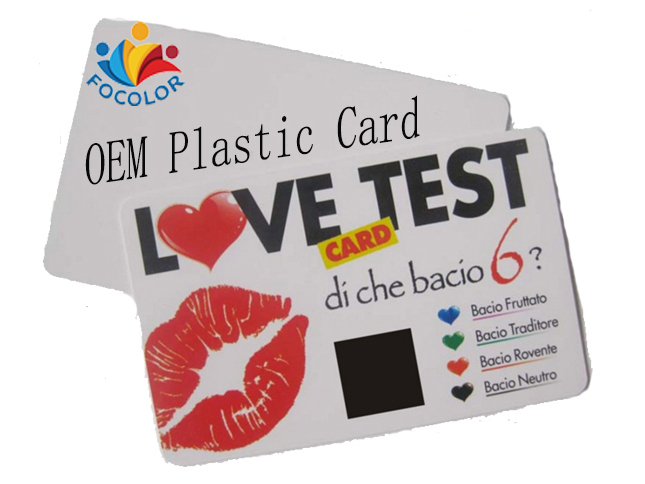
A child-facing card requires assessment of the finished product, not just the responsive pigment.
Review:
- Intended age and foreseeable handling.
- Substrate, edges, and detachable components.
- Inks, coatings, adhesives, and packaging.
- Exposure conditions and cleaning instructions.
- Required testing for the destination market.
In the United States, ASTM F963 is a mandatory toy safety standard where applicable. Children's products subject to relevant requirements may also need third-party testing and a Children's Product Certificate.
Applicability depends on classification and intended use. A supplier's general material statement does not replace finished-product compliance assessment.
Fragrance features introduce additional exposure considerations. They should serve a clear learning purpose and undergo separate suitability review.
For apps, assess accounts, advertising, purchases, analytics, camera permissions, and data retention.
The United States Children's Online Privacy Protection Rule applies to covered services directed to children under 13 and certain services that knowingly collect their personal information.
A privacy-conscious companion app can be designed with local functionality and limited permissions. However, an "offline" label alone does not establish compliance or eliminate every privacy concern.
Color-changing cards and apps have different cost structures. Neither is universally cheaper.
For cards, request quotations covering artwork preparation, material specifications, printing, protective finishes, testing, packaging, inspection, and replacement quantities.
For apps, consider development or licensing, illustration, audio, localization, device testing, accessibility, updates, privacy work, and customer support. Existing platforms may reduce initial development costs but introduce licensing restrictions.
Compare total costs over the same period and expected number of completed learning sessions.
For a physical kit:
> Development, production, testing, delivery, and replacement costs ÷ completed sessions.
For an app-based kit:
> Development or licensing, devices where supplied, maintenance, and support costs ÷ completed sessions.
Use realistic assumptions. Cards may be lost or damaged. Apps may need updates or encounter incompatible devices. Hybrid products carry obligations for both.
A well-designed pilot can reveal whether children understand the intended concept, rather than simply enjoy the effect.
For a temperature activity, use an objective such as:
> "The child can predict that changing temperature may change the card's appearance and explain the observed result."
Avoid vague objectives such as "improves intelligence."
Prepare three versions:
- A card-only investigation.
- An app-only activity addressing the same concept.
- A card investigation with optional digital guidance.
Keep the instructional content, adult support, and activity duration reasonably comparable. Otherwise, differences may reflect unequal teaching rather than format.
Record prediction accuracy, explanation quality, independent completion, and assistance needed.
Also record usability problems: weak contrast, unclear instructions, accidental taps, failed activation, or excessive waiting.
Enjoyment matters, but it is not a substitute for learning.
After the activity, present a new example or ask children to explain the idea without using the original card or app.
Treat a small pilot as product-development evidence, not proof of broad educational effectiveness.
From a product-development perspective, the specification should begin with the child's task rather than the pigment catalog.
An OEM/ODM brief should identify:
- Target age, destination market, and learning objective.
- Intended temperature or light conditions.
- Required image contrast and reveal behavior.
- Card dimensions, substrate, and finish.
- Reuse expectations and storage conditions.
- Packaging, instructions, and verification requirements.
Request finished-card samples. The combined substrate, ink, and coating system matters more than a pigment demonstration alone.
Also test activation and recovery separately. A card may reveal clearly but take too long to reset for the intended game.
For photochromic designs, verify that protective finishes do not prevent effective activation. For thermochromic designs, assess room-temperature effects, abrasion, cleaning, and repeat use under the proposed conditions.
Do not promise a fixed service life without supporting tests.
A hybrid kit works best when physical and digital components have distinct roles.
For example:
1. Children predict a card's response.
2. They conduct the physical investigation.
3. A companion app helps them record observations.
4. Digital prompts compare results.
5. An adult leads a discussion.
The app should add explanation, accessibility, or recording—not merely duplicate printed instructions.
A physical-first design with an optional digital layer can also preserve a complete learning activity when a compatible device is unavailable.
According to the company information supplied for this article, Qingdao Focus On Color Industry & Trade Co., Ltd. has more than 13 years of production experience across photochromic, thermochromic, liquid-crystal thermometer, and fragrance product categories. It offers OEM/ODM and personalized customization services.
That manufacturing scope is relevant to educational brands exploring responsive physical components. However, experience should be evaluated alongside project-specific samples, specifications, testing documentation, and production controls.
To develop a customized color-changing educational kit, share your target age group, learning objective, destination market, activation conditions, artwork, and expected order volume with Qingdao Focus On Color Industry & Trade Co., Ltd. Request a sample-development proposal and agree on performance and compliance requirements before approving production.

Not universally. Cards suit physical observation and shared investigation. Apps can support guided practice and adaptable feedback. Compare them against the same learning objective.
Some formulations can, depending on activation range, surrounding temperature, substrate, and construction. Confirm performance using finished-card samples.
It depends on the formulation and available activating light. Ordinary indoor lighting may not produce the intended effect. Test the actual use environment.
Some can. Others require connectivity for accounts, content, or other features. Confirm which functions remain available offline.
Artwork, dimensions, instructions, packaging, and material specifications can be explored through OEM/ODM development. Feasibility depends on the design and manufacturing process.
Confirm physical performance, age suitability, applicable compliance requirements, app permissions, device compatibility, and whether the kit remains usable without its digital component.
1. Hirsh-Pasek, K., et al. (2015). "Putting Education in 'Educational' Apps: Lessons From the Science of Learning." *Psychological Science in the Public Interest*, 16(1), 3–34. Basis for the four learning principles. [Read the publication record]. [pubmed.ncbi.nlm.nih]
2. Kim, J., et al. (2021). "Measures Matter: A Meta-Analysis of the Effects of Educational Apps on Preschool to Grade 3 Children's Literacy and Math Skills." Basis for the 36-study synthesis, 285 effect sizes, and approximately +0.31-standard-deviation average effect. [Read the paper]. [cepr.harvard]
3. "How Educational Are 'Educational' Apps for Young Children? App Store Content Analysis Using the Four Pillars of Learning Framework" (2021). Basis for the sample-specific 58% lower-quality design finding. [Read the study]. [pmc.ncbi.nlm.nih]
4. QCR Solutions. "Thermochromic Pigments—Technical Data." Technical basis for reversible responses and gradual activation ranges; not a specification for Qingdao Focus On Color products. [Read the technical guidance]. [qcrsolutions]
5. "Behavior of Chromogenic Pigments and Influence of Binder in Organic Smart Coatings." Technical background on photochromic and thermochromic responses. [View the publication]. [sciencedirect]
6. U.S. Consumer Product Safety Commission. "Toy Safety Business Guidance." Basis for the United States toy-standard, testing, and certification discussion. [Read the official guidance]. [cpsc]
7. U.S. Federal Trade Commission. "Children's Online Privacy Protection Rule." Basis for the United States children's privacy discussion. [Read the official rule overview]. [ftc]


