+86 18560646018

Views: 261 Author: Focus Color Publish Time: 2026-08-17 Origin: Site


Content Menu
● Wine Thermometer Strip vs. Champagne Temperature Preservation
● Why Champagne Temperature Needs Careful Control
>> Recommended Champagne Service Ranges
● How a Wine Thermometer Strip Supports Better Service
>> Useful Applications for Thermochromic Temperature Strips
● Bottle Surface Temperature vs. Liquid Temperature
>> Best-Practice Interpretation
● Preserving Champagne Before It Is Served
>> Champagne Storage Checklist
● A Practical Champagne Temperature Workflow
>> Step 1: Identify the Champagne Style
>> Step 2: Set the Target Range
>> Step 4: Check Before Presentation
>> Step 5: Maintain Temperature During Service
>> Step 6: Protect Remaining Champagne
● Custom Thermochromic Labels for Wine and Champagne Brands
>> Features to Specify for an OEM Project
● FAQ
>> 1. What is a wine thermometer strip?
>> 2. Are wine thermometer strips suitable for Champagne bottles?
>> 3. What temperature should Champagne be served at?
>> 4. Can a wine thermometer strip replace a digital wine thermometer?
>> 5. How long should Champagne stay in an ice bucket?
>> 6. Should Champagne be stored in a refrigerator?
>> 7. Can temperature-sensitive labels be customized with a brand logo?
A wine thermometer strip helps you see a bottle's surface temperature quickly, while preserving Champagne serving temperatures requires managing the entire storage, chilling, opening, and serving process. For restaurants, wine retailers, event planners, and promotional-product buyers, the best results come from using a temperature indicator as a practical control tool—not as a replacement for correct Champagne handling.
Champagne is commonly served at 8–10°C (46–50°F), while vintage, rosé, and prestige styles may benefit from a slightly warmer range to reveal more aroma and complexity.

The two concepts solve different problems.
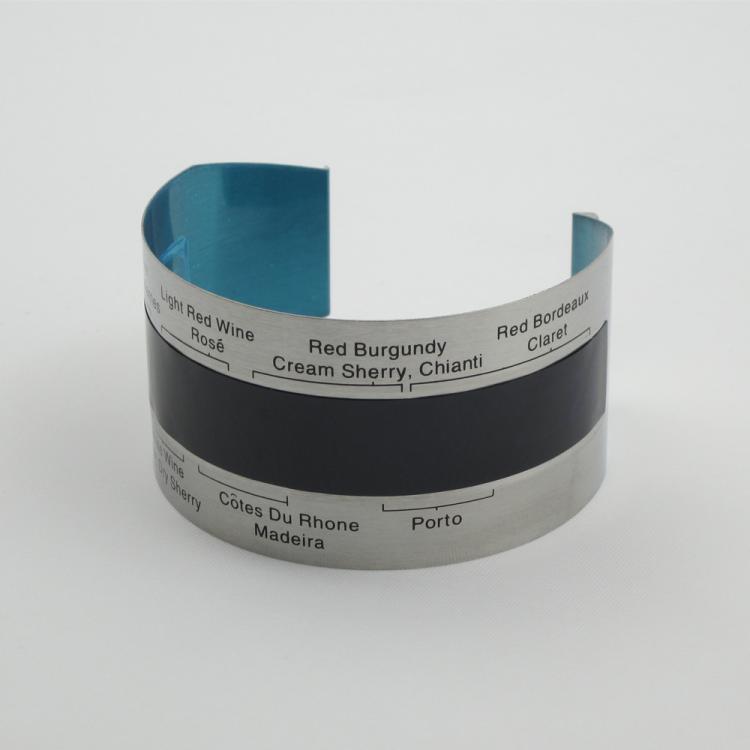
A wine bottle thermometer strip is a visual, on-bottle temperature indicator. It typically uses thermochromic liquid-crystal technology to display a temperature range through a color change. The strip is applied to the outside of a bottle, allowing staff or consumers to check temperature without opening the bottle or inserting a probe.
Preserving Champagne serving temperatures, by contrast, is a handling discipline. It includes stable storage, gradual chilling, ice-bucket management, protection from heat and light, and monitoring the bottle after it has been opened.
| Factor | Wine Thermometer Strip | Preserving Champagne Serving Temperatures |
|---|---|---|
| Primary role | Shows the bottle's approximate external temperature | Keeps Champagne within its intended storage and serving range |
| Main value | Fast, contact-free visual checking | Protects aroma, freshness, balance, and pouring performance |
| Best use stage | Before service and during table service | Before storage, during chilling, and throughout service |
| Temperature reading | Bottle-surface indication | Actual product-condition management |
| Required equipment | Thermochromic strip label | Refrigeration, wine cooler, ice-and-water bucket, stopper, process control |
| Ideal buyer | Wineries, restaurants, gift brands, beverage promotions | Hospitality operators, retailers, collectors, caterers, wine-service teams |
| Key limitation | Does not cool or stabilize the wine | Requires a reliable way to verify whether the target temperature has been reached |
The practical conclusion is simple: a strip tells you what is happening; temperature preservation helps you control what happens next.
For Champagne service, these two functions work particularly well together. A temperature strip can signal whether a bottle needs more time in the ice bucket, should be removed before becoming too cold, or is warming too quickly on a table.
Champagne is not merely cold wine. Its balance depends on dissolved carbon dioxide, acidity, aroma release, sweetness perception, and serving pressure. Temperature affects each of these elements.
When Champagne is served too warm, it can pour more aggressively, lose its crisp impression, and feel heavier on the palate. When it is overchilled, aroma expression may become muted and the wine's complexity can be harder to perceive.
For standard brut Champagne, many professional serving guides place the target around 8–10°C. Laurent-Perrier recommends 8–10°C for Brut La Cuvée, 9–11°C for rosé, and 10–12°C for prestige and vintage Champagne. The Champagne education platform likewise identifies 8–10°C as the ideal serving range.
| Champagne style | Practical serving range | Service objective |
|---|---|---|
| Non-vintage brut | 8–10°C / 46–50°F | Preserve freshness, lift, and lively mousse |
| Rosé Champagne | 9–11°C / 48–52°F | Support fruit expression and texture |
| Vintage Champagne | 10–12°C / 50–54°F | Reveal toast, biscuit, and layered aromas |
| Prestige cuvée | 10–12°C or producer guidance | Balance aromatic depth with structure |
| Simple sparkling wine | 6–8°C / 43–46°F | Emphasize crispness and fine bubbles |
These ranges are guidelines, not rigid laws. The producer's recommendation should take priority, especially for vintage bottles, limited cuvées, and prestige releases.
A quality wine temperature strip offers an immediate visual reference for staff and consumers. This is especially useful where opening a bottle to test the liquid temperature is impractical or where service teams handle many bottles at once.
For a Champagne brand, hotel, bar, or wine gift supplier, a customized temperature-sensitive label can turn a bottle into a more interactive product experience.
- Restaurant service: Staff can identify whether a bottle has reached the intended serving range before presenting it.
- Wine retail displays: Customers receive a practical guide rather than guessing whether a bottle is ready to drink.
- Champagne gifting: A branded strip adds visual value and a functional reason to keep the bottle visible.
- Promotional packaging: Beverage brands can combine a logo, service guidance, and color-changing temperature display.
- Event and catering operations: Teams can check many bottles quickly during receptions, banquets, and outdoor events.
- Wine club programs: A private-label temperature strip can reinforce a premium unboxing and serving experience.
From a manufacturing perspective, the most effective design is not simply a color-changing decoration. It should include a clear temperature scale, readable contrast, suitable adhesive performance, bottle-curvature compatibility, and customized branding that remains legible under cold and wet service conditions.
At Qingdao Focus On Color Industry & Trade Co., Ltd., the practical product-development goal is to match thermochromic functionality with real-world packaging requirements. With more than 13 years of manufacturing experience, the company supports OEM, ODM, and customized color-changing solutions for global buyers seeking stable, production-ready products.
One important point for buyers and users: a wine thermometer strip reads the temperature at the outside surface of the bottle, not a laboratory-grade internal liquid measurement.
That does not make it unhelpful. It means the strip should be used intelligently.
A bottle coming from a refrigerator, wine cooler, or ice bucket may experience a small difference between its glass surface and the liquid inside. The size and direction of that difference can vary according to bottle thickness, chilling time, air exposure, ice-water contact, and handling conditions.
1. Allow the strip to settle. After moving the bottle from a refrigerator or bucket, wait briefly for the display to stabilize.
2. Use a defined service target. For example, if a non-vintage brut Champagne is intended for service at 8–10°C, select a strip range that clearly displays that window.
3. Avoid reading immediately after wiping. Condensation and sudden handling can temporarily affect visibility and interpretation.
4. Use the indicator consistently. The same application position and workflow improve operational repeatability.
5. Use a calibrated probe for critical quality checks. For premium cellar operations, research, or formal quality-control validation, a calibrated instrument remains the appropriate reference.
This distinction is valuable for responsible product positioning. A thermochromic wine strip is best marketed as a convenient visual temperature guide for beverage service, not as a substitute for calibrated analytical equipment.
The best serving temperature starts with proper storage. Champagne education guidance recommends a stable, dark, ventilated, odor-free environment, with storage temperatures around 10–15°C and relative humidity of 60–80%.
Temperature stability matters because repeated heating and cooling can place unnecessary stress on the bottle, closure, and wine. Direct light, vibration, strong odors, and prolonged exposure to warm environments should also be avoided.
- Keep bottles in a dark location, away from direct sunlight.
- Maintain a stable temperature rather than allowing frequent fluctuations.
- Avoid strong odors, such as cleaning chemicals, spices, or aromatic foods.
- Keep bottles away from vibration when possible.
- Do not use a standard household refrigerator for long-term storage.
- Chill Champagne gradually before service.
- Avoid leaving bottles in a freezer, where excessive chilling or bottle damage can occur.
For service preparation, an ice bucket with both ice and water is more efficient than ice alone because water makes broader contact with the bottle. Champagne Education advises placing the bottle in an ice-and-water bucket for around 30 minutes, or refrigerating it for several hours before service. Laurent-Perrier similarly recommends 20–30 minutes in an ice bucket.
For hospitality teams and beverage brands, a repeatable workflow is more reliable than guessing.
Check whether the bottle is non-vintage brut, rosé, vintage, or prestige cuvée. The correct serving temperature depends on the style and the producer's guidance.
Use a simple service card or a custom temperature strip design. For a standard brut bottle, aim for 8–10°C. For complex vintage styles, consider a slightly warmer target.
Use a refrigerator for several hours or an ice-and-water bucket for roughly 20–30 minutes. Avoid rapid freezing.
Read the wine thermometer strip after the bottle has stabilized. If it is too warm, return it to the bucket. If it is too cold, allow a short period of controlled warming.
Keep the bottle in an ice bucket between pours. For table service, use a clean bucket with an appropriate ice-and-water ratio rather than displaying the bottle at room temperature.
After opening, use a purpose-designed sparkling-wine stopper. Refrigerate the bottle and consume it promptly for the best sensory result.
For B2B buyers, the opportunity goes beyond a standard thermometer strip. A customized product can combine temperature indication with visual brand identity, customer education, and premium packaging differentiation.
- Temperature activation range: For example, a focused Champagne service range or a wider wine-serving scale.
- Color-change effect: Select liquid-crystal color transitions that are intuitive and visually attractive.
- Label dimensions: Match bottle diameter, label panel space, and brand artwork.
- Adhesive type: Consider chilled glass, condensation, storage conditions, and packaging process.
- Material structure: Choose materials that balance flexibility, printability, durability, and visual quality.
- Artwork integration: Include logo, service guidance, QR code area, multilingual instructions, or seasonal designs.
- Packaging format: Individual units, rolls, sheets, retail packs, gift-box inserts, or bulk supply.
- Quality verification: Confirm appearance, color-change response, adhesion, and batch consistency before mass production.
A well-designed Champagne thermometer strip can provide a visible "ready to serve" signal. More importantly, it gives the brand a reason to communicate product knowledge at the exact moment consumers prepare to open the bottle.
Choose a wine thermometer strip when your priority is fast visual temperature guidance, product differentiation, promotional value, or easier beverage service.
Choose a full Champagne temperature-preservation process when your priority is protecting bottle quality, achieving repeatable service, and maintaining the intended tasting experience.
For the strongest result, use both: correct storage and chilling practices create the right conditions, while a customized thermochromic strip makes those conditions easier to see and manage.
If you are developing a wine, Champagne, spirits, beverage-gift, or hospitality product line, Qingdao Focus On Color Industry & Trade Co., Ltd. can help turn your desired temperature range, label design, and packaging concept into a customized OEM or ODM thermochromic solution. Contact our team to discuss your bottle size, color-changing range, artwork, quantity, and market requirements.
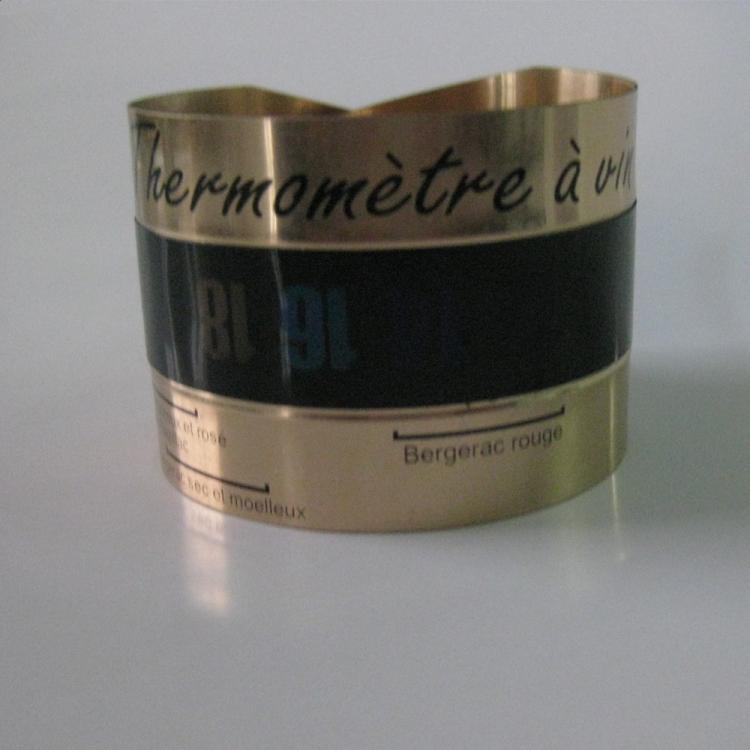
A wine thermometer strip is a temperature-sensitive label that attaches to a bottle. It changes color to indicate an approximate temperature range on the bottle surface.
Yes. They are particularly useful for Champagne because serving temperature affects freshness, aroma expression, bubble behavior, and pouring performance. Choose a strip designed around the relevant sparkling-wine temperature range.
Standard brut Champagne is commonly served at 8–10°C. Rosé, vintage, and prestige styles may be served somewhat warmer, depending on the producer's recommendation and desired aromatic expression.
No. A thermochromic strip is a convenient visual guide for bottle-surface temperature. A calibrated digital probe is more appropriate where exact internal liquid measurement is necessary.
An ice-and-water bucket generally chills Champagne effectively in around 20–30 minutes, though actual timing depends on the starting temperature and bottle size.
A refrigerator can be used for short-term chilling before service. For longer storage, Champagne benefits from a dark, stable, odor-free environment with controlled temperature and humidity.
Yes. OEM and ODM projects can customize dimensions, activation range, color-change effect, printing, logo placement, packaging, and application requirements.
1. [Wine Enthusiast — From Temperatures to Glassware, Here's a Cheat Sheet to Serving Wine]
2. [Laurent-Perrier — How to Serve Champagne with Elegance]
3. [Champagne Education — Store & Serve Champagne: Essential Guide]
4. [G.H. Mumm — How to Serve Champagne at the Ideal Temperature]
5. [EuroCave — At What Temperature Should You Store Wine and Champagne?]


